TL;DR: A storage bed is worth considering in Mumbai when it solves a defined storage shortage, opens safely with the intended mattress and can be delivered, ventilated and maintained properly.
Key takeaways
- Storage beds work best for bulky, low-frequency items rather than everything you use each day.
- Hydraulic lift, drawer and manual panel systems need different clearance and access.
- The mattress weight and bed mechanism must be specified together.
- Interior ventilation and dry storage habits matter in humid conditions.
- Mumbai lift, corridor and bedroom access should shape the bed's construction before production.
What is a storage bed?
A storage bed uses the space beneath the mattress platform as enclosed or drawer-based storage. Common designs include a full lifting platform, split lifting panels, side drawers and removable boards.
The right mechanism depends on what will be stored and how often it is needed. A full hydraulic lift exposes a large compartment but requires the user to raise the mattress platform. Drawers give direct access but need open floor space beside the bed. Removable boards can be simple, but lifting the mattress to reach them is inconvenient.
Our judgement is that under-bed space is most valuable for suitcases, spare bedding and seasonal items. Daily clothing usually belongs in a wardrobe or drawer that can be opened without moving bedding.

Is a storage bed right for a Mumbai bedroom?
A storage bed is right when the room lacks useful cabinetry and the mechanism remains accessible after all other furniture is placed. It can recover a large footprint in a compact apartment, but it does not create free space without trade-offs.
Map the bed, bedside tables, wardrobe doors, curtains and walking routes. Side drawers can collide with a wall or bedside unit. A lift-up platform needs safe standing space at the foot or side. A very high storage box can also change the finished sleeping height.
A fitted solution may be more efficient in an irregular room, while a freestanding bed is easier to replace. FCI India's comparison of built-in and freestanding wardrobes helps decide whether the storage problem belongs under the bed or on the wall.
Which opening system should you choose?
Choose the opening system by access frequency, mattress weight, room clearance and the user's ability to operate it. Do not choose a hydraulic mechanism only because it looks effortless in an empty showroom.
For a lift-up bed, request the rated mattress range, platform weight, lifting force and safe operating instructions. Test the display with a mattress similar to the one you will use. Check whether the platform remains securely open and lowers in a controlled way.
For drawers, measure the drawer front and full extension. Add space for the user to stand and remove a suitcase. For manual panels, test how the panel is supported while items are moved.
Ask how the mechanism can be serviced and replaced. Concealed hardware still needs access. Keep children away from moving components and follow the manufacturer's operating guidance.
How should the mattress and bed be matched?
The mattress and storage mechanism must be specified as one working system. Mattress dimensions, depth and weight affect fit, finished height and lift behaviour.
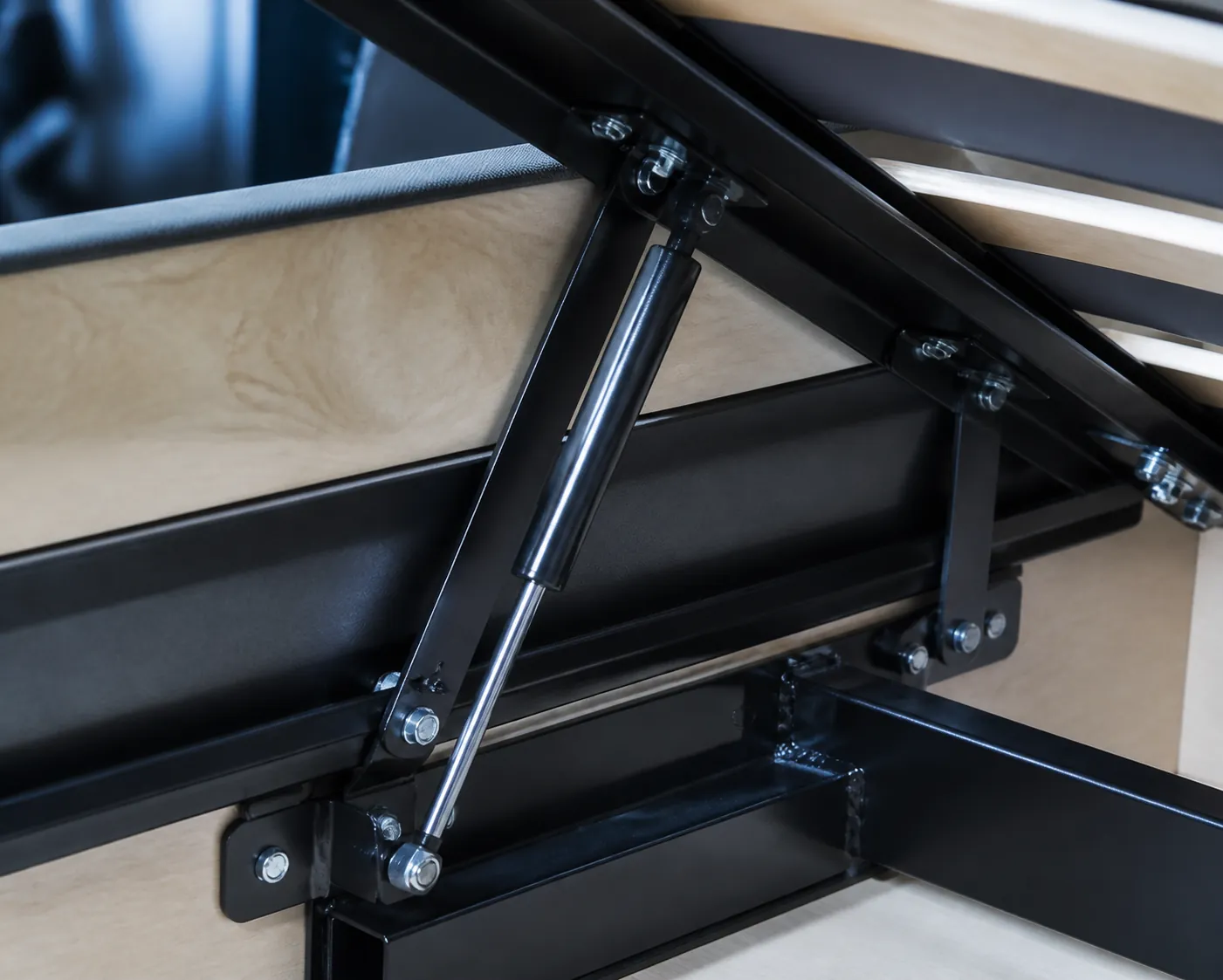
Confirm the exact mattress before the mechanism is selected. A heavier replacement mattress can change how a gas-assisted lift feels. An oversized mattress can obstruct handles or rub against the headboard. A very deep mattress may make the final bed uncomfortably high.
Check the platform type required by the mattress maker. Slats, ventilation gaps and support spacing vary. Never assume that an existing mattress is compatible with a newly commissioned storage bed.
What materials work in humid conditions?
Materials should be selected and detailed for the actual room conditions, with realistic expectations about wood movement and maintenance. The USDA Forest Products Laboratory's peer-reviewed technical Wood Handbook chapter on moisture explains that wood exchanges moisture with surrounding air and changes dimension as moisture content changes.
That does not mean solid wood is unsuitable or that one board type is automatically safe from movement. Construction method, conditioning, finish, ventilation and service environment all matter.
Ask for the substrate, veneer, edge treatment, internal finish and care instructions in writing. Inspect representative samples rather than approving from a screen. Keep the room ventilated and address leaks or persistent dampness rather than expecting the furniture to compensate.
FCI India's Mumbai monsoon sofa fabric guide applies the same principle to upholstery: local conditions change the questions, not the need for product-specific evidence.
How should the storage interior be planned?
Divide the interior around the objects you will actually store and preserve access to the mechanism. One large empty box appears flexible but allows contents to slide, stack too high or obstruct moving parts.
Measure suitcases, bedding boxes and any long items. Create removable dividers where useful. Keep contents below the stated fill line and away from hinges, struts and ventilation openings. Use clean, dry containers for textiles and inspect the compartment periodically.
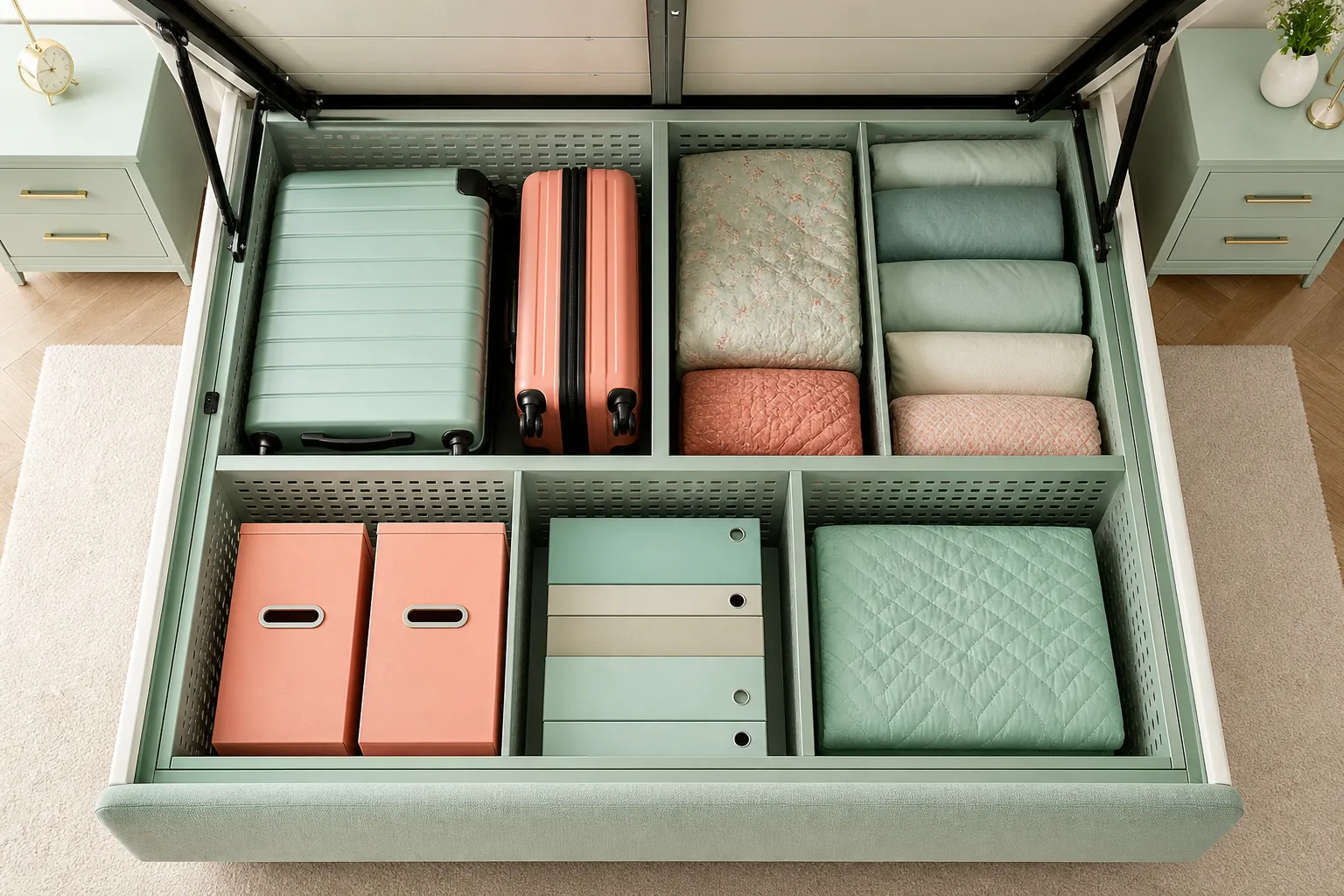
Do not store damp shoes, wet cleaning cloths, food, chemicals or leaking containers under the mattress. Avoid overloading the platform or base. The manufacturer's load and care instructions control.
Will it fit through a Mumbai building?
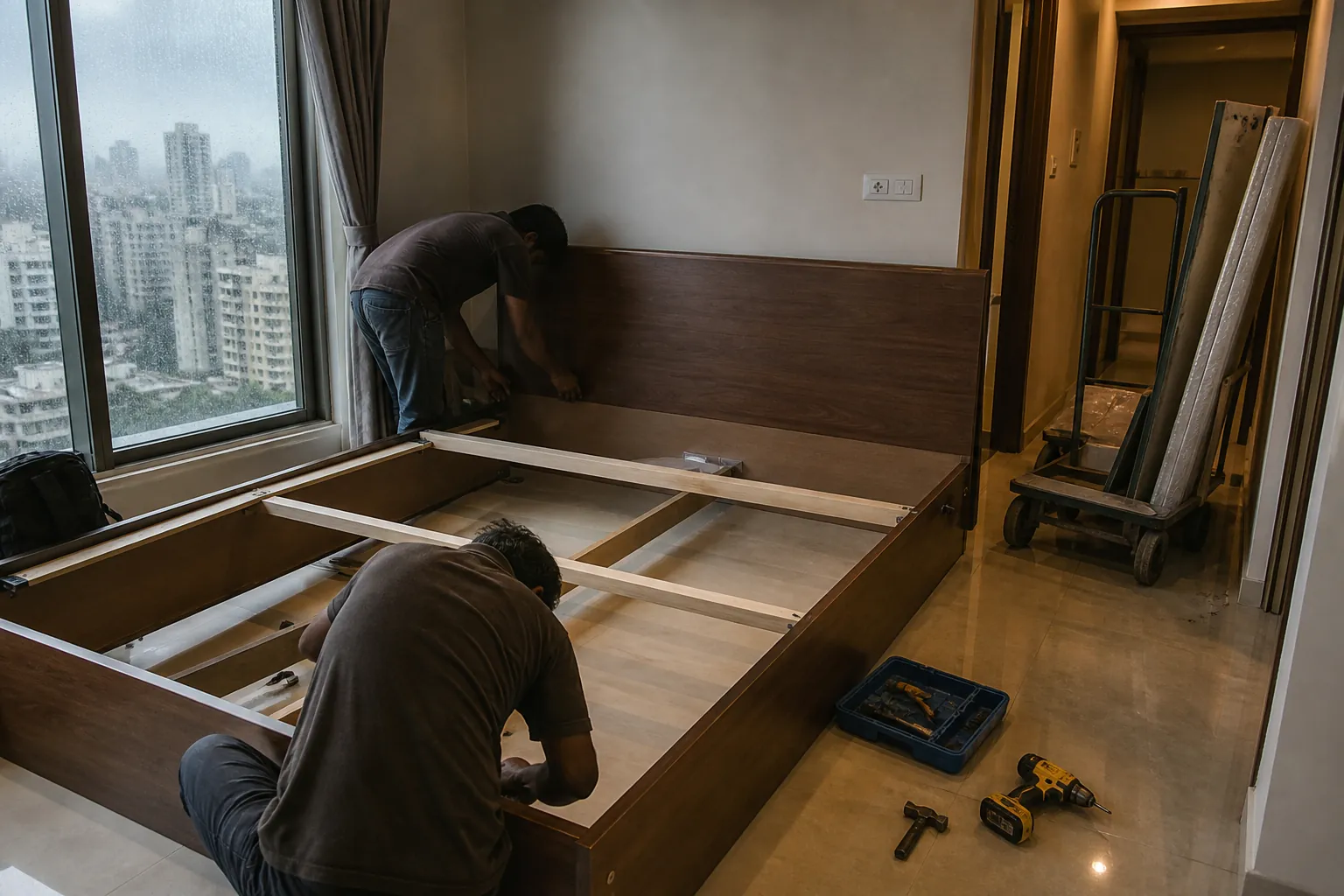
A storage bed should be designed as deliverable components that fit the lift, corridor, doorway and final assembly area. The headboard is often the largest rigid part, while long side rails and lifting platforms create turning problems.
Record the service lift door and cabin, corridor corners, apartment entrance and bedroom door. Confirm whether the headboard separates, whether the platform folds and which parts are assembled on site. Check building delivery times and protection requirements before scheduling.
The Mumbai furniture delivery access guide provides a measurement sequence. Use packed dimensions from the approved drawing, not estimates based on the finished bed.
What should a custom specification include?
A custom storage bed specification should define size, materials, mechanism, mattress, internal layout, ventilation, access and handover tests. Each item closes a different source of ambiguity.
Include:
- finished and packed dimensions;
- mattress make, size, depth and weight;
- mechanism model and operating instructions;
- platform and internal load limits;
- substrate, veneer, upholstery and finish references;
- internal dividers and ventilation details;
- access route and on-site assembly scope;
- mechanism test, alignment check and snagging record;
- warranty and replacement-part route.
Use the custom furniture Mumbai service to turn the room survey and storage inventory into a dimensioned proposal. The custom furniture commissioning checklist explains how to preserve approvals from sample to handover.
What are the limitations of this guide?
This guide cannot confirm structural capacity, mechanism safety or mattress compatibility for a particular bed. Product designs, loads, warranties, rooms and users vary. A site survey and manufacturer documentation are required.
Do not modify a lift mechanism or exceed its stated load. For accessibility or medical needs, obtain appropriate professional advice rather than relying on a general furniture guide.