TL;DR: The best sofa fabric for a Mumbai home is documented, tightly constructed, cleanable for your household, tested as a real sample, and used in a room where moisture and ventilation are controlled.
Key takeaways
- Fibre name alone does not predict upholstery performance, because weave, backing, finish and construction also matter.
- Ask for test data and cleaning instructions for the exact fabric code, not a similar collection.
- Warm, humid, stagnant conditions increase mould risk on textiles, so solve leaks and ventilation problems first.
- Mid-tone, textured fabrics often hide everyday variation better than very pale or very dark flat colours.
- A large sample viewed in the actual room is more reliable than a small screen image.
By August, every Mumbai living room faces the same test: damp air, bright glare between downpours, and a sofa that has to look right through all of it. The fabric you choose either handles the monsoon or fights it for years. Here is how to pick one that holds up.
Which sofa fabric works best in Mumbai?
There is no single best sofa fabric for every Mumbai home, because use, room conditions and cleaning needs differ. A formal living room used twice a month has a different brief from a family sofa used daily by children, guests and pets.
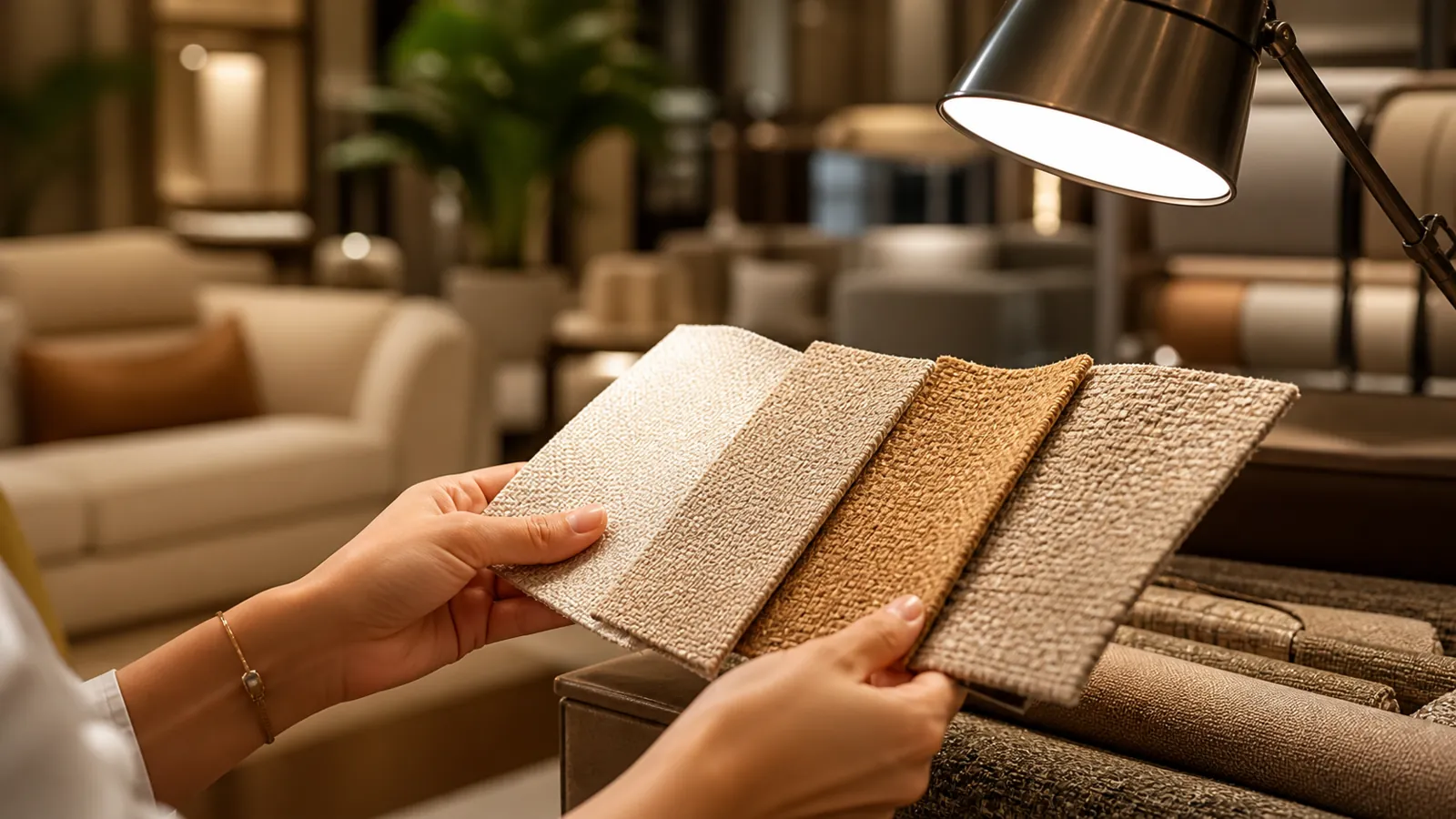
Start with four questions: who uses it, how often, what commonly spills, and how the room behaves during monsoon. Then compare the exact textile's composition, construction, abrasion result, pilling result, colourfastness and cleaning code. Numbers only mean something when they name a test method and a fabric code.
Our judgement is that a tightly constructed, repairable upholstery with realistic care instructions usually beats a fashionable but undocumented fabric. Performance should be selected, not assumed from words such as premium or imported.
Are natural or synthetic fibres better?
Neither natural nor synthetic fibre is automatically better, because finished fabric performance depends on the whole construction. Cotton, linen, wool, viscose, polyester and blends each bring different touch, appearance and care characteristics. A blend can combine properties, but the percentages alone do not reveal how it will wear.
Natural fibres can absorb moisture. Some synthetics absorb less, yet surface soil, backing, foam and trapped humidity can still create care problems. The Smithsonian Museum Conservation Institute notes that "natural-fibre textiles are hygroscopic and that high humidity, warmth and poor ventilation encourage mould."
That conservation guidance is not a household upholstery warranty. It supports a practical boundary: no fabric choice can compensate for a leaking wall, a wet cushion or a persistently stagnant room.
What fabric tests should you request?
Request results that answer abrasion, pilling, seam, colour and cleaning questions for the exact upholstery. Common laboratory methods can compare resistance under controlled conditions, but no test perfectly reproduces years in a Mumbai household.
Ask the supplier:
- Which abrasion method was used, and what was the result?
- Was pilling tested on this colour and construction?
- Is lightfastness documented for a sofa near a bright window?
- Is rubbing colourfastness documented for dry and wet contact?
- What cleaning agents and methods are allowed?
- Does a finish need renewal, and what invalidates it?
Do not compare raw abrasion numbers from different methods as if they were one scale. High cycle claims also do not prove stain resistance, comfort or cleanability.
Which colours hide daily wear?
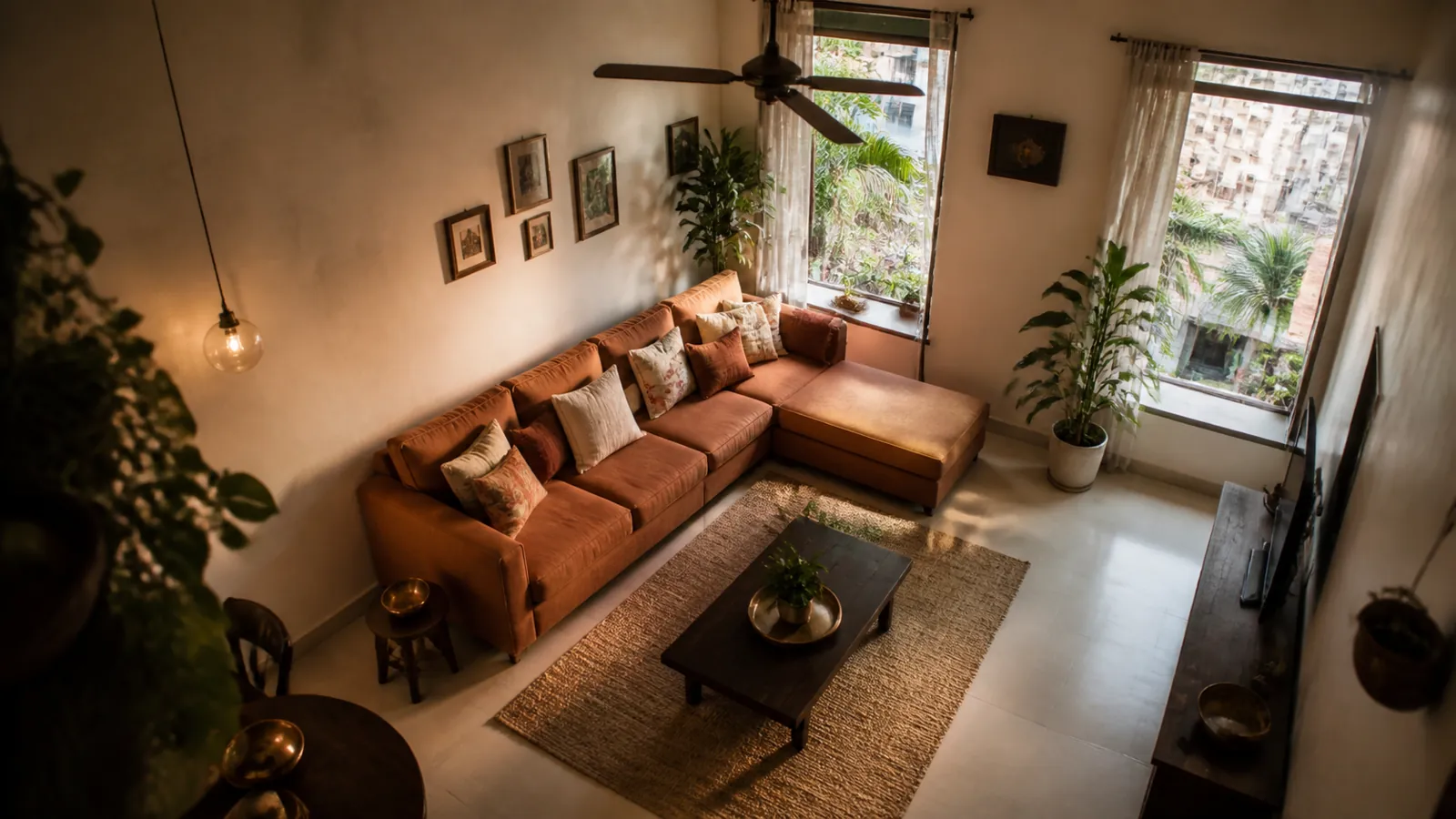
Mid-tone colours with visual texture usually disguise lint and small marks better than flat white, flat black or very saturated plains. This is a design judgement, not a laboratory rule. Your clothing, pets, dust and light determine what becomes visible.
Take the sample to the sofa position. View it in daylight and in electric light. Place it beside your flooring, curtains and wall finishes. Fold it over an edge, because colour often reads differently on a vertical face than on a flat swatch.
Mumbai's bright daylight can expose undertones that a showroom lamp hides. If the sofa receives direct sun, ask for colourfastness evidence and consider blinds or a revised position rather than trusting a vague fade-resistant label.
How should a sofa handle monsoon moisture?
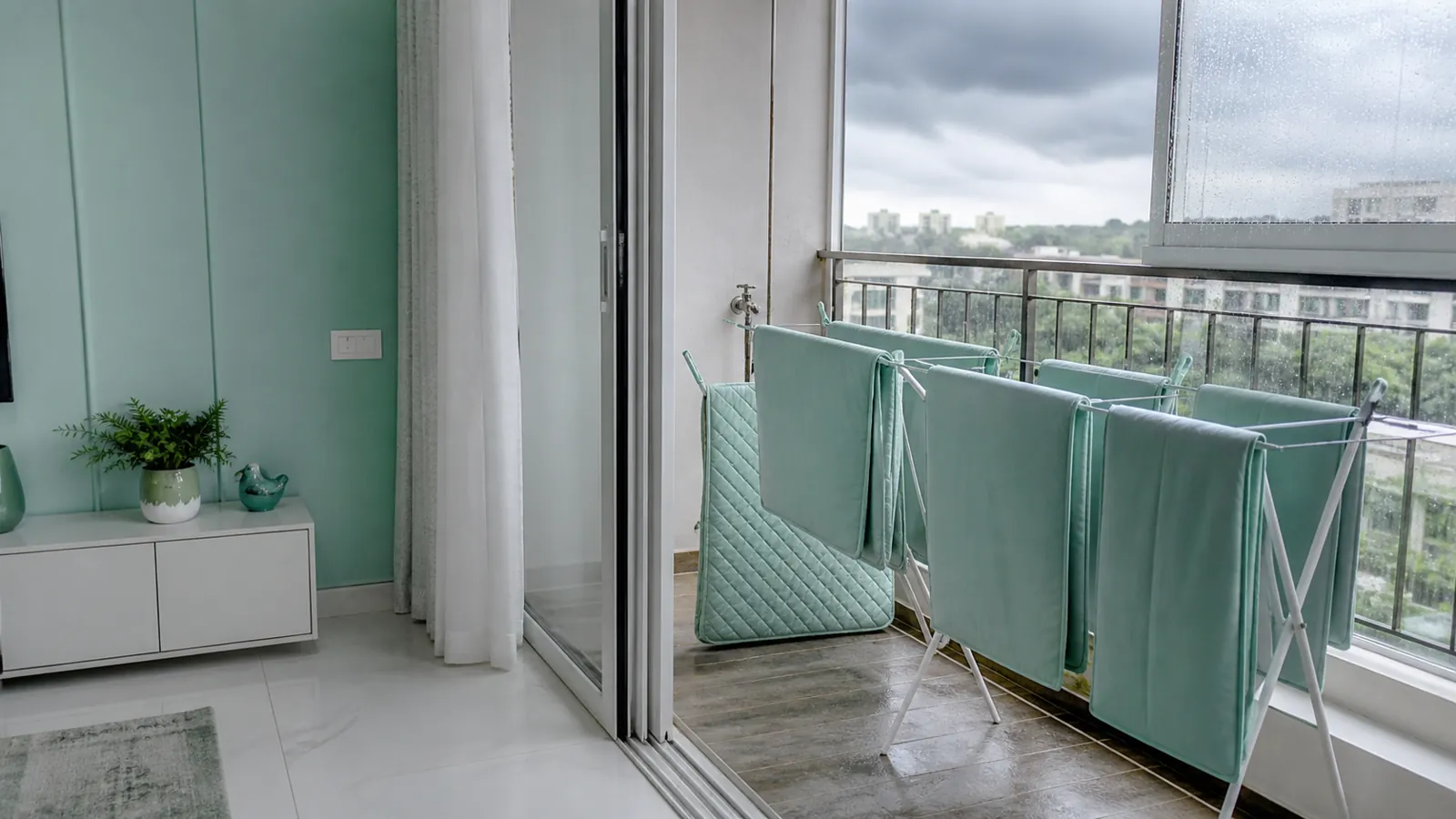
A sofa should stay away from active damp, allow inspection and receive normal room ventilation. Fix water ingress, plumbing leaks and condensation causes before new upholstery arrives. Do not wrap a sofa in non-breathable plastic for long-term protection, because trapped moisture can create another problem.
The Smithsonian guidance says stagnant air and high relative humidity support mould on cellulosic materials. For a home, the useful action is not to chase one universal humidity number. It is to keep conditions stable, ventilate sensibly, dry spills promptly and investigate persistent odour or spotting.
Removable covers can help only when the manufacturer states they are removable and gives a safe method. Washing an unsuitable cover can cause shrinkage, colour change or loss of finish. Never wet-clean upholstery by guesswork.
Should you choose a performance fabric?
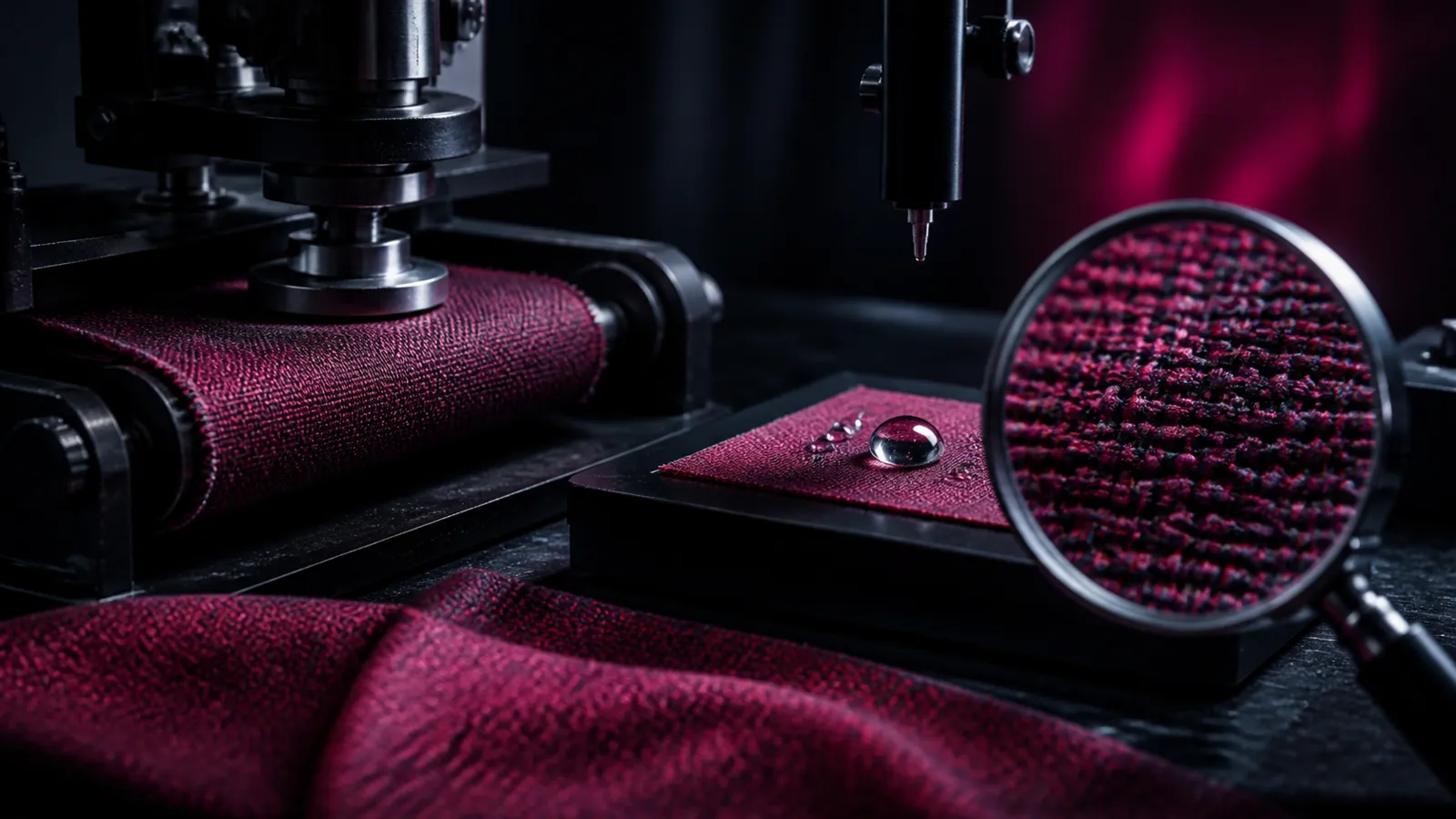
Choose a performance fabric only after defining what performance means and obtaining evidence for the exact product. It may refer to stain release, water repellence, abrasion, lightfastness or several properties. The term has no useful precision without the specification.
Ask whether the treatment changes feel, breathability or future cleaning. Ask about the backing and foam too. A strong face fabric over weak seams or unsuitable cushion construction does not create a durable sofa.
FCI India's materials and finishes library can support a sample-led comparison. Bring a real room palette and household use brief, not just a saved social image.
What should be in the sofa order pack?
The order pack should bind the chosen fabric to the sofa drawing, orientation, care method and approved sample. Record the manufacturer, collection, code, colour, batch process where relevant, composition and any treatment. Mark which panels use it and how the seams align.
Also approve sofa dimensions, seat feel, cushion construction, piping, zips, spare fabric and access. FCI India's guide to furniture delivery access in Mumbai explains why the best upholstery is irrelevant if the sofa cannot turn through the building.
For a tailored project, review custom furniture in Mumbai and FCI India's process. Request full-size samples and written performance data before final sign-off.
What are the limitations of this guide?
This guide cannot guarantee that a fabric will resist mould, stains, fading or wear in a particular home. Laboratory tests have defined methods and limits. Room moisture, sunlight, cleaning, construction and use all vary.
Conservation sources describe risks to textiles in controlled collections, not product claims for domestic sofas. Follow the upholstery manufacturer's current care instructions and use a qualified cleaner where appropriate.
Book a sample-led consultation
Bring your room palette and household use brief to an FCI India consultation, and request full-size samples with written performance data before you commit. Visit the showroom at Nagree Building, 50 Shahid Bhagat Singh Road, Fort, Mumbai 400023, or call +91 (022) 22662878.
Sources
- Smithsonian Museum Conservation Institute, Mold and Mildew on Textiles
- Museums Galleries Scotland, Caring for Textile Collections
- FCI India, Materials and Finishes (https://fciindia.com/materials-and-finishes/)
- FCI India, Our Process (https://fciindia.com/our-process/)