TL;DR: Choose a chest of drawers by its usable drawer space, fully open footprint, specified hardware and installation plan, not just its closed dimensions.
Key takeaways
- A chest's closed footprint does not describe the space occupied by a fully open drawer and the person using it.
- A drawer's usable internal dimensions and the cabinet's external dimensions are different measurements.
- Full extension, soft closing and load capacity are separate specifications, as Blum's MOVENTO description illustrates.
- Correct anchoring reduces furniture tip-over risk; Consumer Reports' safety guidance also distinguishes different wall materials.
- FCI India lists bespoke furniture design, manufacturing and design consultation among its services, providing a route for a detailed Mumbai storage brief.
How much space does a chest of drawers need?
It needs enough room to stand closed, open as designed and be used without compromising the surrounding route. The useful measurement is therefore not just the depth printed beside the product photograph.
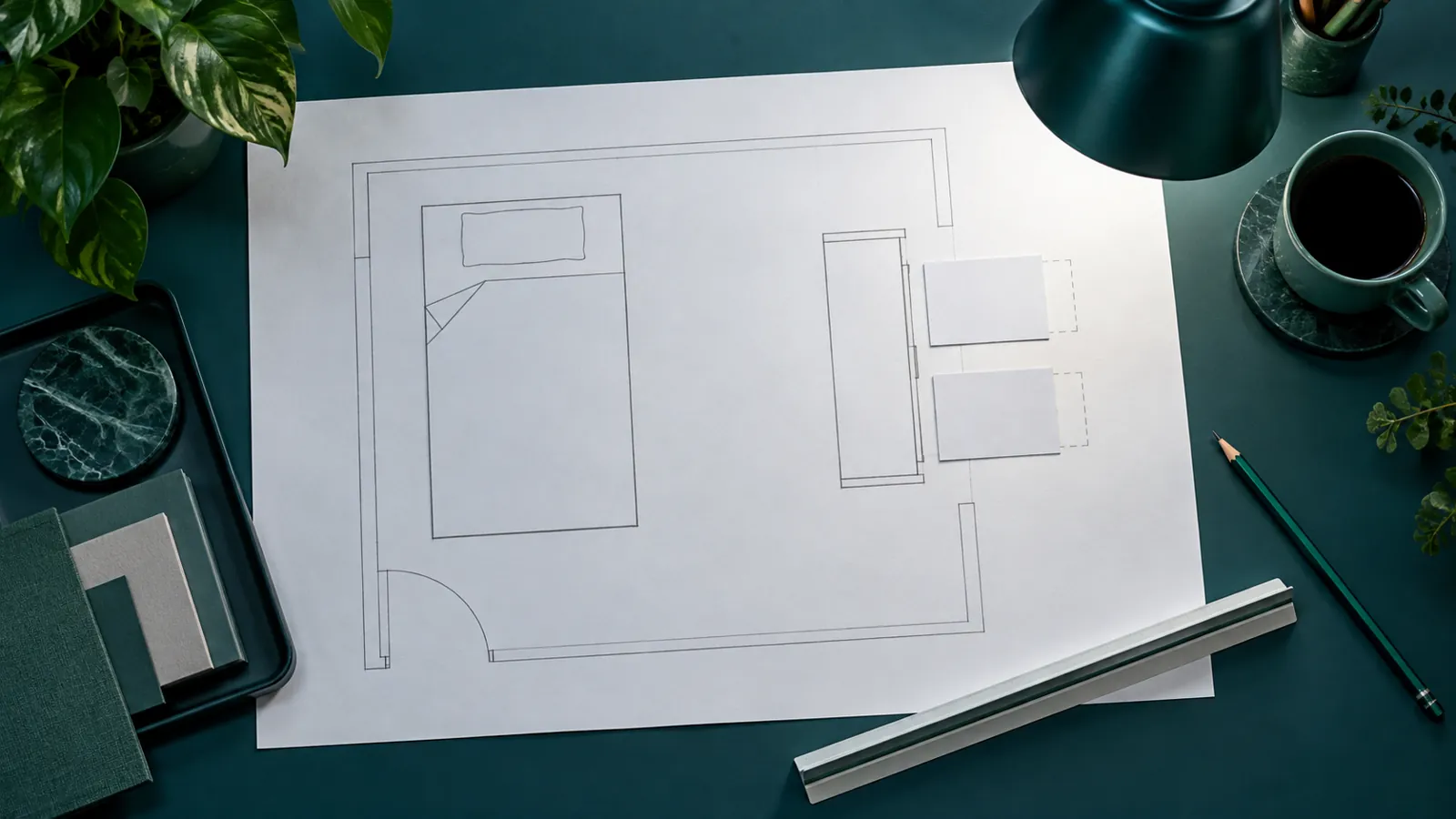
Our suggested layout check has four states. Mark the closed cabinet, including handles. Mark a fully extended drawer. Mark where you stand to reach its contents. Then check the route past that position, with nearby doors and wardrobe fronts in use.
For a Mumbai bedroom, make this specific to the chosen wall. If the chest faces the bed, test that arrangement with the actual bed footprint. If it sits near the bedroom entrance, check the door swing and the handle projection together. Do not borrow a clearance from a room that has a different layout.
A full-size floor marking is a useful planning aid, not a substitute for a measured drawing. Ask your designer to resolve any collision before you approve the cabinet depth. A drawer that technically opens but requires you to stand somewhere else has not entirely understood its job.
Should you choose a tall chest or a wide one?
Choose the arrangement that puts your actual storage within comfortable reach while fitting the room's usable wall space. Our recommendation is to start with a list of contents rather than a desired drawer count.
Separate folded clothes, small accessories, documents and bulky items. Measure representative items or existing organisers and ask for the usable internal width, depth and height of the proposed drawers. A larger exterior is not a promise about every internal compartment.
For shared storage, allocate drawers by user and purpose before selecting the facade. A neatly proportioned front can conceal a layout that gives the wrong amount of space to the wrong things.
Do not choose a tall or wide form on the assumption that one is automatically safe without proper installation. The tip-over question still needs its own assessment and anchoring plan, following the safety principles set out by Consumer Reports.
What should you ask about the drawer runners?
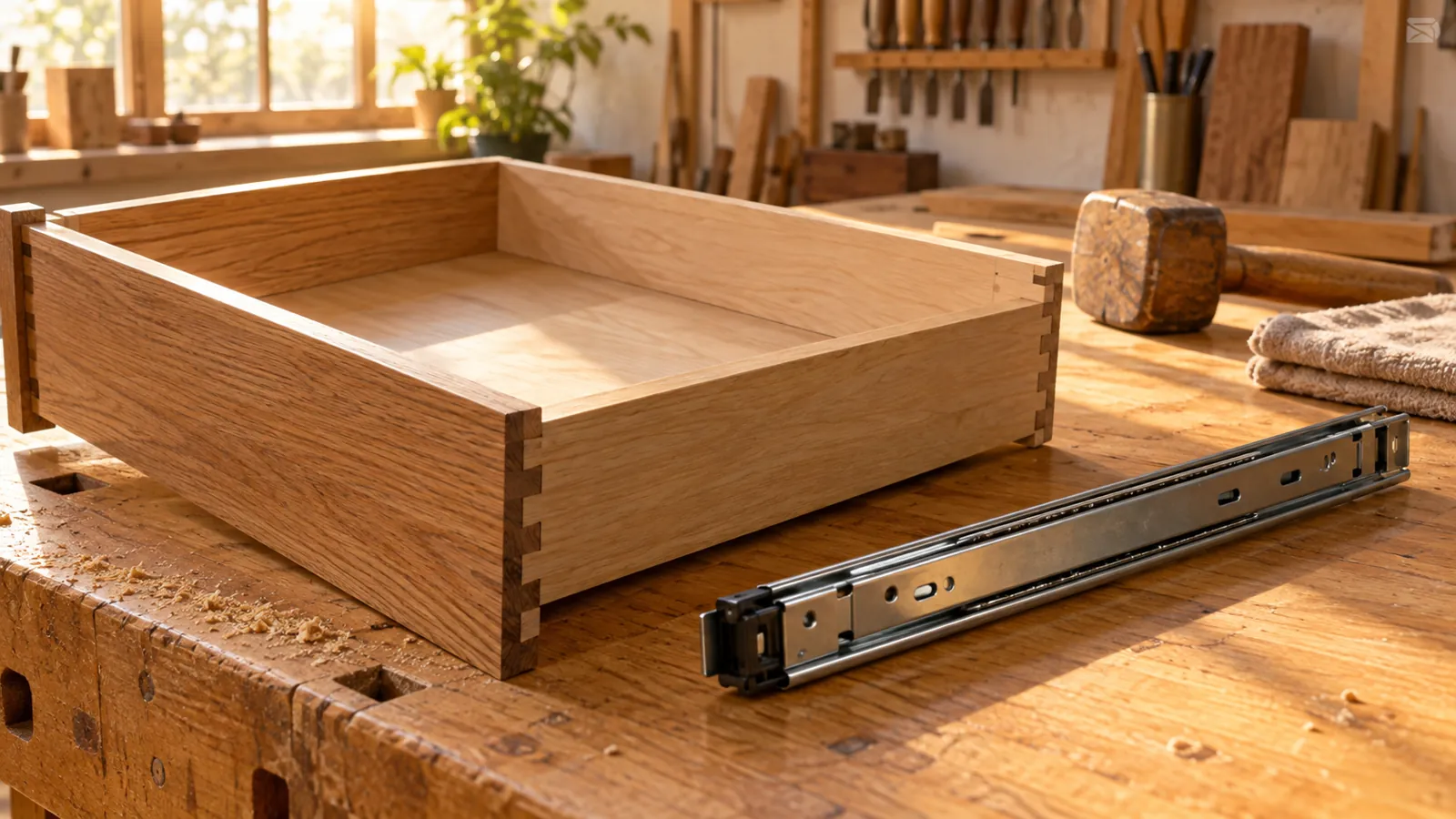
Ask for the runner manufacturer, model, extension type, closing mechanism and approved load information for the complete drawer arrangement. The phrase soft close does not supply all those answers.
Blum's MOVENTO page describes a concealed full-extension runner, its BLUMOTION soft-close mechanism and load-capacity characteristics separately. It is a useful example of distinct specifications, not evidence that a particular chest uses that system.
Our recommendation is to request the exact component code and the maker's documentation for the proposed design. Ask the furniture supplier whether a stated load includes the drawer's own weight, what installation conditions apply and what contents the finished drawer is intended to carry.
Do not transfer a headline load rating from a US product-family page to a different runner or an entire cabinet. Nor should a component's reputation replace checking the drawer box, base, fixing and installation specified for your commission.
At handover, ask the installer to demonstrate each drawer according to the manufacturer's instructions. Do not conduct an improvised overload test.
Which construction details belong in the brief?
Specify the cabinet, drawer boxes, bottoms, backs, fronts, finish and handles as separate components. That is more useful than asking for premium wood and hoping everyone imagines the same thing.
Our solid-wood versus veneer guide is background reading for the material conversation. The actual quotation should still identify what is being used where, rather than relying on the article to specify your furniture.
Ask for a finish sample and a handle sample where practical. Confirm how the finish will be cleaned, whether internal surfaces have separate instructions and how a damaged front or failed runner would be assessed.
If you want handle-free fronts, ask for the exact opening mechanism and a demonstration. If you want projecting handles, include them in the clearance drawing. An uncluttered photograph does not tell you how a drawer feels in everyday use.
Does the chest need securing to the wall?
Plan appropriate wall anchoring rather than assuming the chest is safe because it feels heavy. Consumer Reports recommends properly anchoring dressers and other furniture to reduce tip-over risk.
The same guidance treats drywall, plaster and masonry differently, and advises professional help for masonry when the installer lacks the required skill. Those are US consumer-safety recommendations, not a description of your Mumbai wall or a statement of Indian building regulations.

Have a competent installer assess the actual wall, furniture attachment points, skirting and any concealed services, then select a method consistent with the furniture and fixing manufacturers' instructions. This article does not specify a screw, plug, adhesive or drilling position.
If the home is rented, resolve permission and the installation plan before ordering. Do not treat uncertainty about permission as a reason to omit a required safety measure. Ask the supplier for a suitable alternative if the proposed location cannot accommodate the installation requirements.
What makes a useful custom-furniture handover?
A useful handover checks the finished piece against the agreed brief and leaves you with usable care and component records. Our suggested acceptance record is deliberately more specific than looks good.
| Part of the brief | What to review at handover |
|---|---|
| Room fit | Position, door movement, handle projection and access with drawers open |
| Storage | Agreed internal dimensions and organiser fit |
| Operation | Each drawer demonstrated without binding or unwanted interference |
| Components | Runner and opening-system references match the agreed specification |
| Installation | Required anchoring completed and explained by the installer |
| Aftercare | Care sheet, service contact and component information handed over |
This is a proposed buyer checklist, not a claim that a particular installation has passed. Agree how any snag will be recorded and resolved rather than adding unapproved tests or tolerances on delivery day.
FCI India's current services page lists bespoke furniture design and manufacturing, as well as design consultation. Those services provide a relevant route for discussing a detailed storage brief; the page does not establish the availability of every hardware system mentioned here.
Limitations
This guide does not assess a wall, certify a cabinet, calculate its load capacity or replace installation instructions. The Blum example is a US-market manufacturer page; the Consumer Reports article is US safety guidance, not Indian law.
No universal room clearance, price, warranty or completion time is promised. Generated images are planning illustrations, not completed FCI commissions, real employees, tested drawer capacities or installation diagrams.

What should you send FCI India?
Send the room plan, a photograph of the intended wall, nearby door positions and a list of what each drawer needs to hold. Include any existing organisers, preferred finish and installation restrictions.
Use FCI India's contact page to turn that information into a bespoke-furniture discussion. Ask for the open-position drawing and hardware schedule with the design, not after the chest has been built.
Sources
- MOVENTO runner system, Blum. Primary manufacturer information; US product-family scope.
- How to Anchor Furniture to Help Prevent Tip-Overs, Consumer Reports. Updated 13 February 2023; consumer-safety guidance, not Indian regulation.
- Bespoke furniture services, FCI India. Current first-party service scope.
- Solid Wood vs Veneer: Look Deeper, FCI India. Related material-planning reading.
- Contact FCI India, FCI India. Bespoke enquiry route.