TL;DR: A sofa bed is a smart Mumbai choice when occasional sleeping matters more than perfect sofa or mattress performance, and the open bed fits without blocking the room.
Key takeaways
- Measure the sofa in both closed and fully open positions.
- Test the exact conversion mechanism with the intended mattress and bedding.
- A sofa bed may compromise seat depth, weight and under-seat storage.
- Guest frequency should decide whether you need a robust sleeper or a simpler occasional option.
- Confirm lift, corridor, doorway and servicing access before commissioning one.
What is a sofa bed?
A sofa bed is seating that converts into a sleeping surface using a fold-out, pull-out or rearranged-cushion mechanism. Common formats include a mattress folded inside the frame, a platform that pulls forward, a back that drops flat, and modular cushions that form a bed.
Those formats behave differently. A concealed mattress can preserve a familiar sofa shape but adds mechanism weight. A click-clack design converts simply but uses the sofa surface as the bed. A pull-out platform needs clear floor space and can expose joins between cushions.
Our judgement is to choose the conversion system before choosing the colour. Upholstery can be changed in a proposal. A frustrating mechanism remains frustrating, just more attractively upholstered.

Is a sofa bed right for a Mumbai apartment?
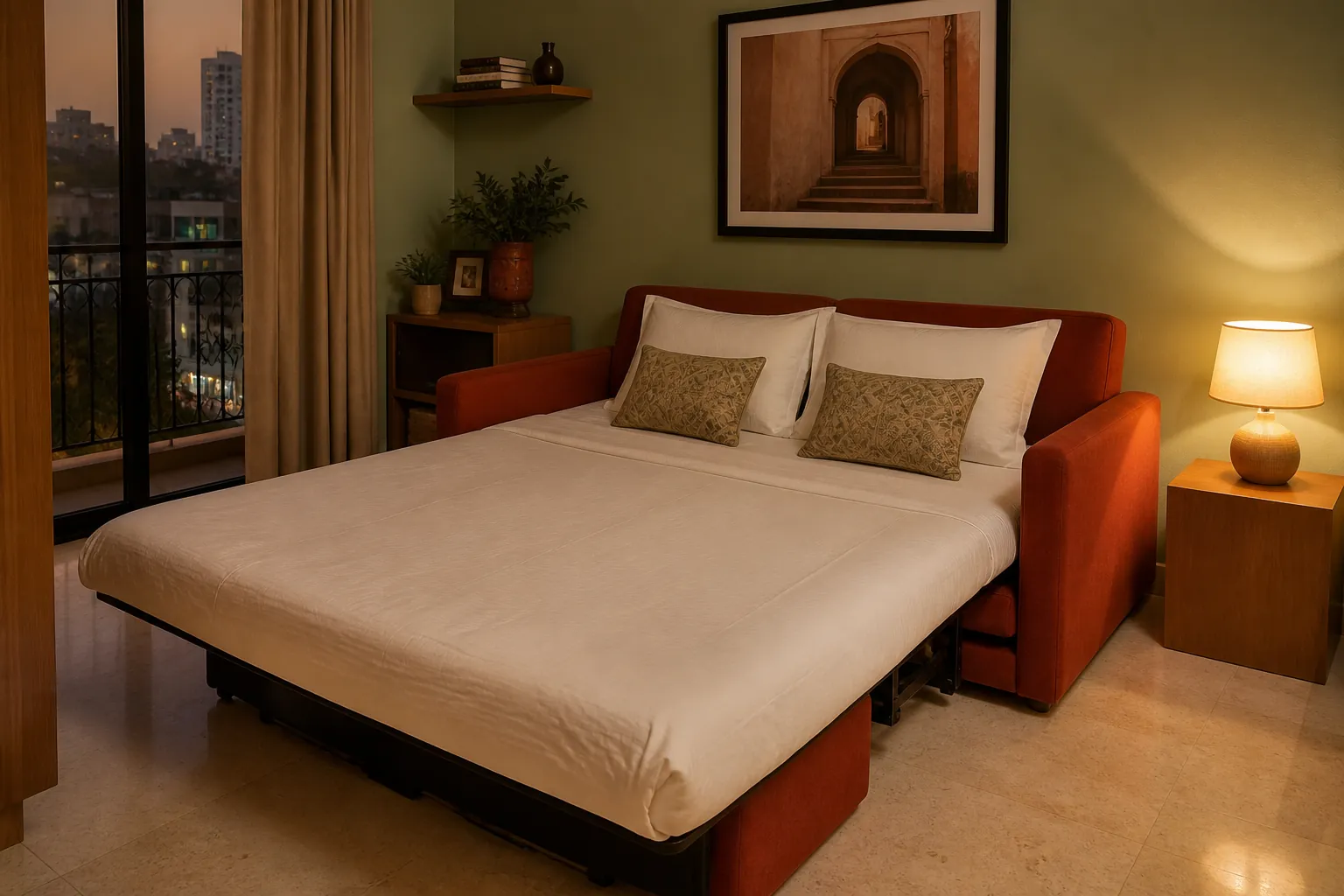
A sofa bed suits a Mumbai apartment when one room must support occasional guests and cannot justify a permanent bed. It is less convincing when someone will sleep on it every night or when opening it blocks the only useful route through the room.
List how often guests stay, for how many nights and who normally uses the sofa. A study used as a guest room has different needs from a living room converted every weekend. If sleeping is frequent, mattress support and ease of operation deserve more weight than compactness.
For a very small room, a daybed, wall bed or conventional sofa plus separate guest arrangement may work better. Multifunctional furniture earns its footprint only when both functions are genuinely usable.
How much floor space does it need?
Measure the fully opened bed, the operating path and the circulation needed around it. Closed sofa dimensions are only half the specification.
Tape the sofa on the floor, then extend the tape to the open-bed outline. Add side tables, curtains, wardrobe doors, desk chairs and the route to the room exit. Check whether bedding can be fitted without moving every other object.
Keep the room usable after conversion. If the opened bed blocks the bathroom route, balcony door or air-conditioning flow, a smaller mechanism or different orientation is needed.
Which mechanism should you choose?
Choose the mechanism by conversion frequency, user effort, stability and serviceability. Test it repeatedly rather than watching one polished demonstration.
Operate the display from fully closed to fully open. Note where hands go, whether parts can pinch, how much lifting is required and whether legs lock into place. Check the floor contact points and ask how they are protected.
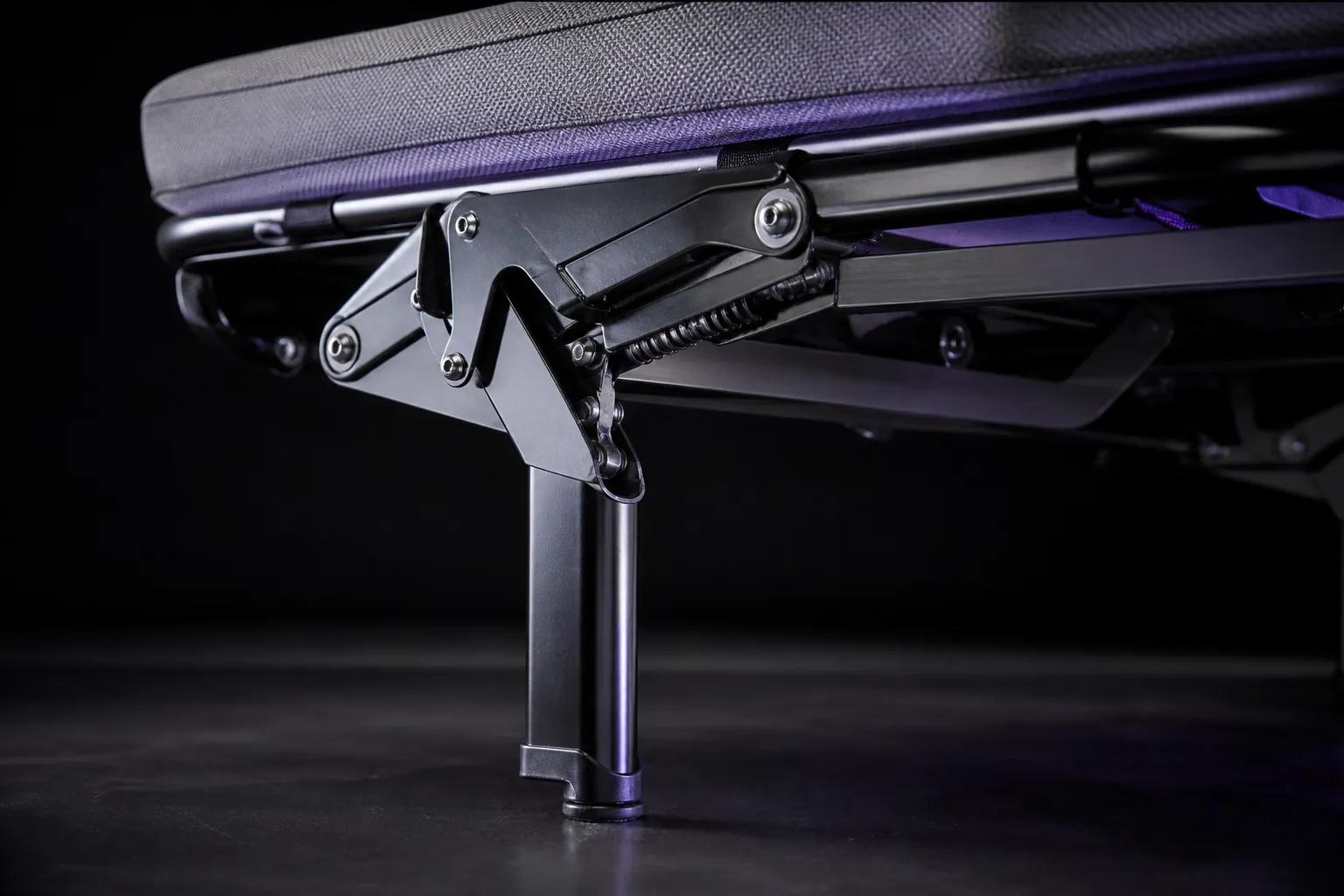
Request the mechanism model, load guidance, operating instructions and replacement-part route. Ask whether it can be serviced without removing fixed upholstery. Keep children clear during conversion and follow the maker's safety instructions.
Is the mattress comfortable enough?
Comfort depends on the sleeping surface, support, joins and the individual user, so the exact model must be tested. A thick-looking cushion is not evidence of an appropriate mattress.
Lie on the opened display in normal sleeping positions. Feel for frame bars, gaps, slopes and hard transitions. Confirm the usable sleeping dimensions and whether standard bedding fits. If a separate mattress is supplied, record its type, depth and permitted replacement range.
Do not add an unapproved thick topper if it must fold inside the mechanism. Extra bulk can obstruct closing or damage the frame. Ask where pillows and bedding will live, because many sofa beds surrender the storage space found beneath a conventional sofa.
Will it still work well as a sofa?
A good sofa bed must remain comfortable and proportionate when closed. Mechanisms can create a deeper seat, higher front rail, firmer base or heavier overall frame.
Test seat height, usable depth, back angle, arm position and cushion movement. Sit near the centre and edges. Check whether the closed mechanism makes noise and whether the sofa can be moved for cleaning without being dragged.
For upholstery choices in local conditions, use FCI India's live Mumbai monsoon sofa fabric guide. The exact fabric composition and maker's care instructions should control, not a generic claim that one cover is monsoon-proof.
How should you choose the upholstery?
Choose upholstery for daily seating first, then verify that repeated conversion does not rub, trap or overstretch it. Ask to inspect the fabric near hinges, moving decks and folding cushions.
Request a physical sample and the technical care information. Consider direct sun, household use, cleaning methods and the likelihood of food or drink in the room. Removable covers can help only when removal and cleaning are genuinely supported by the product design.
If the sofa is custom, approve seam positions on an elevation. A seam placed across a frequently folded edge may age differently from one on a fixed panel.
Will it fit through a Mumbai building?
A sofa bed is often heavier and less easily dismantled than a conventional sofa of similar width. The mechanism can prevent arms, backs or bases from separating.
Request packed dimensions, component weights and authorised disassembly instructions. Measure the service lift door and cabin, corridor turns, apartment entrance and final room doorway. Check the route for ceiling restrictions and tight landings.
FCI India's Mumbai furniture delivery access survey gives a practical route-measurement sequence. Apply it to the largest rigid component, not the attractive finished silhouette.
What should a custom sofa bed brief include?
A custom brief should define both modes, the mechanism, sleeping surface, upholstery, access and handover test. Include:
- closed, open and packed dimensions;
- intended seating and guest use;
- mechanism model and operating instructions;
- sleeping surface and mattress specification;
- upholstery composition, sample and care code;
- bedding storage plan;
- component weights and delivery route;
- conversion, alignment and noise checks at handover;
- warranty, servicing and replacement parts.
Take the taped room plan, guest pattern and access measurements to FCI India's custom furniture Mumbai service. Ask to test the proposed mechanism or an equivalent working sample before approval.

What are the limitations of this guide?
This guide cannot confirm the comfort, load capacity, safety or durability of a particular sofa bed. Mechanisms, mattresses, fabrics, rooms and users vary. Product documentation and a site survey are required.
For daily sleeping, accessibility needs or back and mobility concerns, seek appropriate product and professional advice rather than relying on a general buying guide.