TL;DR: For bespoke veneer furniture in Mumbai, specify the grain-matching method and its position across the whole piece, not just the wood name and colour.
Key takeaways
- Book matching turns consecutive veneer leaves over to create mirrored pairs.
- Slip matching places successive leaves alongside one another to repeat the grain.
- A small finish sample does not specify the pattern across multiple doors or drawers.
- Record the intended grain arrangement on the approved furniture drawings.
What does veneer matching mean?
Veneer matching is the arrangement of individual wood veneer leaves to create the visible pattern. It is a design decision separate from choosing the species, stain or sheen.
The Timber Veneer Association of Australia's guide explains several joining methods, including book, slip and random matching. The same named wood can therefore create different compositions depending on how its leaves are arranged.
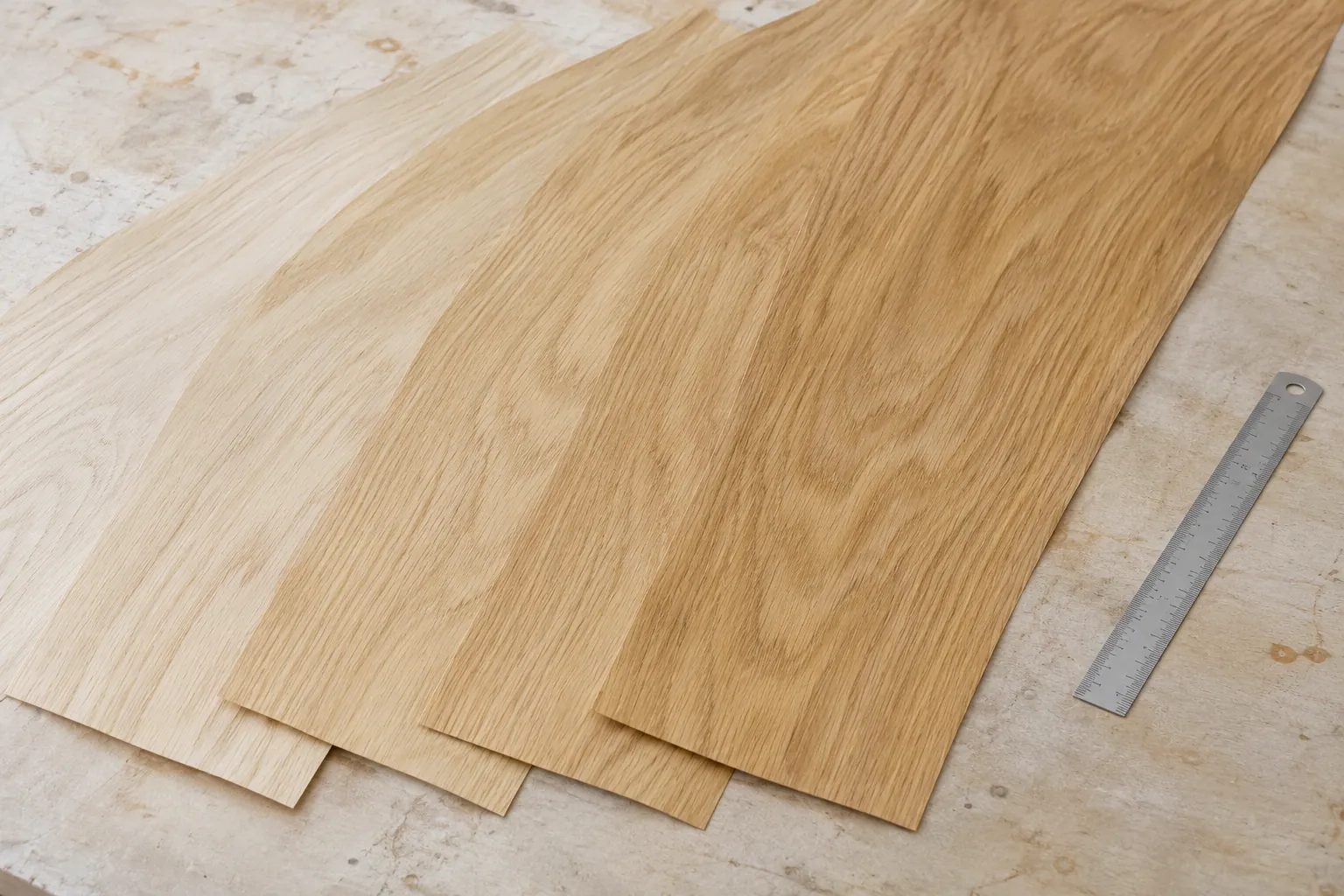
For a Mumbai commission, our recommendation is to discuss the face of the whole cabinet or table before approving a small square of material. A sample can help establish a finish, but it cannot stand in for the entire grain layout. Wood has not agreed to become a flat paint chart.
How do book and slip matching differ?
Book matching creates mirrored pairs, while slip matching repeats the grain with successive leaves placed alongside one another. The association describes book-matched leaves as turning like the pages of a book, and slip-matched leaves as being moved beside one another without that alternating turn.
Our design judgement is to compare the methods against the proportions of the intended piece. A central mirrored pattern can suit a symmetrical composition; repeated vertical grain can serve a different, quieter brief. Neither is automatically the more luxurious choice.
Ask the maker to explain where the joins will fall. On a cabinet, review the pattern across the complete front rather than approving each door in isolation.
What should the drawings show?
The drawings should show the grain direction, matching approach and any intended continuation between adjacent components. These are proposed specification checks, not a claim that every workshop uses the same drawing convention.
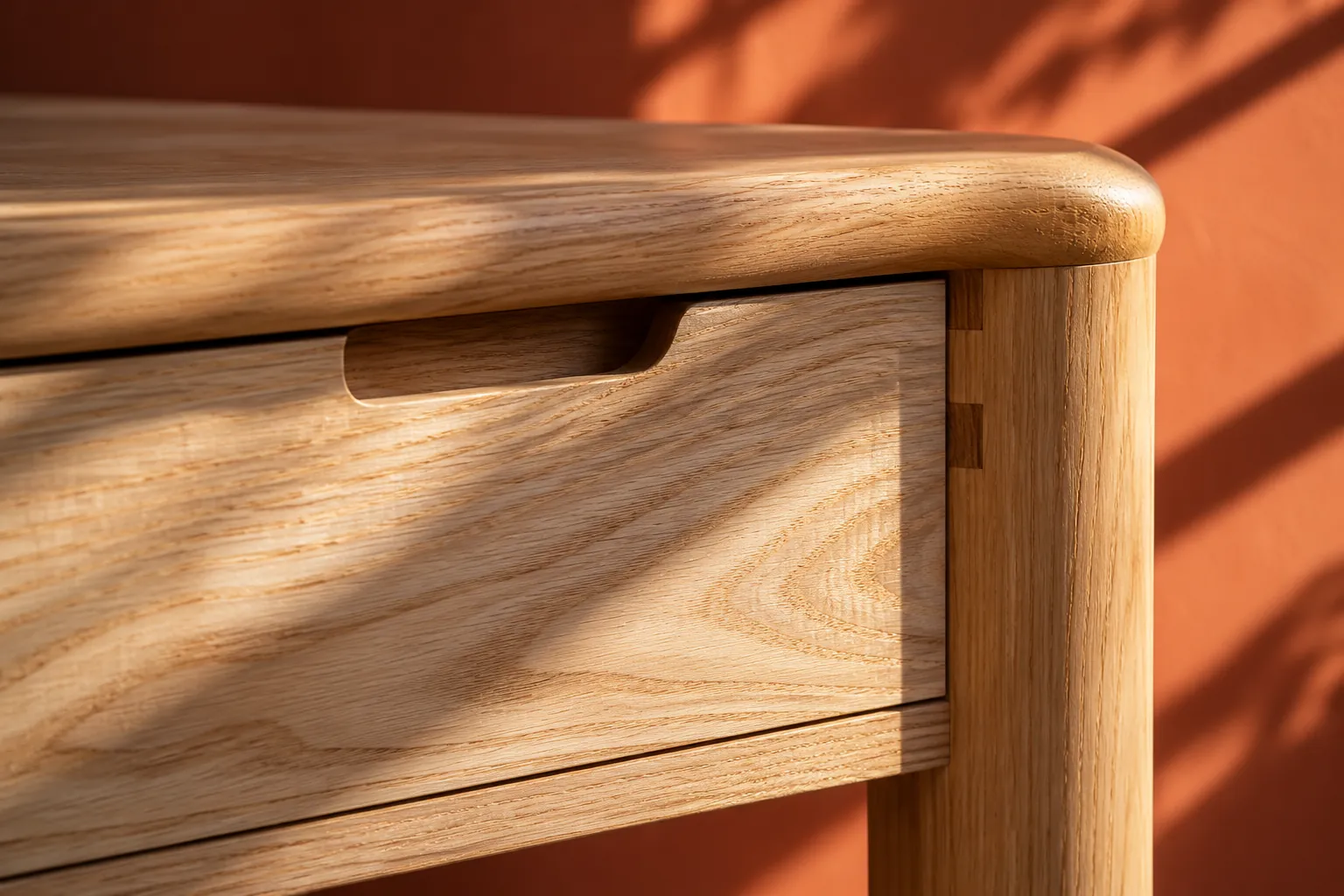
For a sideboard, ask whether the grain continues across the drawer and door fronts. For a long tabletop, ask how the composition is centred. For a wardrobe, identify whether the design repeats within each door or across a run of doors.
Include exposed ends, plinths and visible edges in the discussion. A face view alone can leave the side of a freestanding piece undecided.
FCI India's published bespoke process describes physical material samples, detailed drawings and approval before production. Use that consultation stage to ask how the proposed veneer layout would be recorded for your piece.
How should you review the material sample?
Review the proposed finish and the intended grain arrangement as related but distinct approvals. Ask which questions the physical sample answers and which require a larger layout or drawing.
Our recommendation is to view the finished sample upright and horizontally where relevant, under the room's planned daylight and artificial lighting. Compare it with the actual flooring, upholstery and metal finishes rather than relying only on a phone photograph.
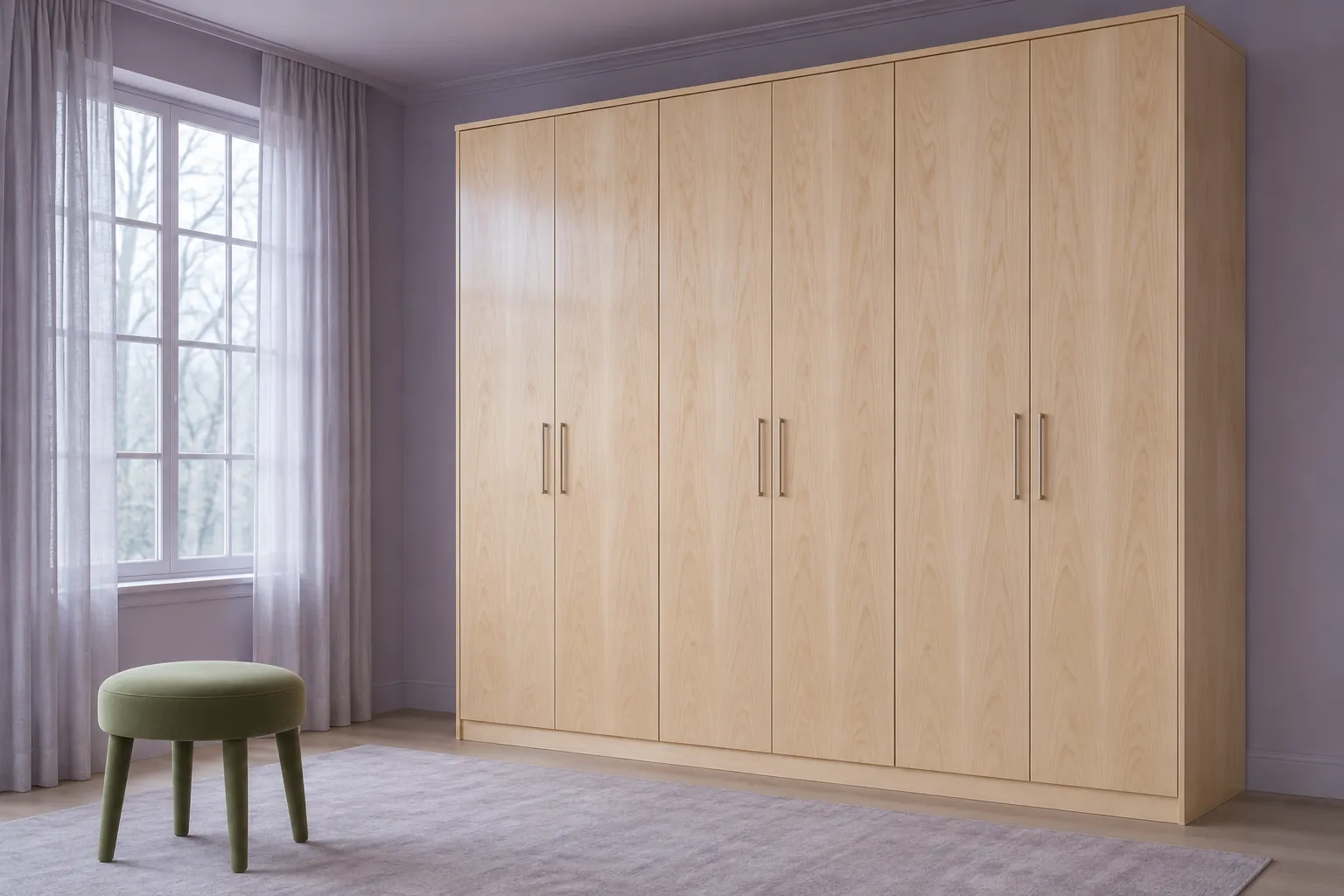
Record the sample reference alongside the drawing revision. If the design later changes from a symmetrical cabinet to an uneven drawer arrangement, ask whether the veneer composition also needs to change. A revised silhouette should not inherit an old grain plan by accident.
What matters for a Mumbai project handover?
A useful handover connects the approved appearance to the installed piece and its care instructions. Photograph the whole front and visible sides at the final review, and keep the agreed drawings and material references together.
For an apartment project, coordinate that review with the designer or person accepting delivery. The practical objective is one agreed reference for the furniture, not several competing photographs circulating between the client, site team and workshop.
FCI India's process includes final inspection against approved drawings and a care discussion at installation. Ask how those steps will cover the veneer and finish on your commission rather than assuming a generic care routine is suitable.
Limitations
This article explains appearance and specification decisions. It does not establish substrate quality, bonding performance, moisture resistance, durability, price or lead time. Grain matching alone is not a complete quality assessment, and the images are illustrative rather than examples of completed FCI India work.

How do you begin a veneer furniture brief?
Bring a room photograph, the proposed furniture dimensions and a reference for the grain arrangement you like to FCI India's project consultation. Ask for the matching approach, finish and approval references to be linked in the specification.