TL;DR: Plan a storage ottoman in Mumbai around what it must hold, how its lid opens and whether its main job is storage, a footrest or occasional seating.
Key takeaways
- Specify the usable internal compartment, not just the ottoman's outside dimensions.
- Choose between a removable lid and a hinged opening before finalising the room layout.
- Seating suitability, hardware and permissible loads need explicit confirmation for the commissioned piece.
- Agree fabric care and access to the lid mechanism before approving upholstery details.
- A custom furniture brief should show the ottoman both closed and open.
Is a storage ottoman right for your room?
A storage ottoman is worth considering when it gives specific belongings a home without compromising the room's main activity. It is not automatically the best use of every spare patch of floor.
For a Mumbai living room, our first recommendation is to name the items that otherwise lack a place. Throws, a small collection of games or occasional cushions produce different requirements from a vague request for “extra storage”.
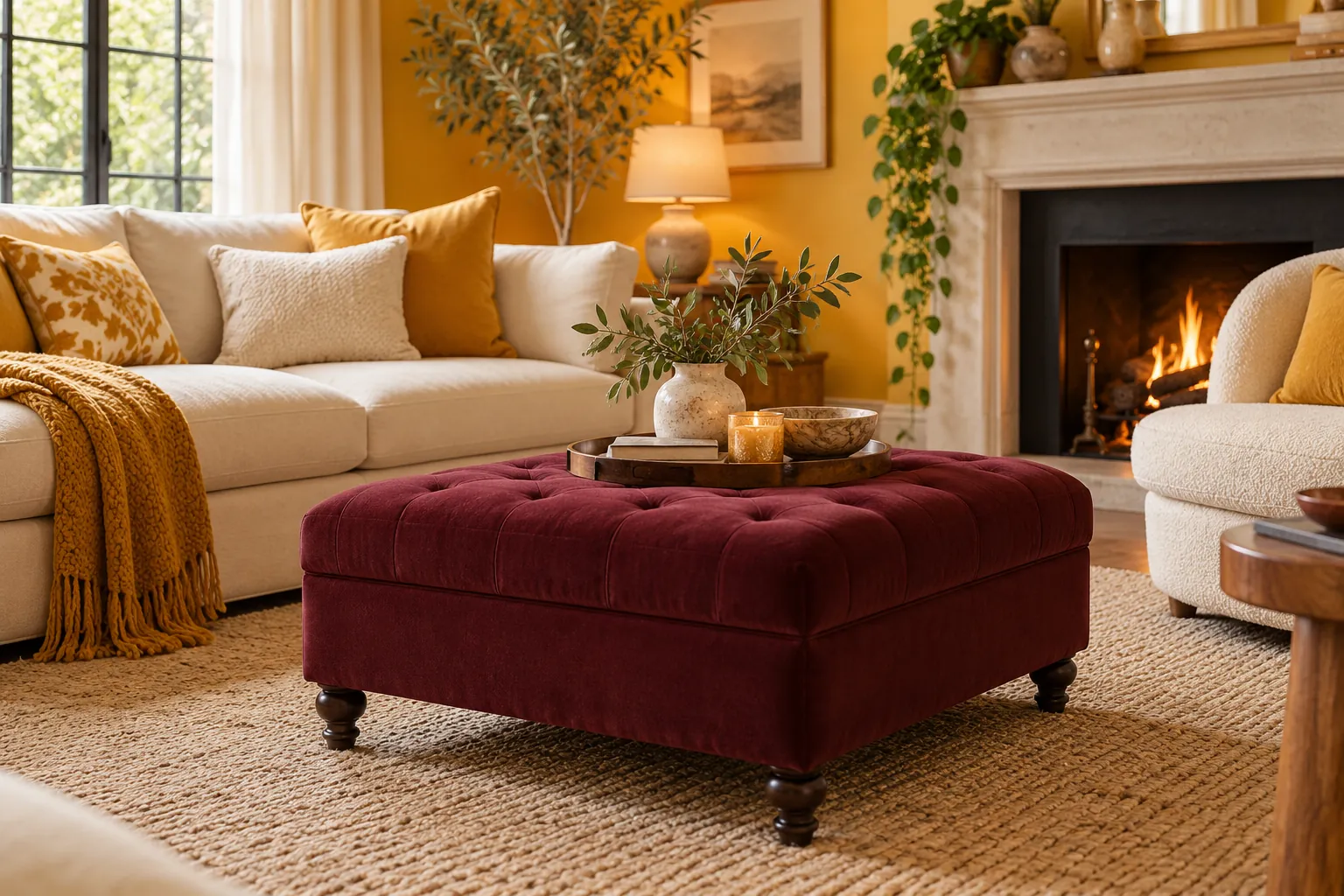
Then choose the primary job. A footrest needs to work with the actual sofa. Occasional seating requires the maker to design and confirm the piece for that use. Storage needs an opening you will genuinely bother to use.
Three jobs can share a piece of furniture. They should not share one unexamined assumption.
FCI India describes bespoke furniture, upholstery and interior design made around individual specifications. A useful enquiry therefore starts with your room and contents, not a demand to copy the outside of an unrelated product.
How much storage will you actually get?
Usable storage is the clear internal space available after allowing for the frame, upholstery, lid and hardware. Ask for those internal dimensions on the drawing rather than estimating capacity from the exterior.
Lay out the intended contents before discussing the design. Fold the throws as you normally store them and note the size of the largest item. Ask the maker to show any partitions, pockets or internal projections that affect access.
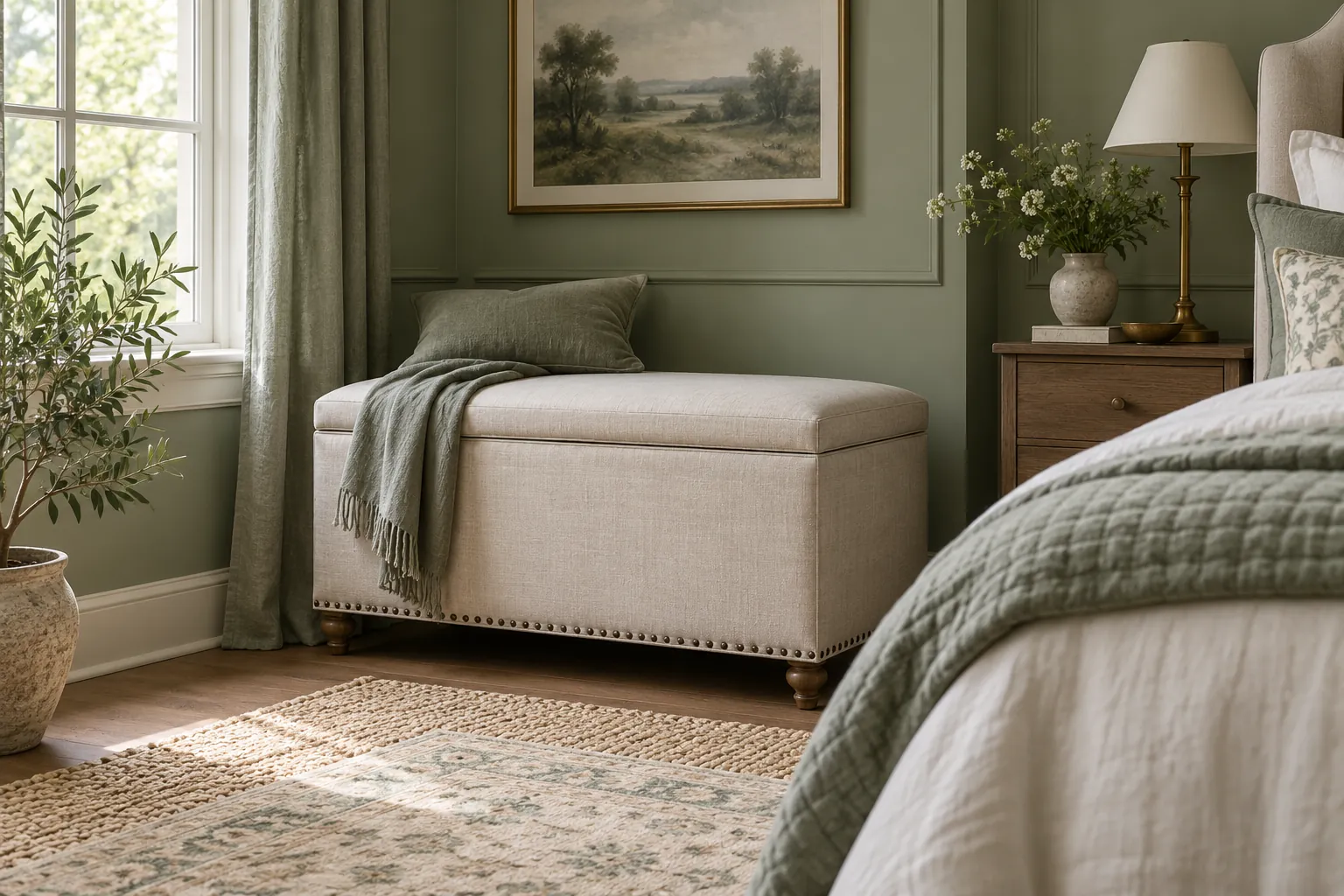
Pockets are a separate design decision, not a synonym for a large compartment. As one published example, IKEA describes storage space with pockets inside its SIDSJÖ pouf. That is a feature of that product, not a specification for an FCI commission or a claim about Indian availability.
Our judgement is to design for the things you want to retrieve most often. An impressive internal volume is less useful if the everyday item ends up beneath everything else.
Should the lid lift off or stay attached?
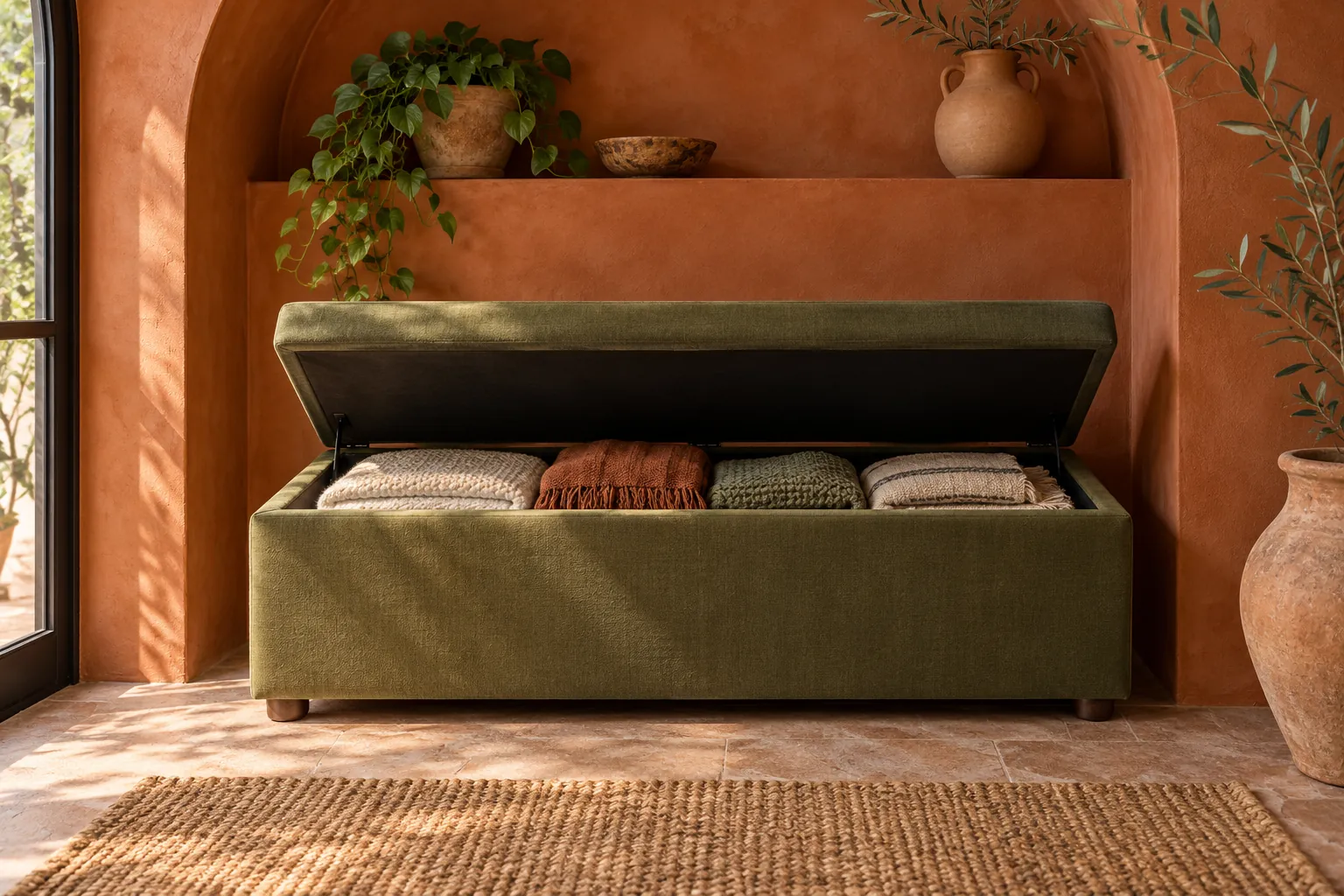
Choose the opening method by testing where the lid and the person using it will go. A lift-off lid needs somewhere suitable to rest, while a hinged lid needs room to travel and a correctly specified mechanism.
For a piece placed close to a sofa or bed, request a drawing of its fully open position. Include nearby cushions, curtains and tables in that check. Do not assume that an opening demonstrated in an empty workshop will be equally convenient in the finished room.
Ask the maker to explain how the lid is supported, how it closes and how the hardware is accessed for maintenance. Where children may use the room, discuss the design and its safety requirements explicitly with the maker; a general-purpose ottoman should not be assumed to be a suitable toy chest.
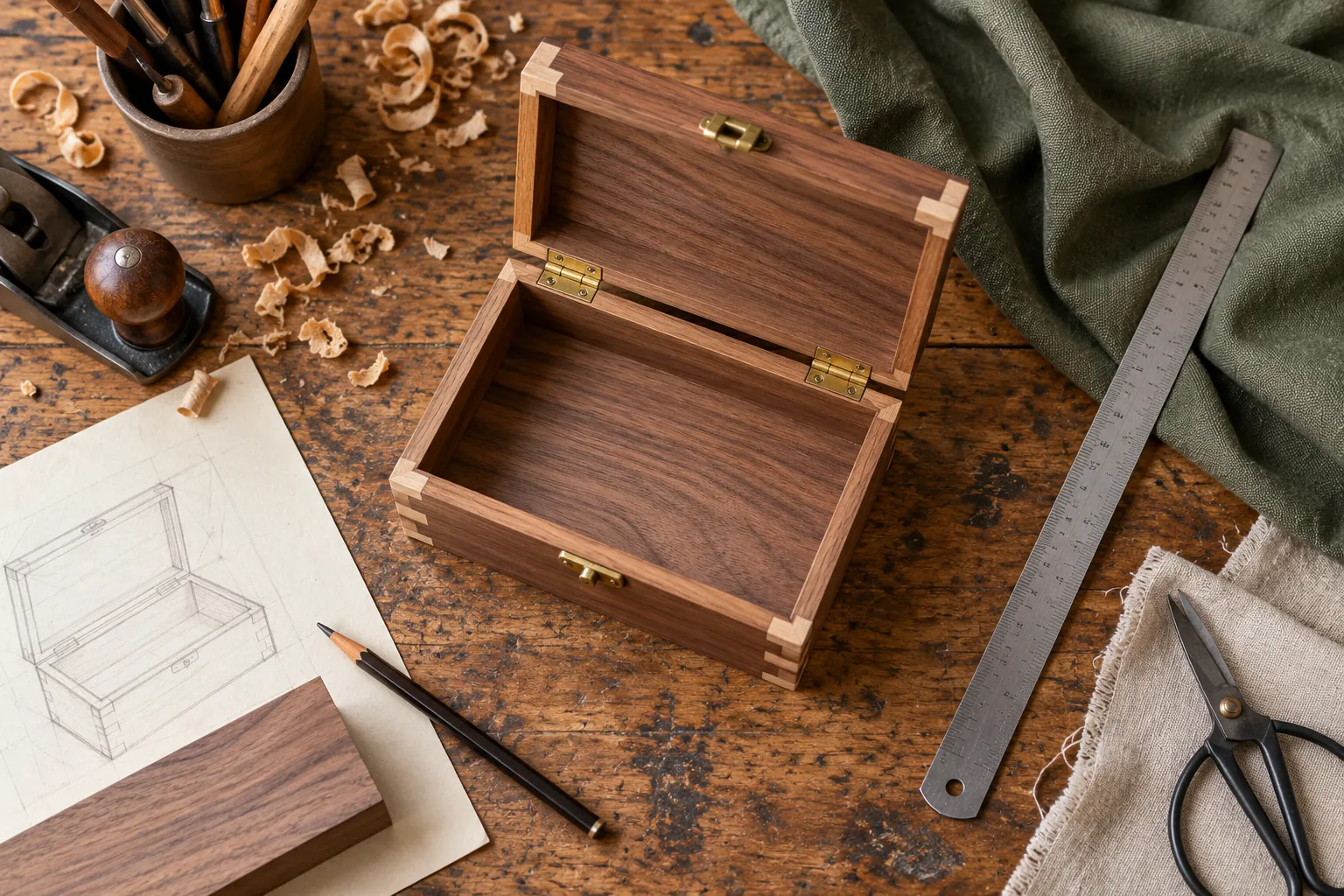
Hardware selection and safety assessment belong to the maker. This is not a guide to improvising hinges or fitting a lifting mechanism yourself.
Can a storage ottoman double as a seat?
Only treat the ottoman as seating if the commissioned design is specified and confirmed for that purpose. An upholstered lid alone is not evidence of a suitable seat or an agreed load capacity.
If occasional seating matters, include that use in the initial brief, together with the expected users and where the piece will sit. Ask the maker to specify the supporting structure, intended load and care requirements.
If the main use is as a footrest, test its height and distance against the finished sofa rather than copying the height of another piece. For a tray or drinks, discuss surface stability and the actual arrangement instead of assuming soft upholstery behaves like a coffee table.
Where seating is the primary requirement, compare whether a dedicated seat would serve you better. Our guide to planning banquette seating in Mumbai takes a different approach to a different furniture job.
Which upholstery details should you agree?
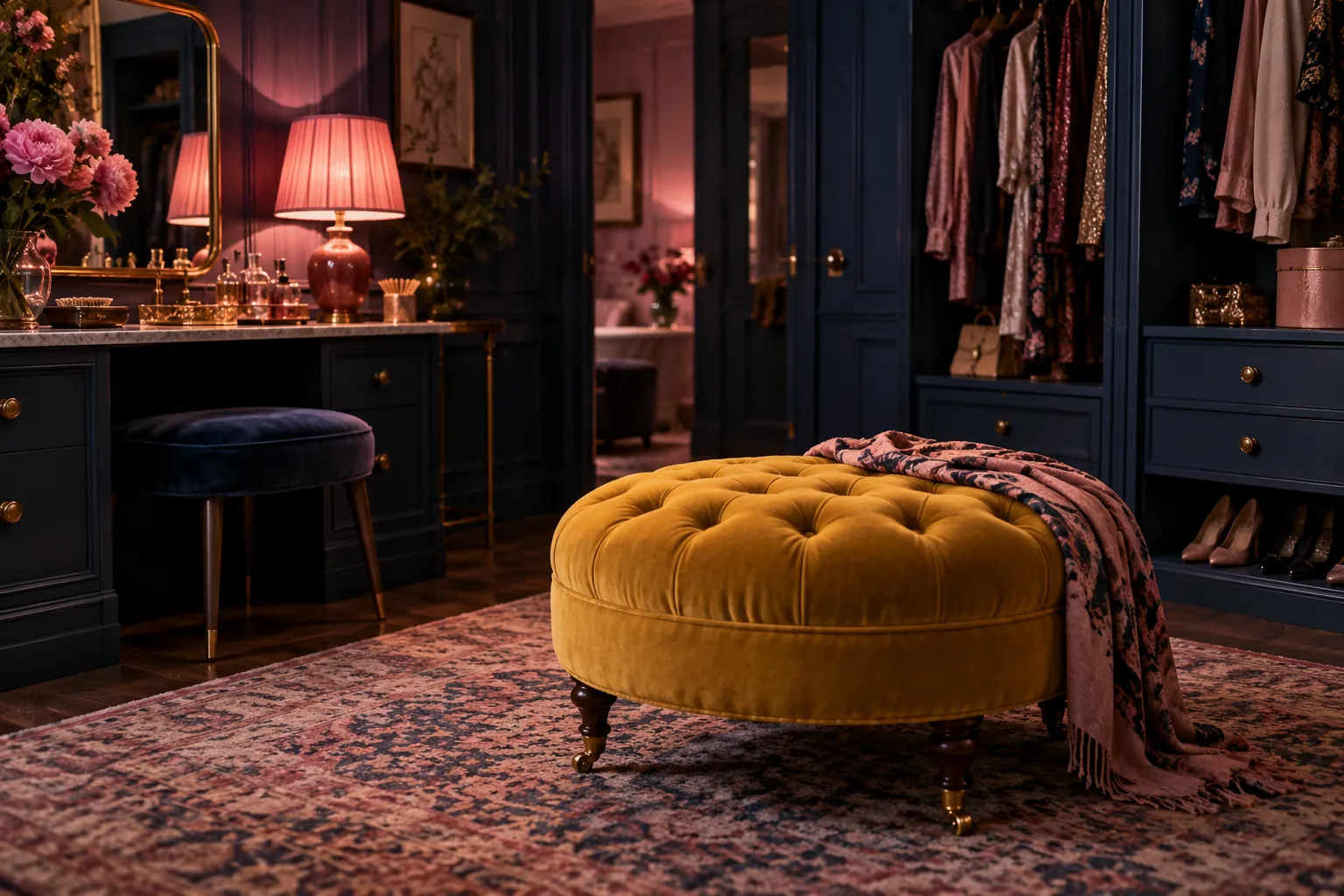
Agree the fabric reference, cleaning instructions, seam positions and access to serviceable components before production. An attractive sample should come with a practical plan for using and maintaining the finished piece.
For a family room, our recommendation is to discuss likely contact and handling with the upholsterer. If a removable cover matters, specify it explicitly and request the relevant care instructions. Do not assume that a zip automatically means machine washing is permitted.
Review handles, piping and any buttoning as part of the opening test. A detail that looks elegant from the front should not make routine access awkward.
Limitations
These are design-brief recommendations, not engineering instructions, tested load ratings or a promise of storage performance. The maker must confirm construction, hardware and suitability for the agreed uses. Prices, lead times and available finishes require a current quotation. Images illustrate concepts rather than completed FCI India commissions.
What should you send to the maker?
Send a measured room plan, photographs, an inventory of contents and the intended primary use when you enquire with FCI India. Request a drawing showing the usable compartment, closed footprint and open lid before approving the finish.
The best storage ottoman is not the one that promises to swallow everything. It is the one that makes the right things straightforward to put away and take out again.