TL;DR: A solid wood table for a Mumbai home needs a specification that accounts for moisture-related timber movement, not merely a preferred species and finish.
Key takeaways
- Wood exchanges moisture with surrounding air as conditions change.
- Protective coatings can slow moisture changes but do not prevent them.
- The connection between a solid tabletop and its base deserves a technical review.
- A Mumbai commission should describe the actual room conditions rather than rely on a city-wide assumption.
What should a solid wood table Mumbai brief say?
A solid wood table Mumbai brief should identify the construction, intended room conditions and movement provisions alongside the design.
Start with what solid wood means in the quotation. Ask which parts are solid timber, whether the top is made from joined boards and what materials form the base. Do not assume that a product name describes every component.
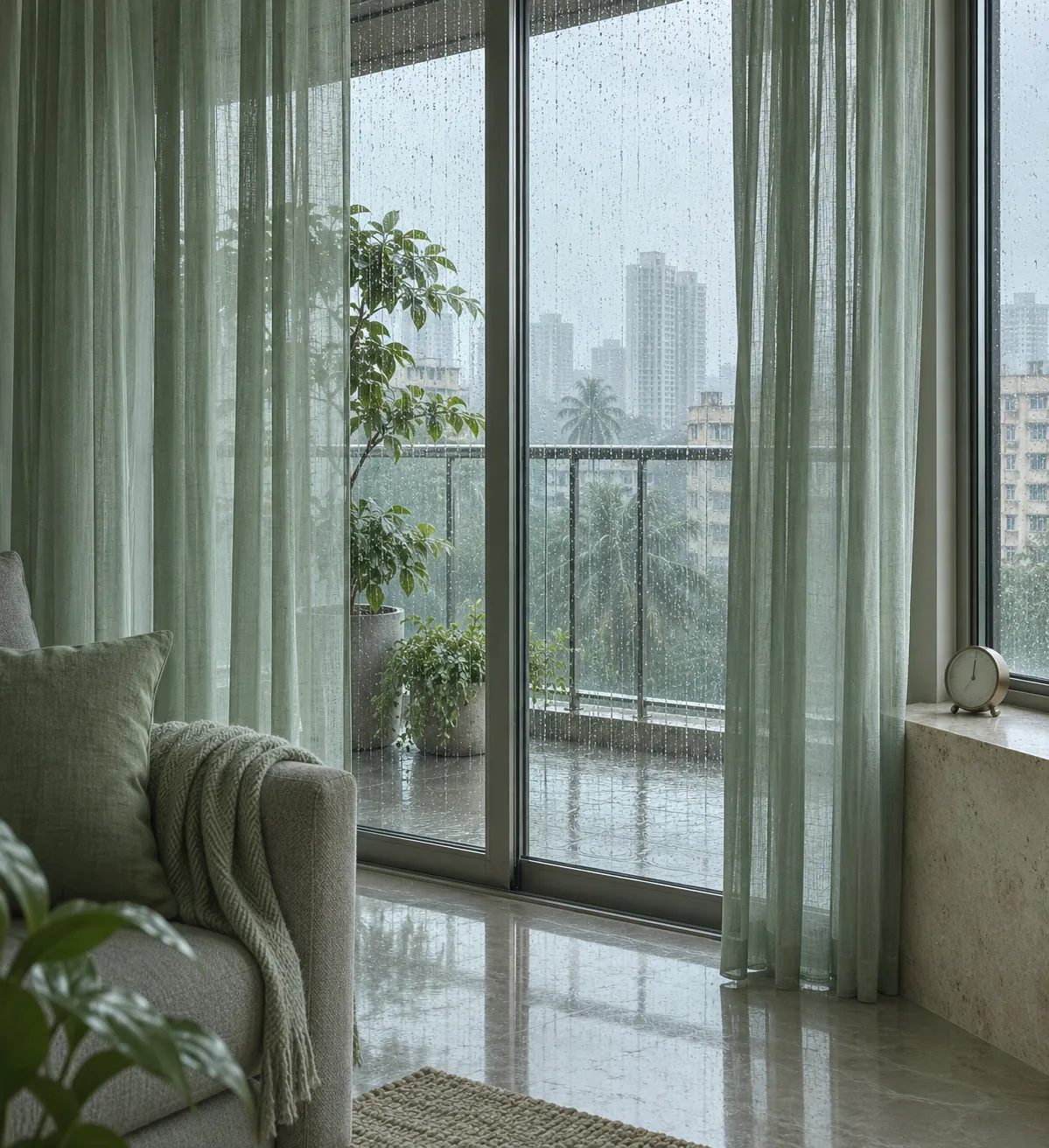
Next, explain where the table will live. Is it in a room used with air conditioning, near frequently opened balcony doors or in a space that will remain unfinished until handover? These are project questions, not measurements of your indoor humidity.
Our procurement judgement is straightforward: ask about the underside before falling in love with the top. It is less photogenic, but it has work to do.
Why does solid timber change size?
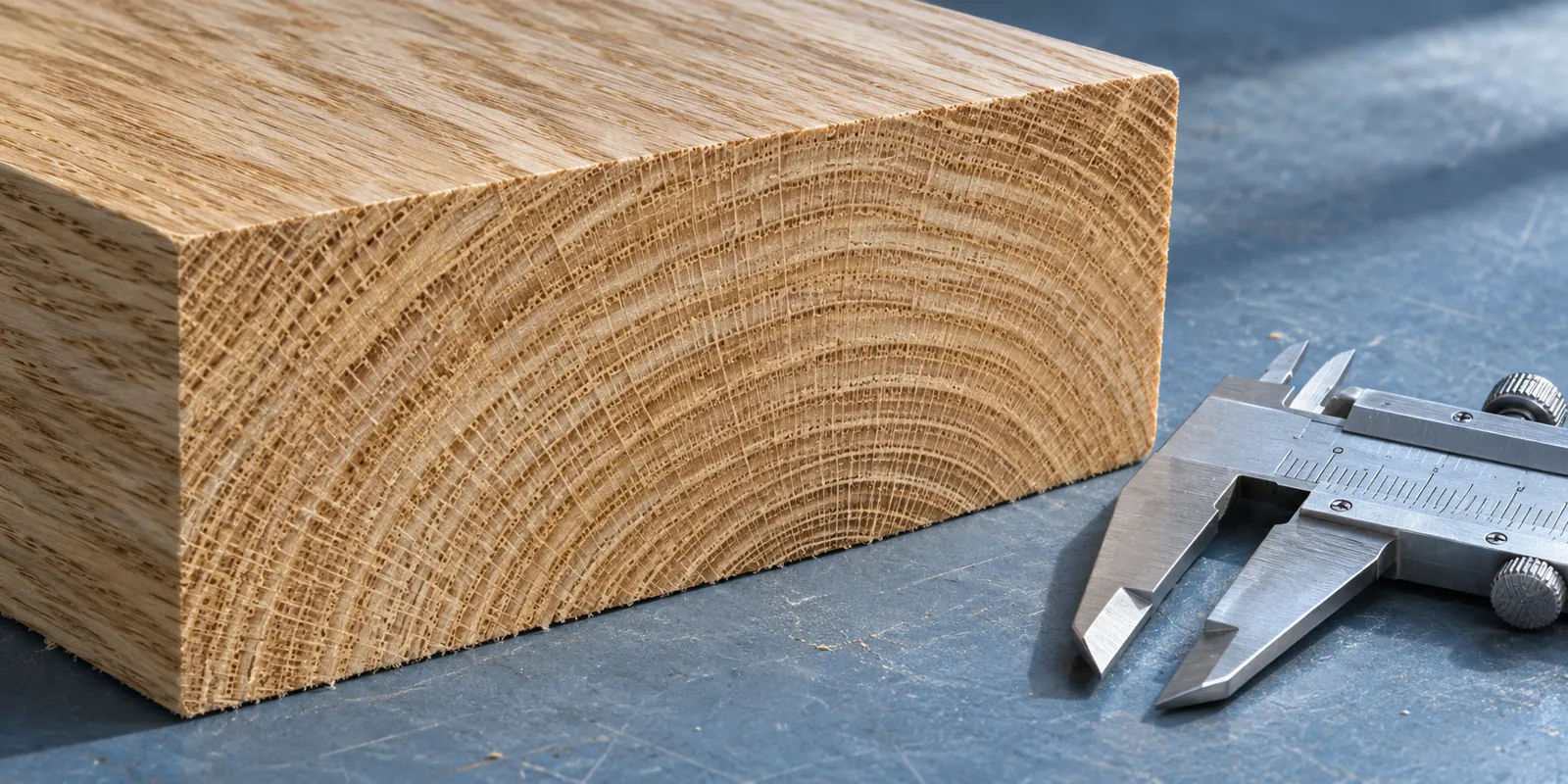
Solid timber changes dimension as its moisture content changes, with the behaviour depending on the wood and its orientation.
The USDA Forest Service's Wood Handbook explains that wood in service experiences seasonal and daily changes in surrounding humidity and temperature. Those conditions induce changes in wood moisture content, usually gradually. Its discussion of shrinkage also distinguishes wood directions and species. Read the Wood Handbook chapter.
That evidence does not supply a single movement allowance for every Mumbai table. The actual species, board arrangement, dimensions and service conditions matter. Ask the maker how these inputs inform the design instead of adopting a number from an unrelated project.
Avoid treating kiln drying as a promise that timber will never respond to its surroundings. Drying and in-service behaviour are related subjects, not interchangeable guarantees. The handbook describes drying's objective as bringing moisture content close to the expected condition in service.
Does a lacquer finish stop wood movement?
No, a protective coating can slow moisture-content changes but cannot prevent them, according to the USDA Wood Handbook.
The chapter explicitly includes varnish, lacquer and paint among such coatings. A polished surface therefore does not remove the need for suitable construction. See the handbook's wood-moisture discussion.
Choose the finish for the agreed appearance and maintenance requirements, then ask the maker to explain the structural approach separately. Gloss level is not an engineering strategy.
If comparing solid timber with a veneered construction, keep the discussions distinct. The veneer matching guide covers grain appearance; it does not make the two constructions equivalent.
What should you ask about tabletop fixings?
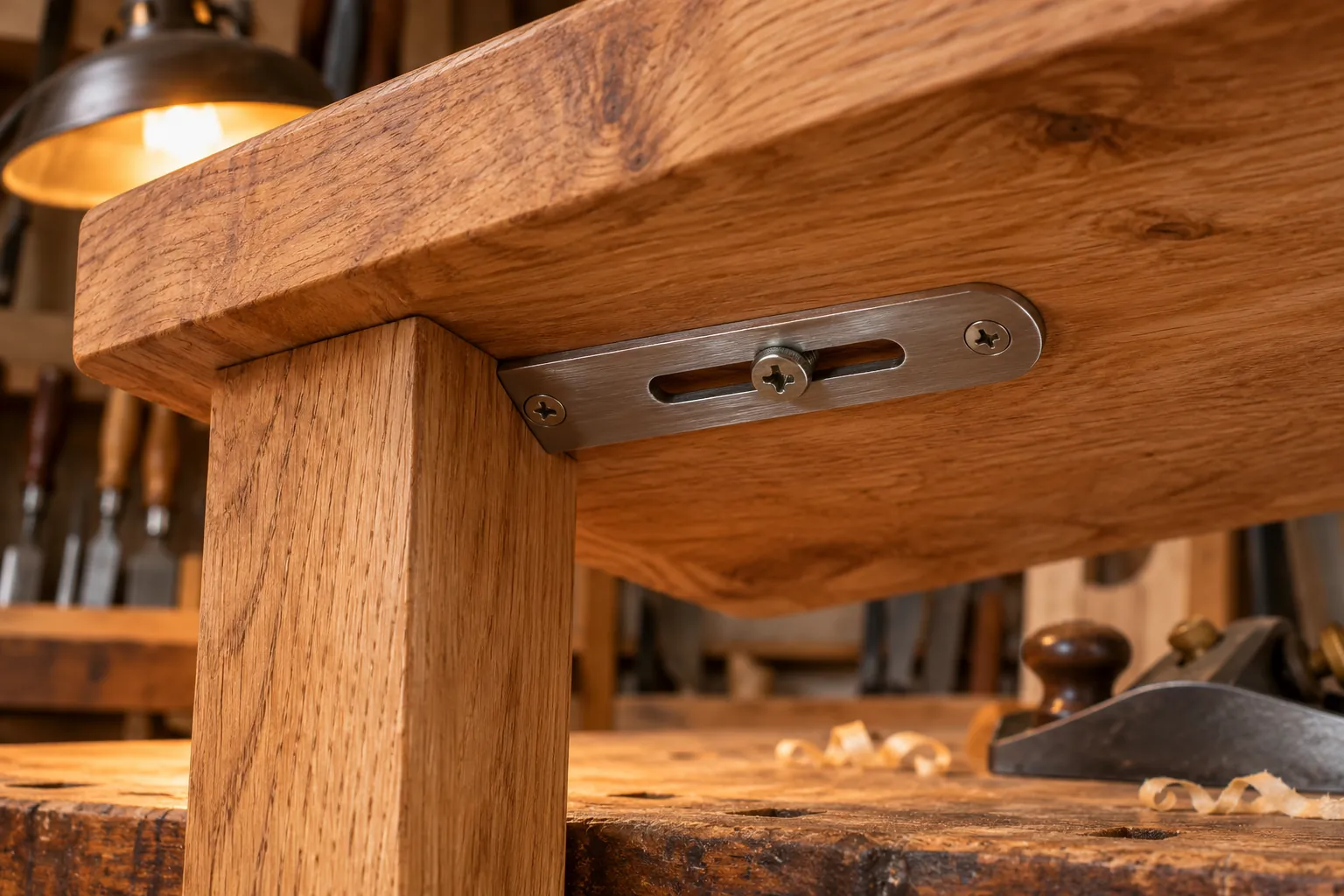
Ask how the tabletop connects to its base while accommodating the movement expected in that design.
Ask the maker to explain how the proposed attachment relates to the chosen timber and room conditions. The USDA Wood Handbook provides the materials background, not a fixing schedule for your commission.
For a bespoke commission, request a relevant drawing or explanation from the maker. Ask which details are intentional and which changes would require a revised design. Do not add brackets, tighten unfamiliar mechanisms or immobilise a top based on a general blog article.
The useful output is a maker-approved construction detail tied to your chosen table, not a collection of hardware screenshots.
What should be agreed before manufacture?
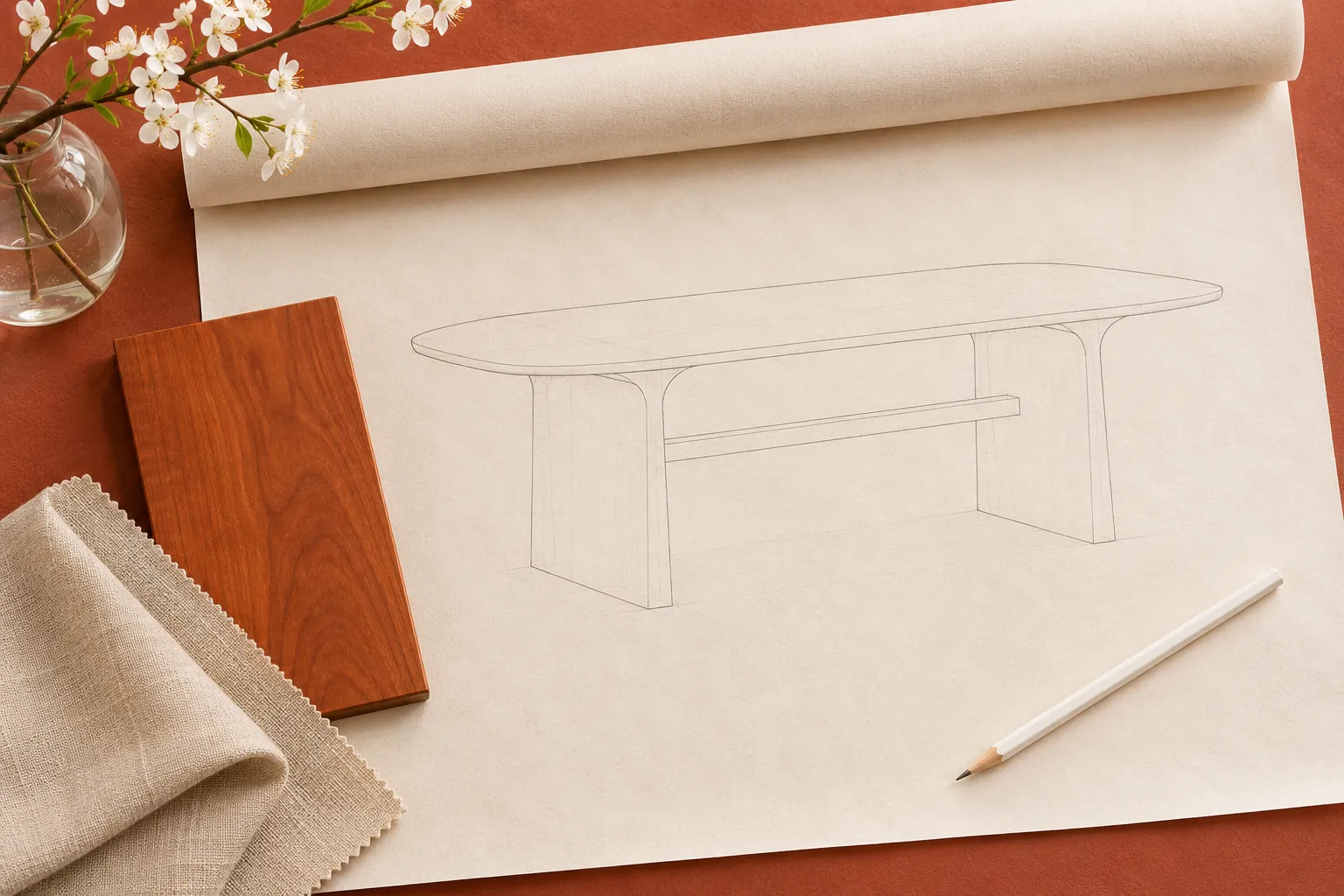
Agree the material schedule, dimensions, finish sample, construction approach and care instructions before manufacture.
Ask how the maker wants the room prepared for delivery and what information they need about its normal use. Record any environmental or maintenance conditions attached to the warranty. Avoid writing a universal humidity target into the order without product-specific guidance.
FCI India describes bespoke furniture manufacture in Mumbai and technical support for architectural practices. Explore its furniture services and bring your table brief to the team with a room plan, material preferences and questions about the top-to-base connection.
Limitations
This article explains a materials principle and a specification process. It does not measure conditions in your home, calculate movement for a particular timber or approve a structural detail. The maker must establish suitable construction for the actual commission.