TL;DR: Design a bedside table in Mumbai around the finished mattress height, what you need to reach from bed, and the space required for drawers, switches and daily movement.
Key takeaways
- Measure the bed with its final mattress before agreeing the bedside table height.
- List the objects that need a place on top and inside the cabinet.
- Test drawers with the bed, wardrobe and bedroom door in their real positions.
- Coordinate lamps, sockets and charging leads before releasing a custom drawing.
- Two sides of a bed can have different storage requirements without abandoning a coherent design.
How high should a bedside table be?
Set the height by testing it beside the finished bed, rather than copying a standard dimension. Include the mattress, topper and any part of the frame that affects the reach.
Our recommendation for a Mumbai custom commission is to make a simple height mock-up and try the ordinary actions: setting down a glass, finding your spectacles and reaching the lamp switch. Record the height that works for the person using that side.
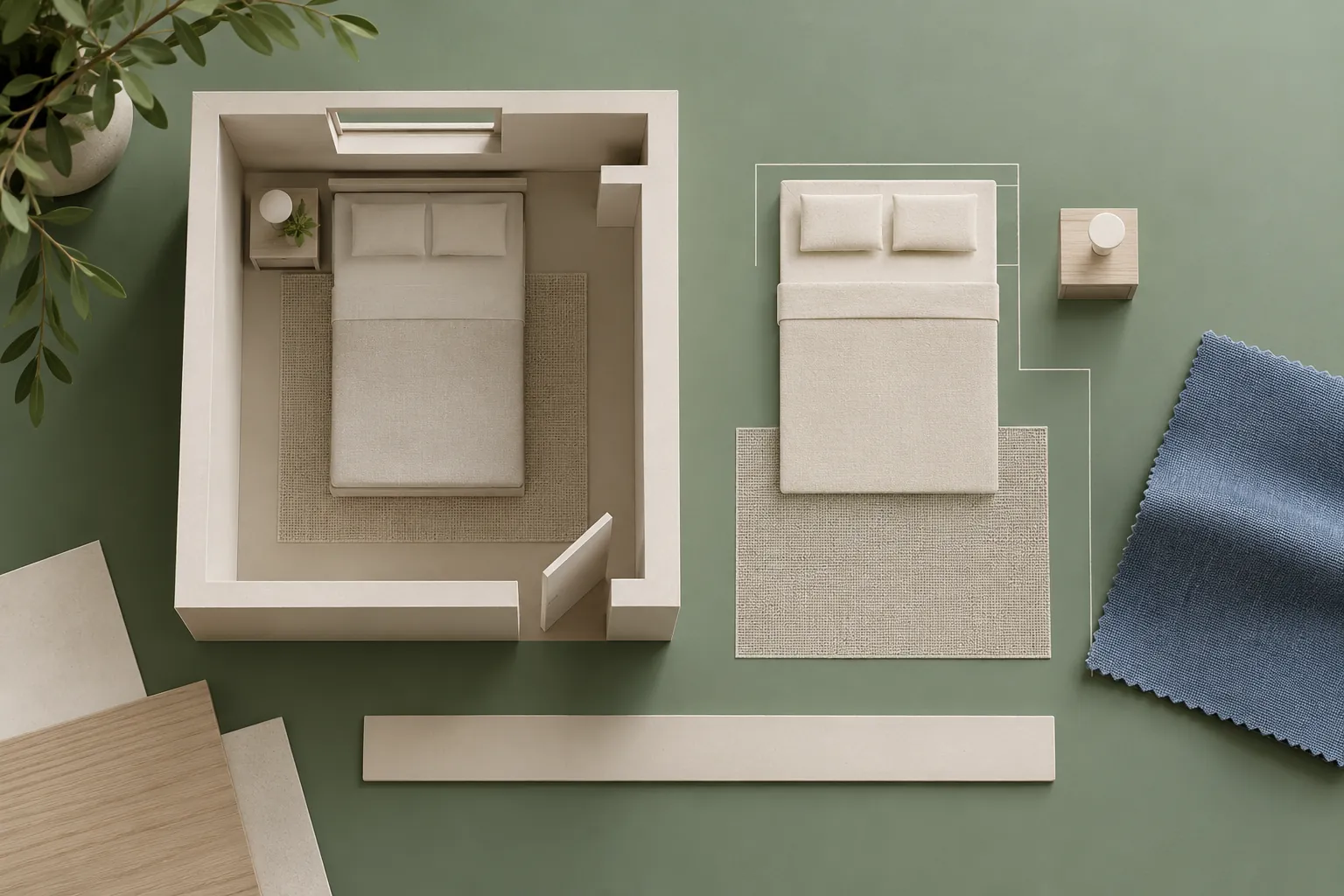
A photograph cannot tell you whether a table will be easy to reach from your mattress. The catalogue has many virtues. Being your actual bedroom is not one of them.
Avoid turning this test into a universal accessibility claim. Where someone has specific movement or support needs, the design should be reviewed for that person rather than justified by a generic furniture rule.
How wide and deep should the top be?
Size the top around the objects you intend to keep there and the floor space you can allocate. Lay out the actual lamp base, phone, glasses case and water glass before approving a compact surface.
For a bedroom with limited space beside the bed, we would first ask what can move off the surface. A reading light might be discussed as part of the wall scheme, while charging could be coordinated separately. Any electrical alteration needs appropriate professional assessment and installation.
Do not solve the footprint by placing objects so close together that ordinary use becomes awkward. Mark the proposed top on a piece of card, then try the arrangement at the intended height. This is a useful purchasing test, not a claim that a particular shape suits every Mumbai apartment.
What belongs in the drawer?
The drawer should be designed around the objects it will hold and the way it opens beside the bed. Ask for clear internal measurements, not merely the cabinet's external dimensions.

A small notebook, a glasses case and a charging accessory can require different divisions from larger personal items. List the contents and ask the maker to show the drawer opening, runner arrangement and any space taken by hardware.
Open the drawer on the plan and in a physical trial where possible. Check whether bedding hangs over the front, whether a handle projects into the route and whether the user can open it without shifting another object. An elegant closed drawer is only half the demonstration.
Should both bedside tables match?
Both sides should work together visually, but they do not have to contain identical storage. Agree which features create the shared design and which can respond to each person's routine.
One person may want a drawer and an open shelf; another may prefer a clear top and concealed storage. Our suggested approach is to keep a deliberate relationship between materials, proportions or detailing while checking each side separately.
Manufacturer collections also illustrate why the base needs specifying. Poliform's Kelly storage units include bedside tables and chests with feet or floor-standing versions. That example is not a proposed FCI India product. It shows why “matching bedside table” is less precise than an approved drawing with the base and finish identified.

How should lighting and cables be coordinated?
Coordinate the furniture with the agreed lighting and socket positions before manufacture. Show the lamp, switch, plug and cable route on the drawing rather than treating them as styling accessories added later.
Ask the designer and electrical professional to review whether controls remain reachable and whether the table obstructs a socket. If you request an integrated charging feature, obtain its exact specification, installation requirements and maintenance access before approving it.
For the wider bedroom, our dressing-table planning guide offers a separate discussion of seated use and storage. Review both pieces on the same room plan so their drawers and seats do not compete for the same space.
What should you approve before manufacture?
Approve a single drawing that covers overall dimensions, internal storage, openings, materials, hardware and coordination with the finished bed. Add physical finish samples and written care instructions for the selected surfaces.
Ask for the intended load conditions, fixing method where relevant, delivery arrangements and responsibilities for installation. Do not assume that a floating table can be fitted to any wall or that a material name establishes a maintenance method.
FCI India designs and manufactures bespoke furniture in Mumbai. Bring the team the bed specification, bedroom plan, bedside inventory and lighting information, then request a coordinated custom proposal.

Limitations
This is a design brief, not a site survey, electrical specification or individual accessibility assessment. It sets no universal furniture dimensions and makes no claim about stock, prices or production times. The Poliform example illustrates design choices, not a product supplied or manufactured by FCI India. Images are conceptual furniture and workshop illustrations, not completed commissions.