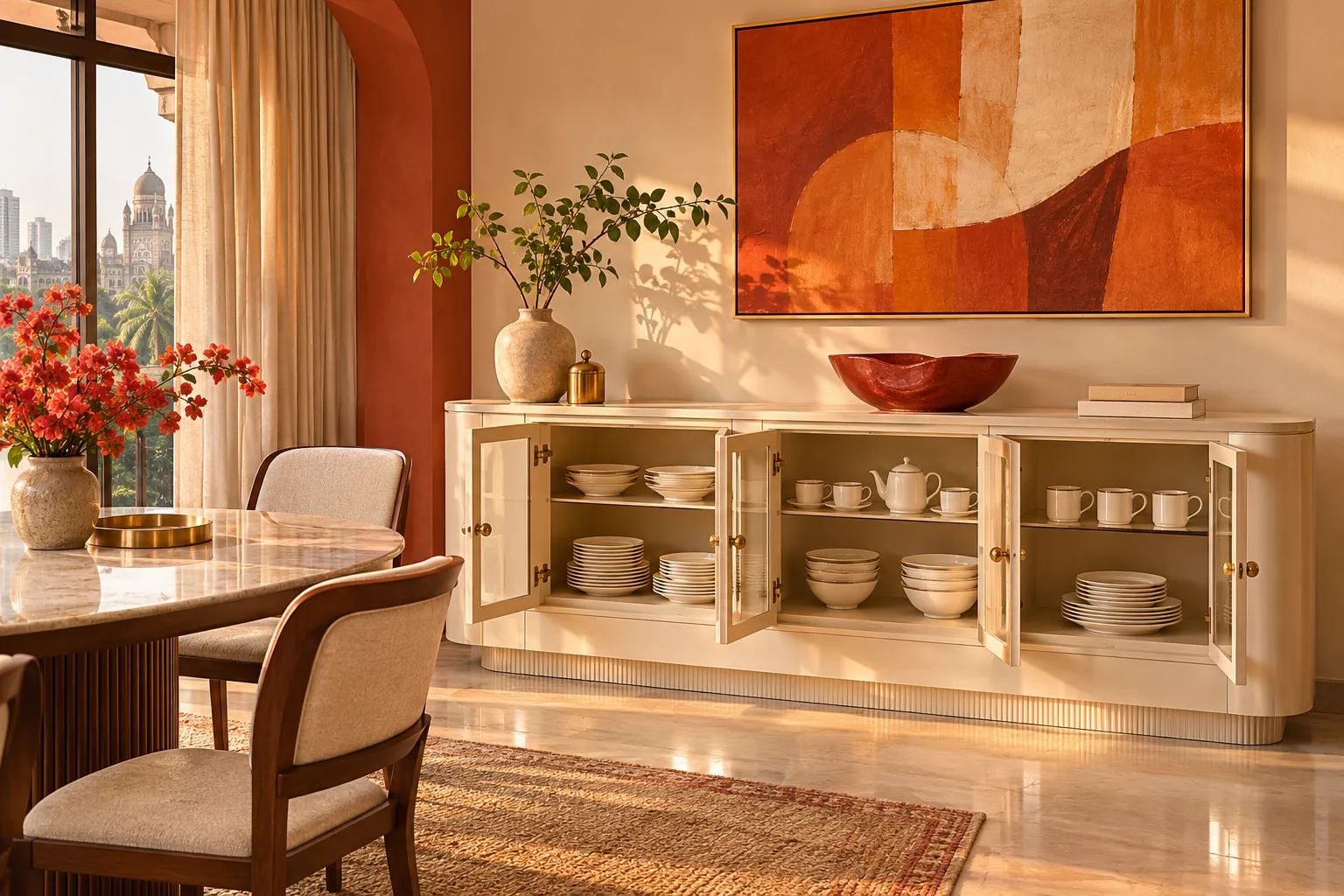
TL;DR: Choose cabinet hinges for the finished door and its application, not by appearance or hinge count alone. Blum identifies door weight, dimensions and materials as relevant factors.
Key takeaways
- Door weight, dimensions and materials affect hinge selection in Blum's planning guidance.
- Handle weight belongs in the finished-door assessment.
- Glass, mirror and thick-door applications may call for different hinge products.
- Record the approved hardware reference and opening requirements before manufacturing begins.
How should you specify cabinet hinges Mumbai commissions need?
Begin with the finished door specification and ask the maker to select hardware for that application. Blum's hinge planning guidance identifies weight as a key factor, alongside dimensions and materials, and says additional weight such as handles should be included.
For a bespoke Mumbai cabinet, our recommendation is to keep door construction, finish, handle and hinge decisions in one approval record. A late mirror or heavier handle should prompt a review rather than becoming an invisible change on the workshop floor.
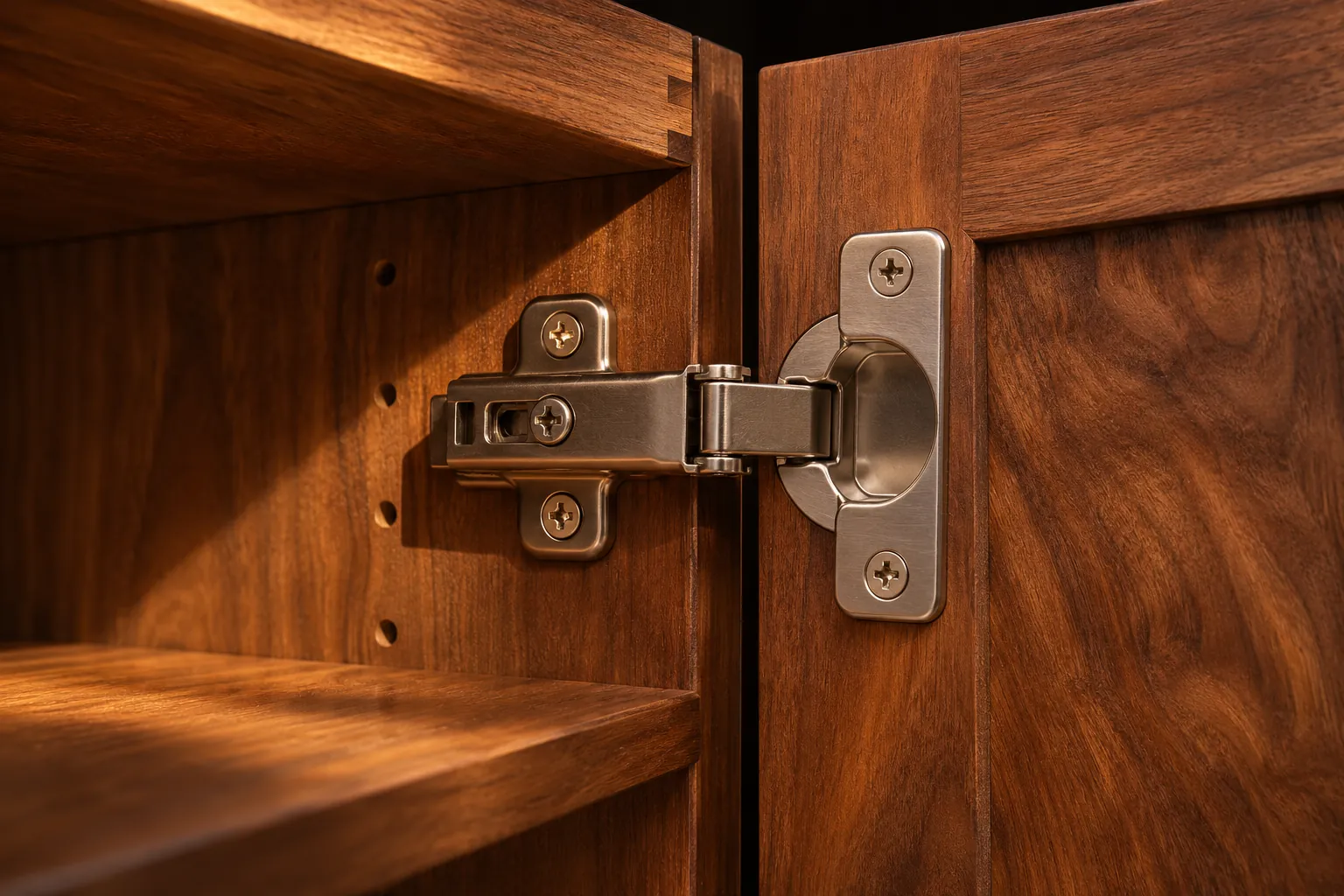
“Soft close” describes an aspect of operation. It does not supply the rest of the engineering brief. Unfortunately, two useful words cannot do the work of a specification sheet.
Does a taller door simply need more hinges?
Do not set a hinge count from height alone. Blum's guidance discusses weight, height, width and material, and places conditions on its example recommendations. The maker should apply current technical information for the chosen hardware rather than copying a number from an unrelated cabinet.
Ask for the finished door dimensions, assessed weight and proposed hinge reference. Request confirmation that the door construction and fixing method are suitable for the selected system. This is a question for the responsible maker, not a DIY drilling schedule.
Do glass and mirror doors use the same fittings?
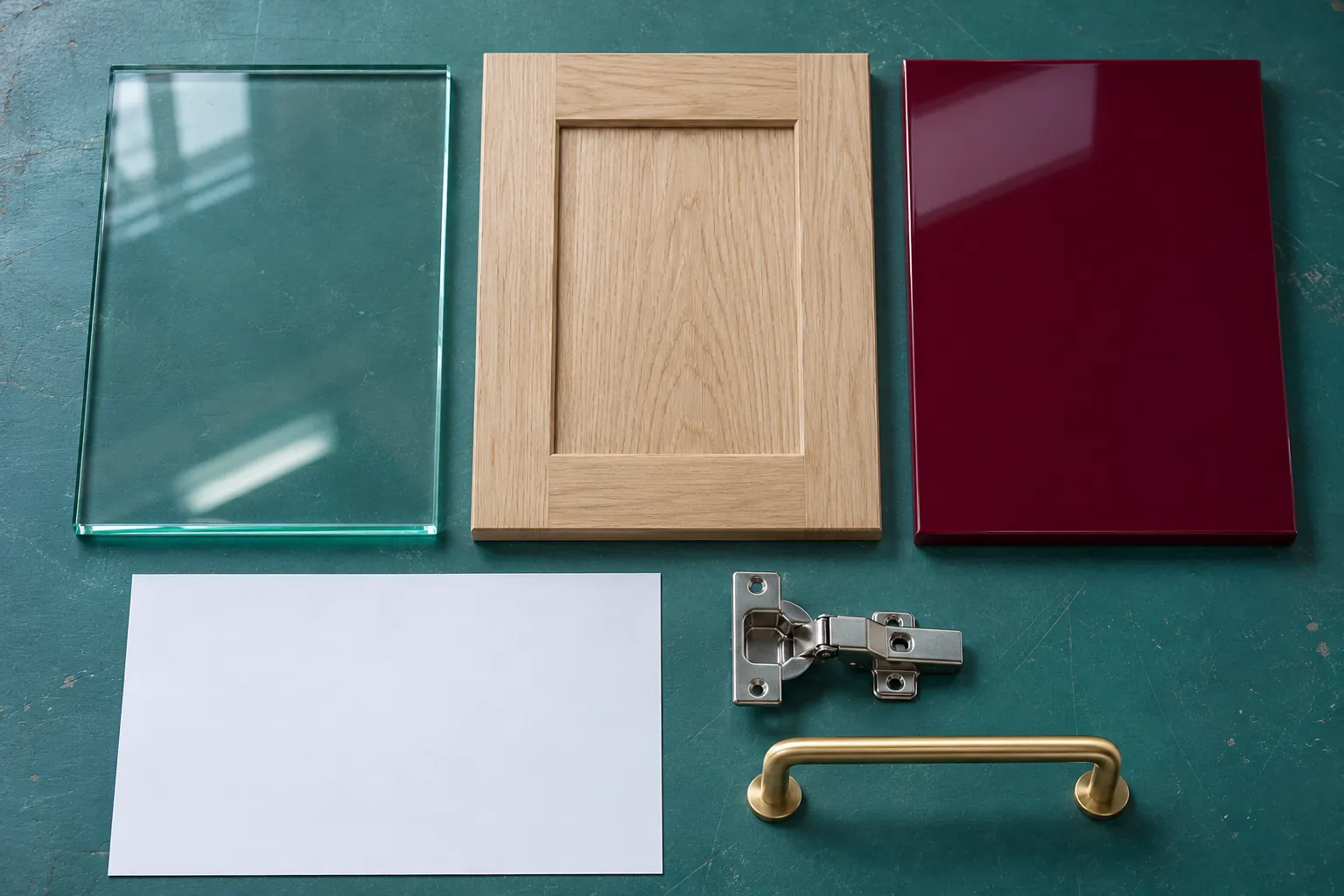
Do not assume they do: Blum's hinge portfolio separates applications including glass and mirror, thin doors, thick doors and aluminium frames.

That distinction matters when approving a crockery display cabinet or a mirror-front wardrobe. Ask whether the proposed hardware is appropriate for the exact substrate and finished construction. The existence of a product family does not establish suitability for your individual door.
For related layout decisions, start with the maker's measured drawing and the objects you intend to store. Check the storage layout separately from the door hardware.
What should you check besides the hinge itself?
Check the door in the room, including the handle and the space needed to reach the storage behind it. Our recommendation for compact Mumbai layouts is to show neighbouring furniture, skirting and circulation on the approval drawing.
Ask whether shelves, drawers or internal pull-outs can be used with the door in its proposed open position. Review both the ordinary opening and any access needed for maintenance. A generous opening angle on a hardware sheet is not permission to ignore the bedside table.
Keep material decisions coordinated too. Our veneer matching guide covers a different part of the same approval process, while the solid wood table guide explains why construction questions deserve their own discussion.
What belongs in the handover record?
Retain the hardware reference, approved door drawing and the maker's maintenance instructions. Ask who handles adjustment or replacement and whether any substitutions require fresh approval.
FCI India's current service page describes bespoke furniture manufacture and technical drawings for architectural practices. Send the complete door brief when discussing a commission, not just an image of the desired finish.
Limitations
This article is a procurement checklist, not a hinge calculation or installation method. The maker must confirm current hardware suitability, fixings and safe operation for the actual cabinet. No universal hinge count or service-life promise is offered. Images are illustrative concepts, not evidence of FCI India's manufactured work.