TL;DR: Plan a crockery cabinet in Mumbai from the size, weight and access needs of your dinnerware, then commission the shelves, doors and installation around that inventory.
Key takeaways
- Measure your largest plates, serving pieces and tallest glasses before deciding the cabinet depth.
- Confirm usable internal dimensions, not just the outside dimensions of the cabinet.
- Request a load allowance for each shelf and the intended distribution of crockery.
- Test door opening and serving access with the dining chairs in use.
- Include wall construction, fixings and any lighting access in the installation brief.
What should you measure first?
Measure the pieces you need to store before choosing the cabinet envelope.
Start with dinner plates, serving platters, bowls, glasses and the pieces that do not stack neatly. Record the width, depth and height of the largest examples. Include handles and lids rather than measuring only the body of a serving dish.
Our recommendation for a Mumbai dining room is to separate everyday access from occasional display. Put the pieces you use daily into the planning exercise first. A display arrangement that looks generous while empty may be awkward once the family's actual dinnerware arrives.
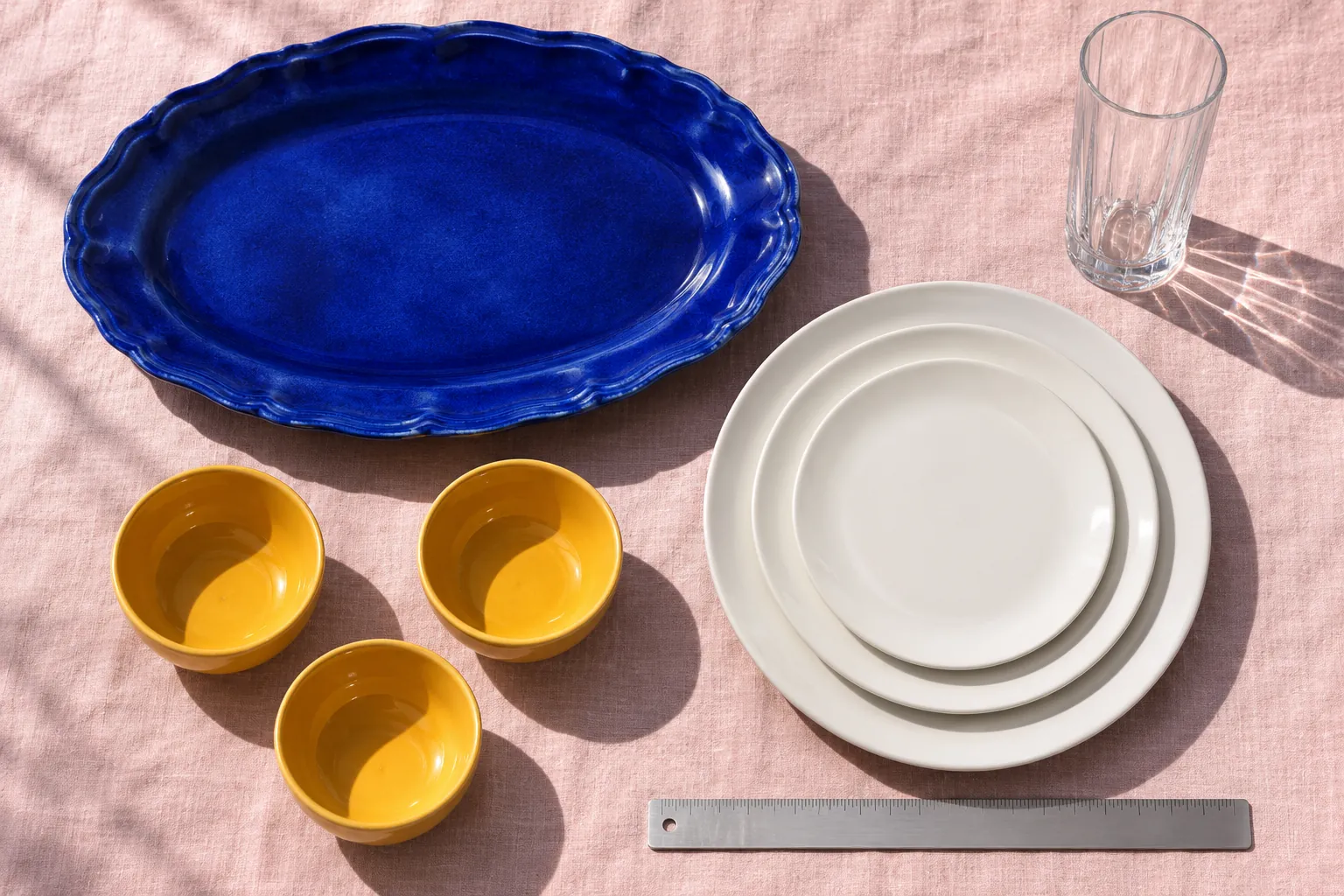
Make a simple inventory showing which items stack, which need an individual space and which you want visible. This gives a furniture maker something much more useful than a photograph captioned “similar, but smaller”.
How deep should a crockery cabinet be?
The cabinet should be deep enough for the intended objects within its usable internal space, with the doors and hardware accounted for.
Ask for the clear depth behind closed doors. Allow the maker to account for the back panel, hinges, handles and any lighting equipment. If you want to place platters upright, show the proposed rack or support in the drawing rather than assuming a shelf alone will do the job.
Ask for both a front elevation and an internal drawing. The internal drawing should show the clear spaces available for your largest pieces, not merely divide the outside width into attractive-looking sections. Check those spaces against your inventory before choosing the final finish.
How should shelves be specified for crockery?
Specify each shelf for the intended contents, support arrangement and agreed load, not simply for appearance.
Ask the maker to confirm shelf material, span, supports, adjustability and allowable loading. Show where stacks of plates will sit. A cabinet's overall size does not provide a shelf rating, and a load stated for one manufacturer's product cannot be transferred to another design.
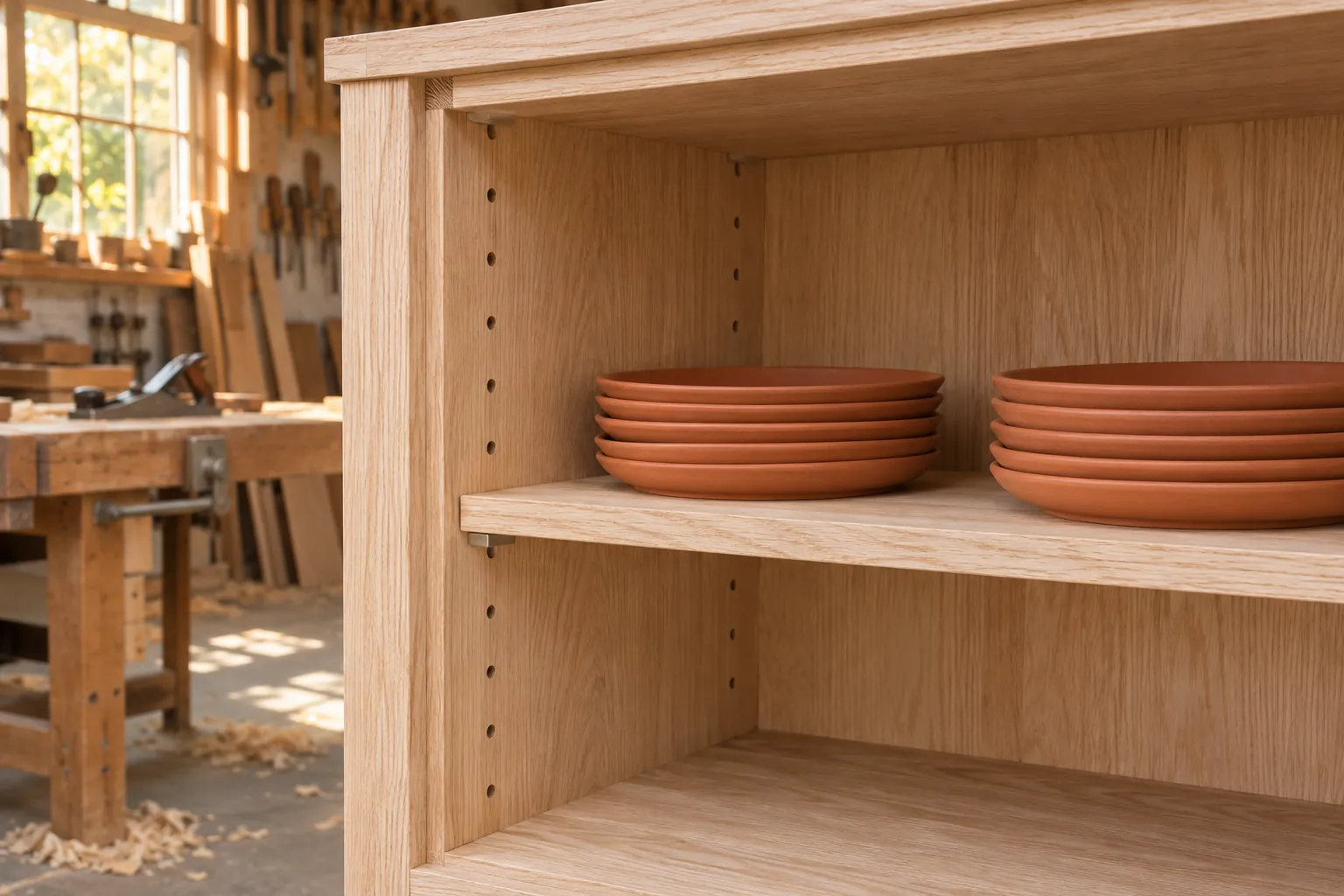
Our judgement is to resolve the plate stacks before choosing glass display shelves. You may prefer a combination of enclosed everyday storage and a lighter display area. That is a design decision to work through with the maker, not a claim that either glass or timber is automatically suitable for every load.
If your design includes pull-out storage, specify the runner as well as the shelf. Blum's MOVENTO range includes different load-bearing classes and supports pull-out shelf applications. This is an example of why the exact hardware matters, not a load rating for an FCI India cabinet or a statement that this hardware is included.
Where should the doors open in a Mumbai dining room?
The doors should open where someone can retrieve and set down crockery without conflicting with the occupied dining area.
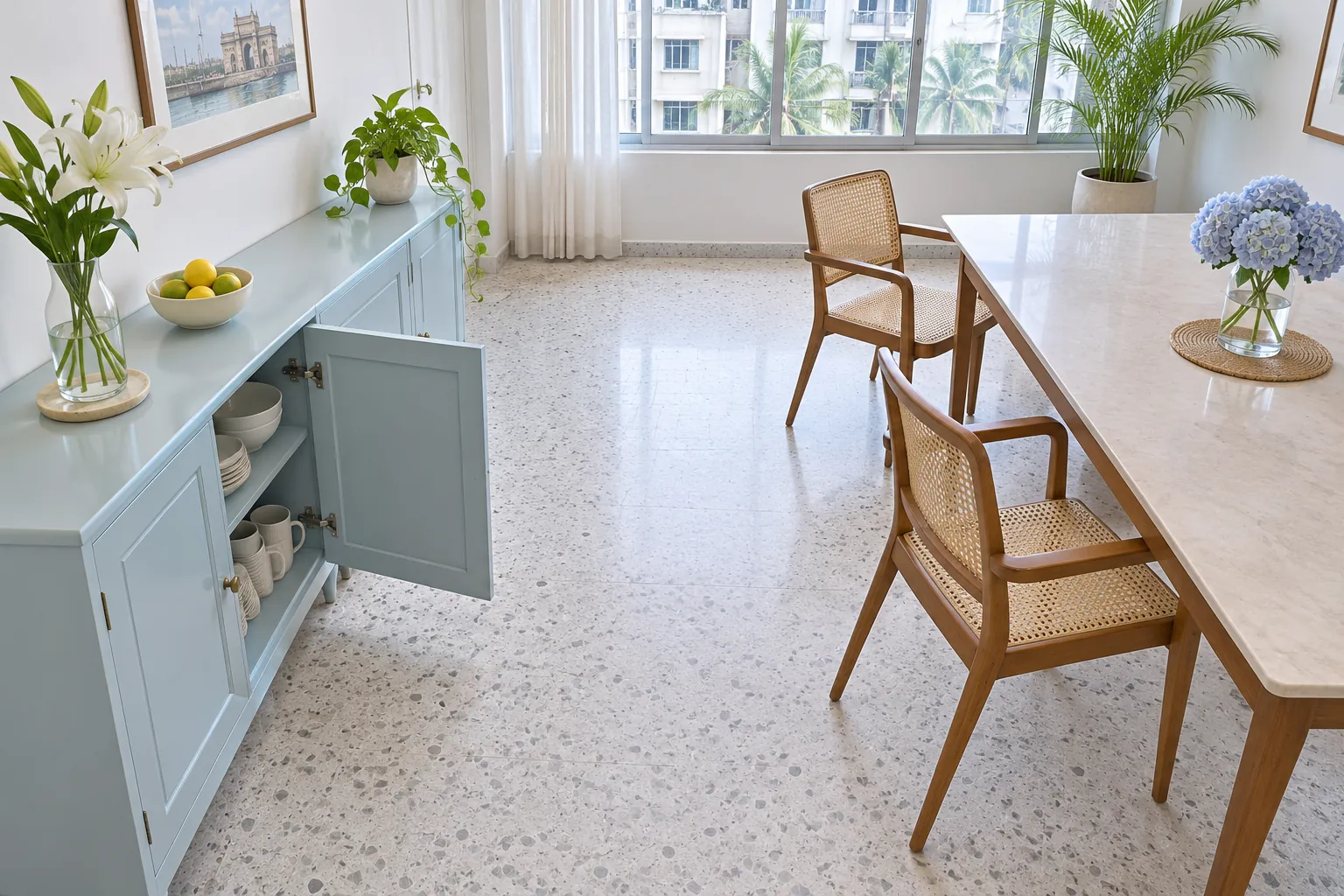
Draw the cabinet with doors fully open and the dining chairs pulled into their normal positions. Walk through the route from the cabinet to the table. If the room also connects the kitchen or hallway, include those journeys in the same test.
For a built-in commission, record skirtings, switches, sockets and the actual wall condition at the survey. Ask the installer to determine suitable fixing details and any required anchorage. Do not treat a rendered image as an installation plan.
Should you include lighting and display glass?
Include lighting and display glass only after deciding what needs to be seen and how the cabinet will be serviced.
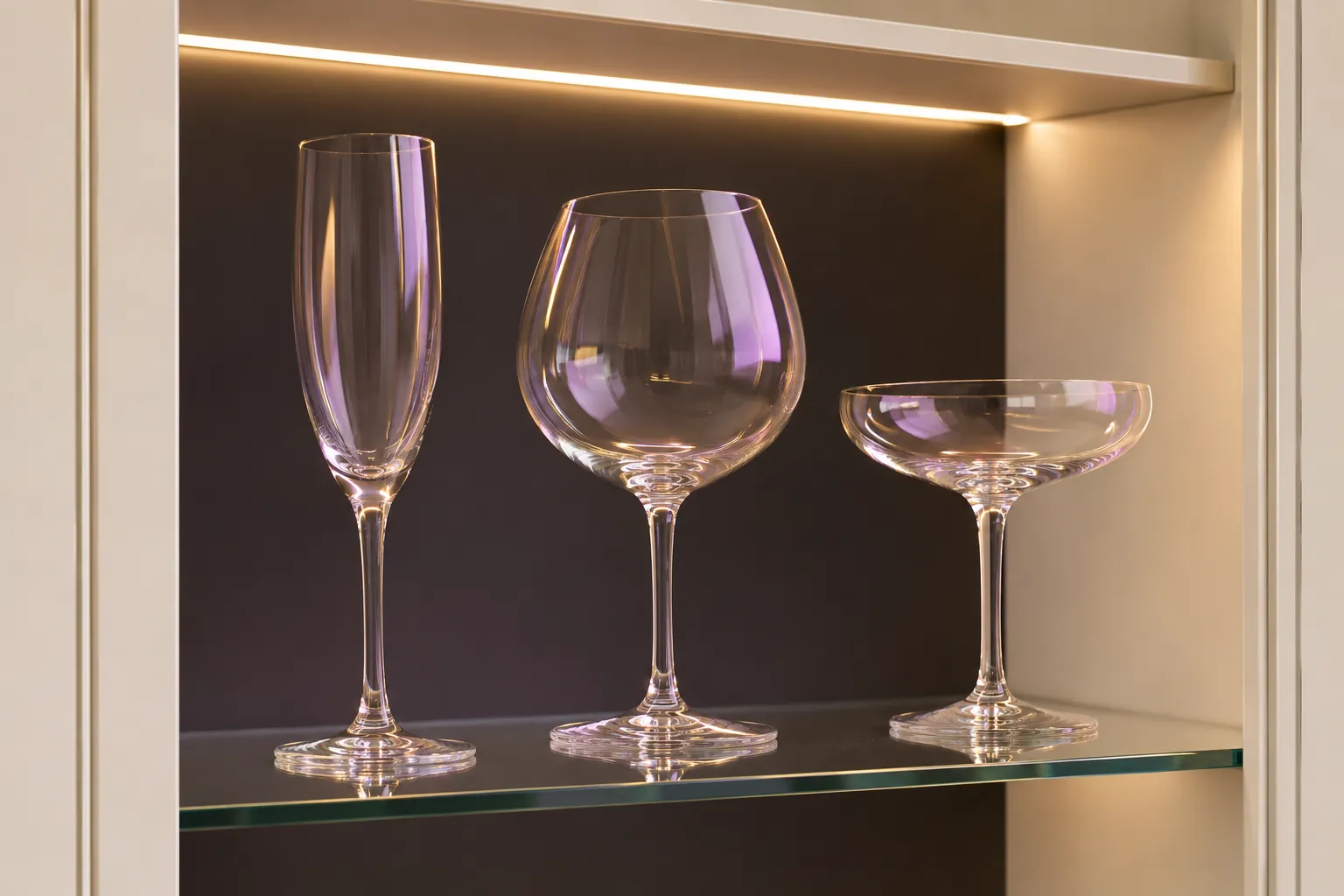
Ask which components are included, how power will reach them and how a failed light source or driver would be accessed. Any electrical installation should be agreed with an appropriately qualified installer. Request the care instructions for the chosen glazing, timber and finish.
A restrained display can make a cabinet feel considered without making every plate part of an exhibition. Our preference is to keep the everyday retrieval route simple and reserve the display space for objects you genuinely want on view.
What should an FCI India brief contain?
An effective brief combines your crockery inventory, room measurements, storage layout and installation questions.
FCI India describes bespoke furniture design and manufacturing, built-in joinery and design consultation in its services overview. Send the team your largest-item measurements, preferred door arrangement and shelf-loading questions before asking for a finish-led proposal.
Ask the quote to identify what is included in manufacture, delivery, installation and any lighting work. Confirm the final drawings and care requirements before approving the commission.
Limitations
This guide does not specify structural shelf loads, wall fixings or electrical details. Those require the actual design, materials and site conditions. Manufacturer examples are not FCI India specifications, prices or stock claims. Images are illustrative designs rather than completed FCI India projects.
How can you start the design conversation?
Contact FCI India with your crockery inventory and room plan. Ask for a cabinet proposal that shows the internal arrangement as clearly as the front elevation.