TL;DR: Choose an upholstered headboard by checking its position above the finished mattress, fabric specification, mounting and access to bedside fittings before approving the shape or colour.
Key takeaways
- A headboard drawing should show the finished mattress height as well as the headboard's overall height, width and projection.
- Bed-mounted and wall-mounted designs need different installation questions; ask the maker to specify the method for your actual room.
- Abrasion, resistance to fading, dye transfer and pilling are separate fabric considerations, as explained in Room & Board's fabric-testing guide.
- A high abrasion-test number is not a lifespan promise, and it does not establish that a fabric is washable.
- FCI India's current services page includes bespoke furniture and upholstery, providing a relevant route for a custom headboard brief.
What should you decide before the headboard design?
Decide which bed, mattress and bedside arrangement the headboard has to work with. Our recommendation for a Mumbai custom bed project is to approve those relationships before selecting decorative panels, curves or deep buttoning.
Measure the mattress you intend to use, including its finished top position on the bed base. Ask the maker to show how much upholstered surface remains visible above it and how the lower edge meets the bed. A floor-to-top height alone leaves an important part of the picture unresolved.
Include pillows in the visual check if they are normally stacked against the headboard. What looks imposing in an empty drawing may look quite different when the bed is made.
The FCI India bed-size guide covers the larger footprint. Here, the narrower task is to make the headboard, mattress and wall work as one arrangement.
Should the headboard attach to the bed or wall?
Choose the mounting approach after the maker has assessed the bed and the wall, not from appearance alone. For a bed-mounted proposal, ask how the headboard connects to the exact frame. For a wall-mounted proposal, ask who assesses the substrate, chooses the fixings and completes installation.
Our preference for a project brief is to record the chosen method explicitly. A drawing should distinguish a decorative panel from the structure and hardware that support it. Do not assume a design can be transferred between mounting methods without changes.
If you are furnishing a rented Mumbai apartment, establish permissions before agreeing to wall work. If the bed may move to another home, ask how the headboard can be removed, transported and refitted. These are project questions, not assertions about a universal tenancy rule.
Also ask what must happen if the wall needs maintenance later. A beautiful permanent panel can become rather less charming when the answer to every practical question is to dismantle the bedroom.
How should sockets and lighting affect the shape?
Show existing sockets, switches, wall lights and bedside furniture on the same elevation as the headboard. An elevation is simply a straight-on drawing of the wall, rather than a view down onto the floor.
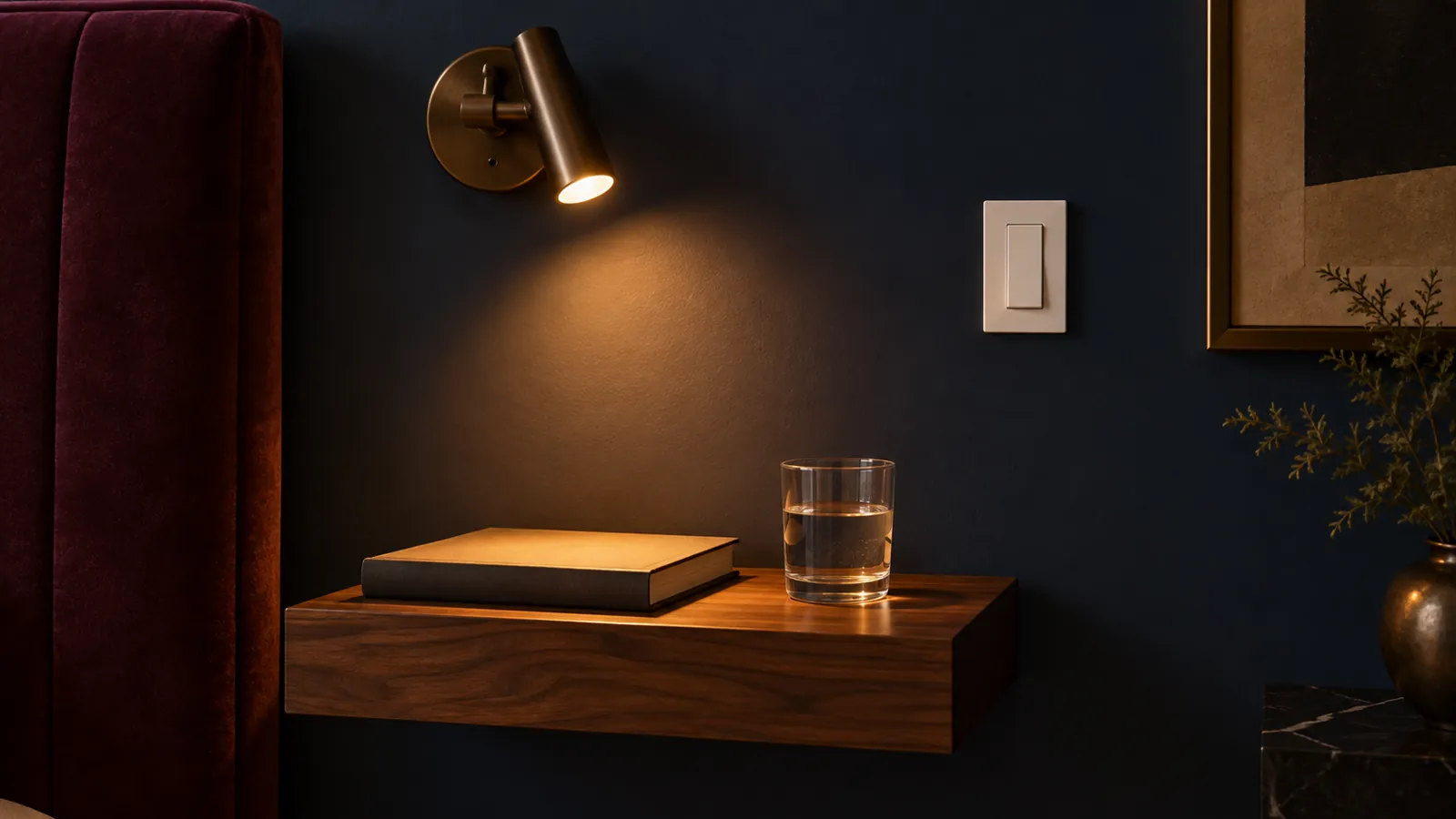
Our suggested approval drawing marks the mattress top, headboard edges, bedside table tops and every fitting that needs to remain accessible. Check the actual reach from the bed as well as the appearance from the doorway.
For a wide headboard spanning both bedside tables, ask whether it conceals any fittings or affects drawers, curtains or access for maintenance. Treat electrical changes as separate work for an appropriately qualified professional, not as part of an upholstery improvisation.
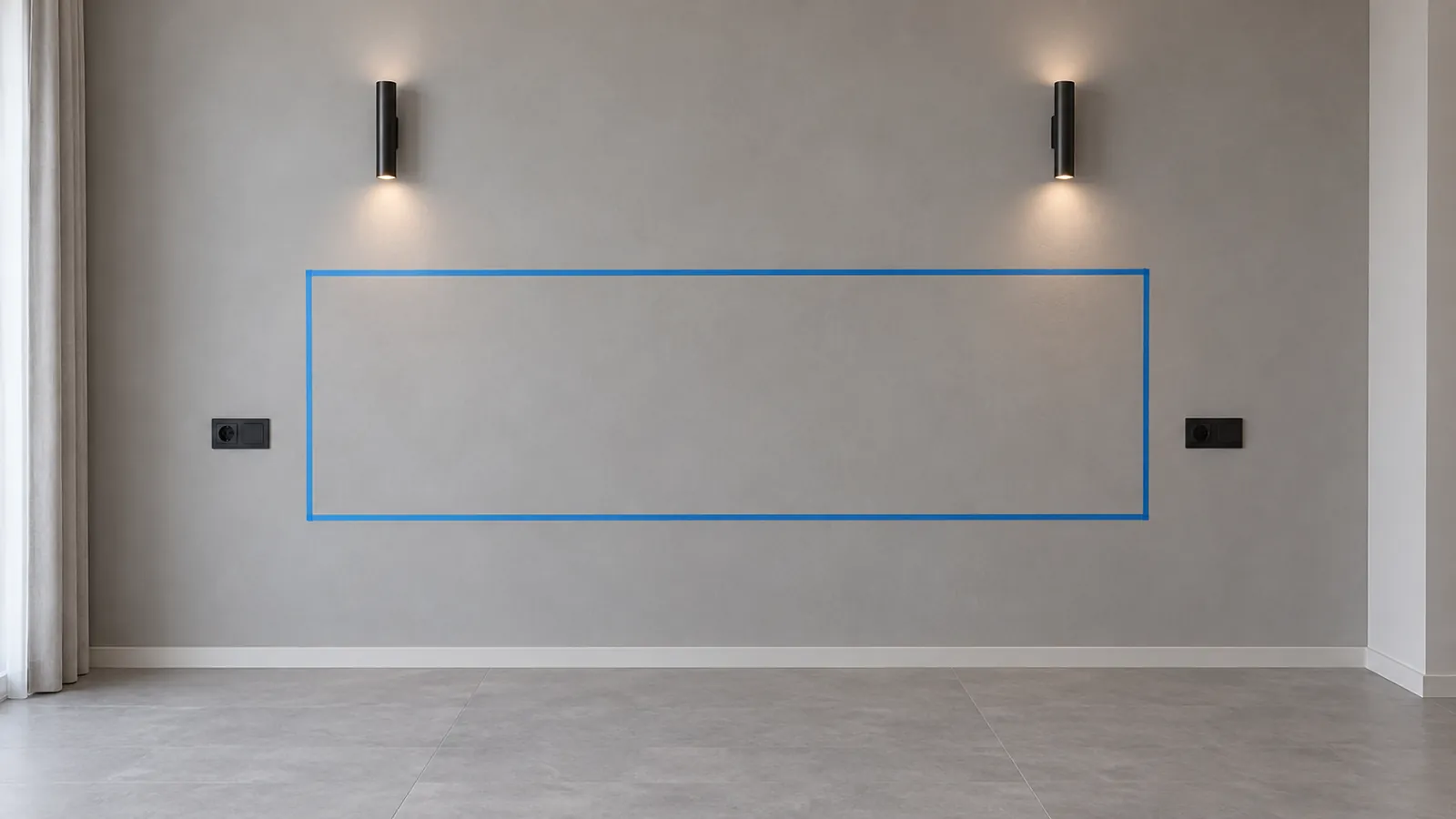
In a bedroom where space is already committed to wardrobes and a dressing area, avoid choosing extra headboard projection by default. Have the designer confirm the whole bed position again before manufacture.
Which fabric questions matter beyond colour?
Ask about the exact fabric's performance and care instructions, not simply whether it is described as premium. Room & Board's explanation of fabric testing distinguishes abrasion resistance, colourfastness to light, dye transfer when rubbed and physical properties including pilling.
Those are different questions. A single abrasion figure cannot answer all of them. The same guide says abrasion results above its cited thresholds do not indicate product lifespan; do not convert a large rub count into a promise of years of use.
For the headboard you are commissioning, request the fabric name and code, composition, relevant test information and care instructions. Ask whether the instructions apply to the finished upholstered piece, a removable cover or only the loose fabric.
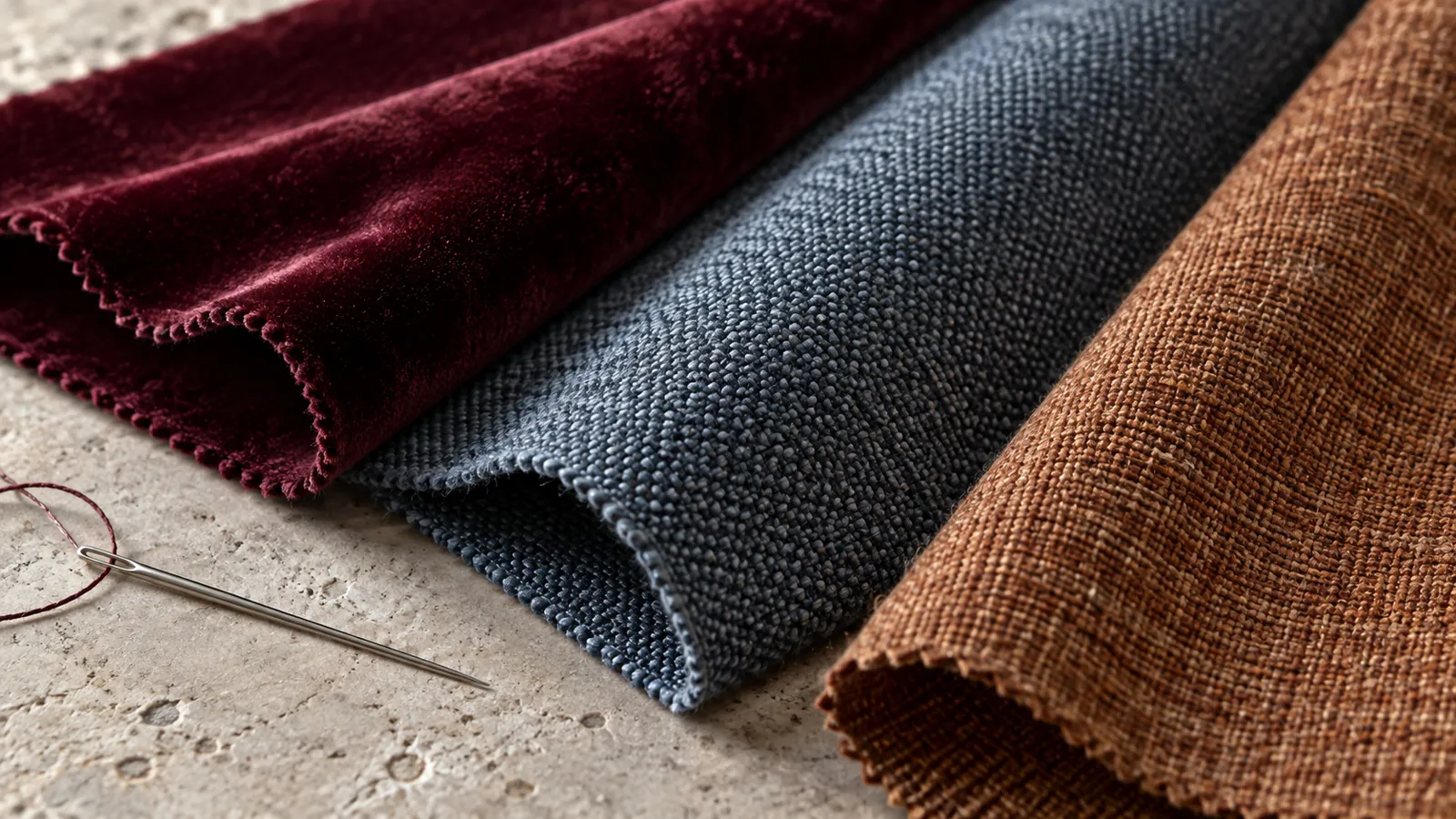
Our practical preference is to review a large physical sample against the wall and bedding. Look at it in daytime and under the actual bedroom lighting. For a fabric with a directional surface, ask the upholsterer to show the proposed orientation across neighbouring panels.
None of this makes a fabric stain-proof, fade-proof or suitable for every Mumbai home. Those claims require evidence for the exact material and intended use.
Are deep buttons and channels harder to live with?
Their suitability depends on the construction and the maintenance you are willing to undertake. Rather than assuming that smooth, buttoned or channelled upholstery is always best, ask the maker to demonstrate how the proposed surface should be cared for.
A physical sample panel is useful here. Inspect seams, panel junctions and the places you would need to reach during normal cleaning. Ask which cleaning products or methods are permitted and what to do if the fabric is marked.
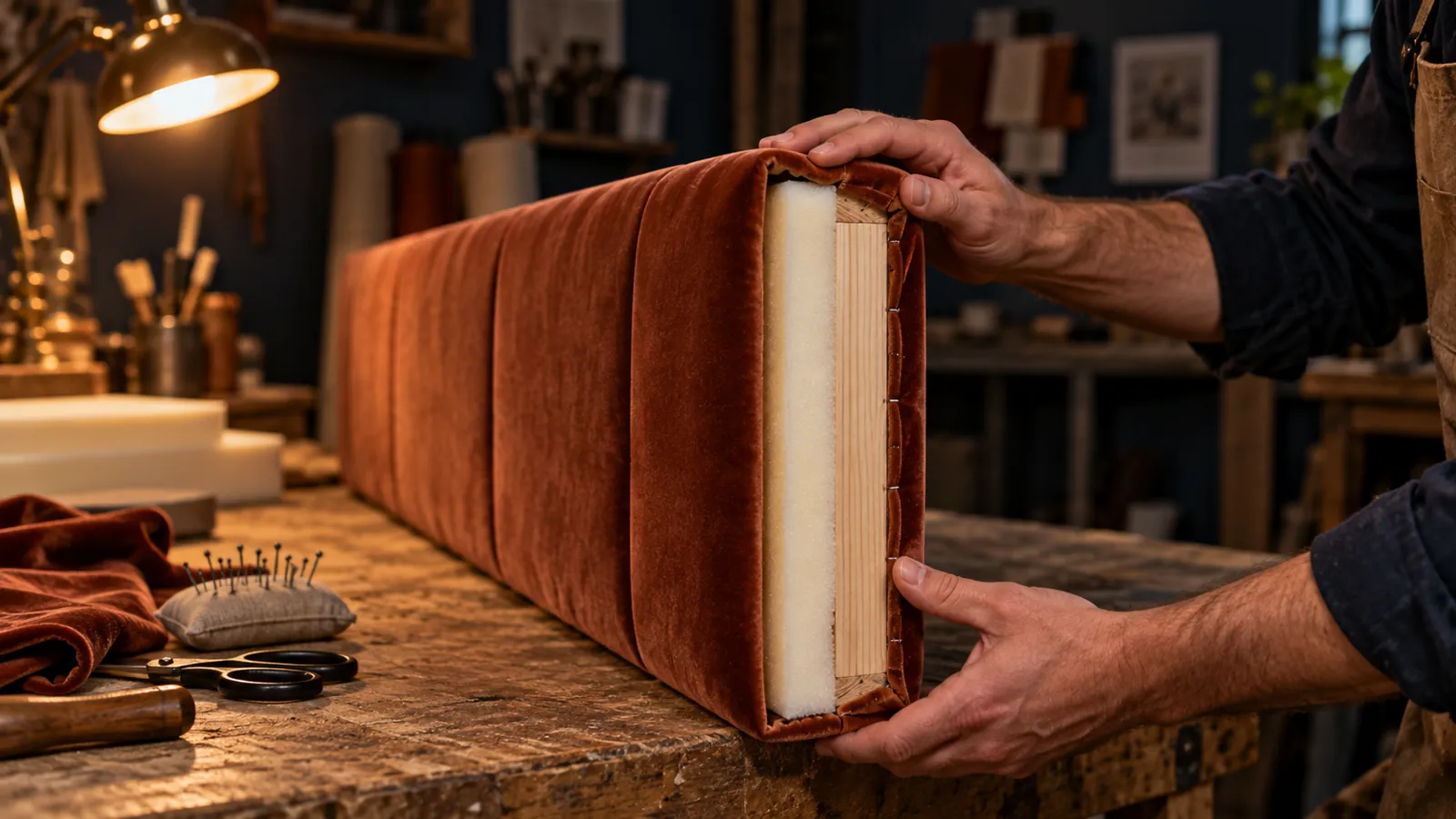
Our judgement is to choose the simplest construction that delivers the appearance you want. Elaborate detailing should earn its place through a design you genuinely prefer, not because a catalogue has declared that more stitching equals more luxury.
If you like to sit against the headboard, try a representative sample or completed example where available. Comfort is personal; a photograph cannot establish how a padded surface feels.
Can the headboard be reupholstered later?
Treat future reupholstery as a question to settle before manufacture, not an assumed feature. Ask how the upholstered sections can be removed, whether the underlying structure is intended to be retained and which parts might need replacement during recovering.
For a multi-panel design, ask whether a single damaged panel could be recovered independently and what happens if the original fabric is no longer available. Do not mistake a possible future service for a guaranteed colour match.
FCI India's current bespoke furniture and upholstery services include upholstery and reupholstery. Ask the team how those services would apply to your proposed headboard rather than assuming every construction has the same options.
What should your Mumbai headboard brief contain?
Bring a measured wall drawing, mattress details and a shortlist of materials to the discussion. Include photographs of the room, sockets and lights, the preferred mounting approach if known, and the delivery route for the largest proposed panel.
Request a drawing and sample approval before production. Record the exact fabric, panel layout, finished dimensions, installation responsibility and any agreed removal or recovering provisions. Confirm quotation and delivery details separately.
Contact FCI India with that brief for a bedroom project discussion. The useful starting point is the room you have, not the unoccupied bedroom in a showroom photograph.
Limitations
This guide offers design and procurement questions, not fixing instructions, an electrical assessment or a fabric certification. Room & Board's testing explanation does not establish that an FCI material meets a particular standard, and no foreign testing threshold is presented as an Indian legal requirement. No health, acoustic, fire-resistance or lifespan benefit is claimed.
Generated images show illustrative rooms, materials and workshop concepts, not FCI products, premises or client projects.