TL;DR: A luxury bed suits a Mumbai bedroom only when the complete frame, headboard and opening parts fit the room, storage and delivery route.
Key takeaways
- Measure the outer bed frame, not only the mattress size.
- Test wardrobe doors, bedside storage and circulation around the full footprint.
- Inspect storage mechanisms in every operating position.
- Choose upholstery and timber finishes from physical samples with written care guidance.
- Survey lifts, stairs and turns using packed component dimensions.
Why is mattress size not enough?
Mattress size describes the sleeping surface, not the complete bed. Upholstered rails, projecting headboards, integrated tables and broad bases can add significant width or depth.
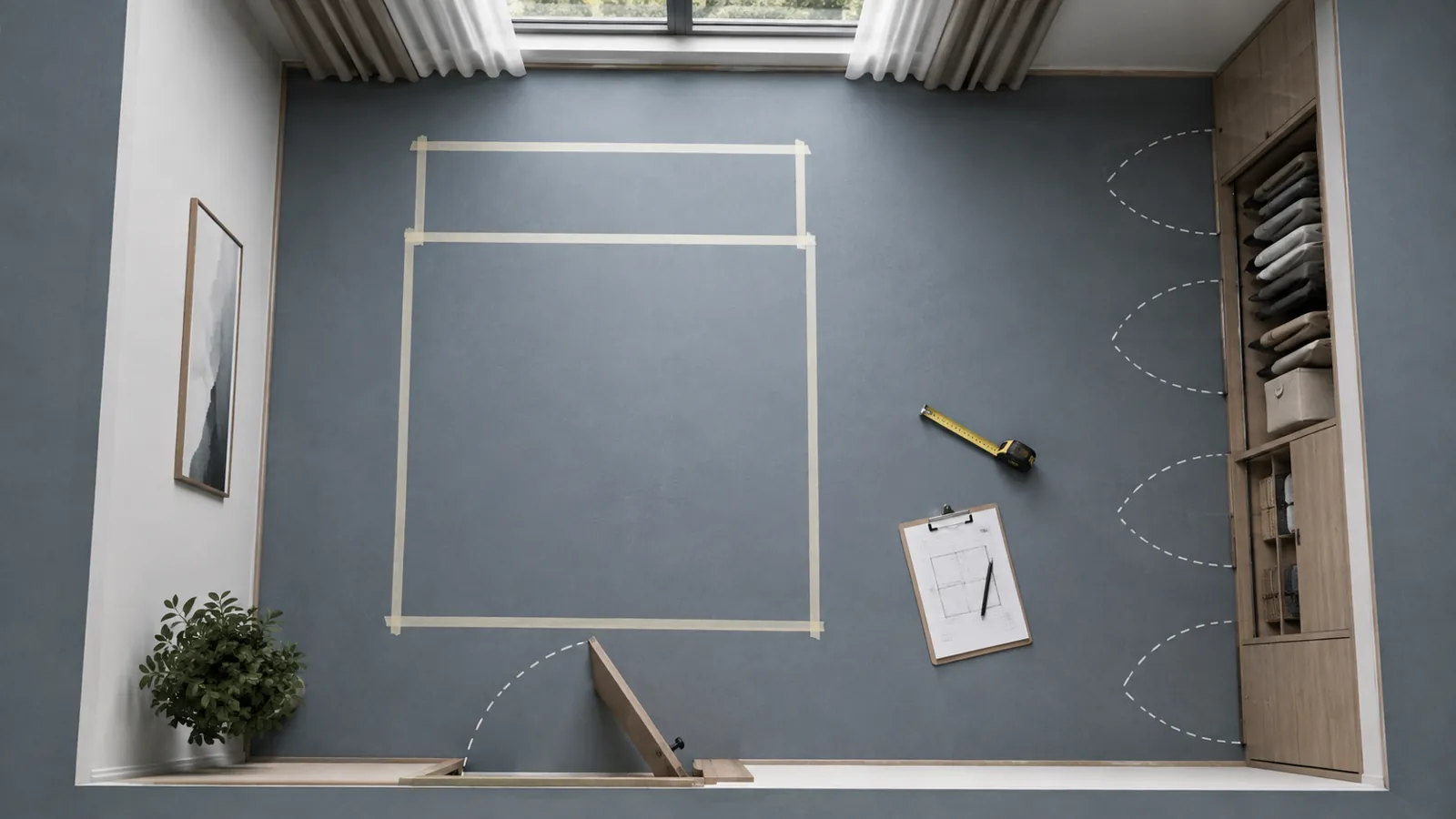
Request the maker's dimensioned drawing. Mark the full outer footprint on the floor and include any curved corners, benches or floating bedside elements. Then open the bedroom door, wardrobe and drawers.
Buying from the mattress label alone is rather like measuring a car by the driver's seat. Accurate in one narrow sense, but unlikely to delight the parking space.
How much circulation does a bed need?
The room needs enough clear space for its actual users, doors and daily tasks. There is no universal clearance that solves every Mumbai apartment.
Walk both sides of the taped footprint. Rehearse making the bed, reaching sockets, opening curtains and accessing wardrobes. Check the narrowest point rather than averaging generous and tight areas.
If one side must sit near a wall, decide who uses it and how cleaning will work. A symmetrical photograph is less important than a room that functions every morning.
Should the bed include storage?
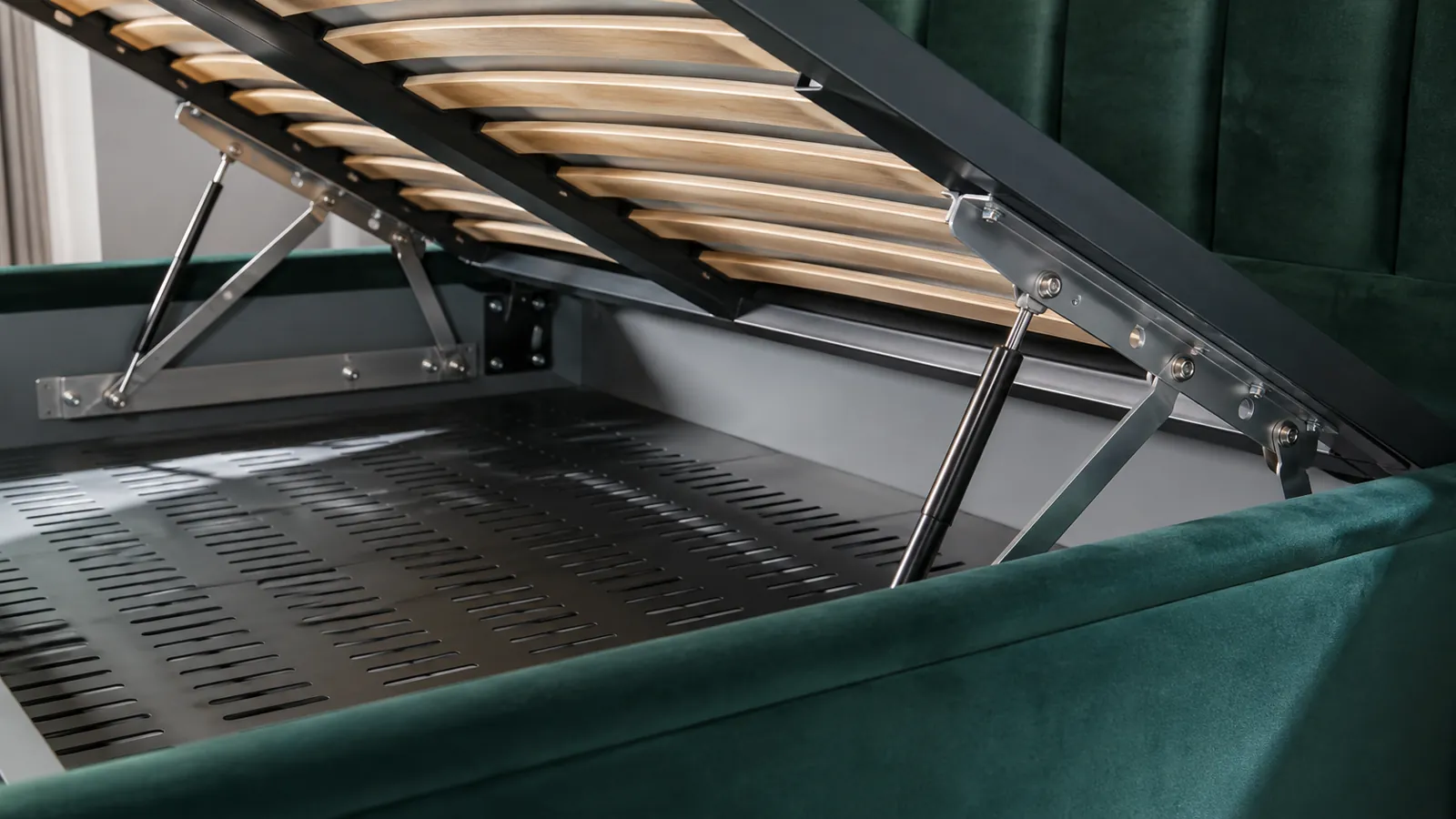
Storage is valuable when the mechanism, internal volume and access suit named belongings. Ottoman lift bases, drawers and removable panels each need different clearances.
FCI India's storage bed Mumbai guide explains how to test the bed open and closed. Lift the mechanism using the intended mattress specification and check the safe operating instructions supplied by the maker.
For drawers, mark their open projection and stand where the user would pull them. For lift storage, inspect the base, ventilation provisions and access to items at the far side. A vast compartment that requires moving two bedside tables is storage with administrative overhead.
How should the headboard be planned?
Plan the headboard against wall width, switches, sockets, windows and bedside lighting. Its visual scale should be judged from the room entrance as well as from the bed.
Record the mattress top height so the upholstered or decorative section appears in the intended position. Coordinate wall lights and switches before production, particularly with wide headboards or integrated bedside units.
If the wall is uneven or contains services, include that condition in the site survey. Do not move electrical points or drill without appropriate professional checks for the actual property.
Which materials work in Mumbai?
Choose materials according to indoor conditions, maintenance and the manufacturer's instructions. Upholstery, timber, veneer, lacquer, metal and stone respond differently to moisture, dust, sunlight and cleaning.
View samples in the bedroom rather than under showroom lighting alone. Ask how removable textiles are cleaned, how timber finishes should be maintained and what the warranty excludes.
FCI India's live guide to furniture and Mumbai humidity provides broader climate context. The product-specific care sheet still takes precedence.
What should you test for comfort?
Test the mattress and bed frame as a complete system where possible. Mattress support, rail height and edge access affect how the bed feels and how easily someone sits down or stands up.
Lie in usual sleeping positions, turn over and sit on the edge. Check whether the frame projects where shins approach and whether the headboard supports reading in the intended posture.

Do not assume a taller or softer bed is universally more luxurious. Comfort is personal, while gravity remains stubbornly democratic.
Will a large bed fit through the building?
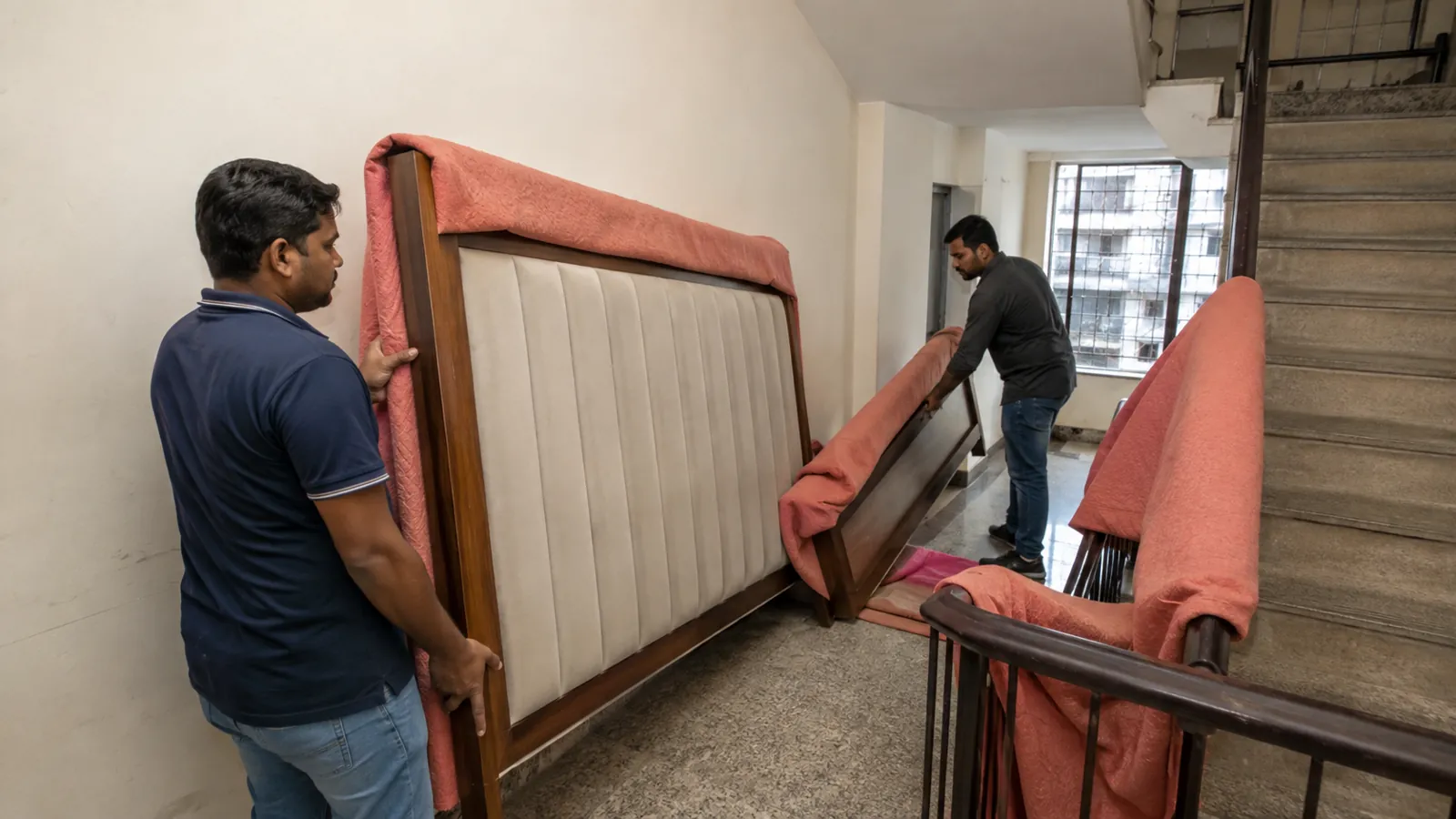
It fits only if every packed component can travel from vehicle to bedroom and be assembled there. The headboard is often the critical piece because it may be broad, tall and unable to bend around a landing.
Use FCI India's Mumbai furniture delivery access survey to check gates, lifts, stairs, corridor turns and doorways. Compare those dimensions with the packed headboard, side rails, base sections and storage mechanism.
Confirm what can be separated, the weight of major components and the installation sequence. Ask how floors and walls will be protected and how snagging will be recorded.
When is a custom bed worth considering?
A custom bed is worth considering when standard dimensions repeatedly conflict with storage, services, circulation or the room's architecture. Customisation should resolve the brief rather than simply add decoration.
Provide a measured plan, mattress specification, bedside needs, finish references and access survey. Review drawings and samples before production. FCI India's verified custom furniture Mumbai page describes its current route for made-to-measure enquiries.
What should you approve before production?
Approve the overall dimensions, materials, support system, storage action and installation method in writing. Confirm mattress compatibility, floor contact, headboard fixing and access requirements.
Use FCI India's process page to understand the current consultation and production workflow. Bring room photographs, dimensions and known constraints to the first conversation, not to the installation-day post-mortem.
Limitations
This guide cannot confirm whether a particular bed or mattress is suitable for an individual or property. Comfort, mobility needs, component dimensions, materials and building access vary. Use current manufacturer information, a measured site survey and appropriate professional advice for installation or accessibility needs.