TL;DR: In the solid wood vs veneer decision, compare each furniture component's construction, finish and intended use rather than treating either material label as a quality guarantee.
Key takeaways
- Real wood veneer is a wood surface; the material supporting it is a separate part of the specification.
- Wood exchanges moisture with its surroundings and can change dimensions as its moisture content changes, as explained in the US Forest Service Wood Handbook.
- Decorative panels can have different cores, and their performance depends on more than the visible grain: Wood Handbook, chapter 11.
- For custom furniture in Mumbai, request a component schedule, an edge sample and written finish details before approving manufacture.
What is the difference between solid wood and veneer?
Solid wood describes timber through the specified component, while real wood veneer is a sheet of wood used as a surface or part of a layered construction. A veneered item still needs a separate description of what is underneath.
For example, the Wood Handbook's chapter on composites describes plywood made from veneer plies and decorative panels with several possible centre materials, including timber, particleboard and fibreboard. The face and the core are not interchangeable terms.
That makes “walnut finish” an incomplete answer to a construction question. Ask whether it means solid walnut, real walnut veneer or a different decorative finish. Then ask the same question about the legs, doors, shelves and drawer fronts.

A piece can sensibly combine different constructions. The useful question is why each material was chosen for its job, not whether one word can describe the entire cabinet.
Is solid wood always better furniture?
No: the material name alone does not establish whether a piece is well designed, well made or suitable for the room. Judge the finished assembly and the evidence behind its specification.
For solid timber, ask about species, preparation, joinery and how the design accommodates movement. For a veneered panel, ask about the face, core, adhesive system, edges and finish. Neither conversation can be replaced by tapping the surface and looking thoughtful.
The Wood Handbook states that plywood properties depend on veneer quality, layering, adhesive and bonding conditions. That is a more useful basis for comparison than assuming all engineered panels behave alike.
Our recommendation is to compare like-for-like proposals for the same use. A dining-table top, a wardrobe door and a sculptural chair leg are different design problems, even when the client wants all three to look like walnut.
What matters in a Mumbai home?
For a Mumbai commission, describe the room's actual moisture exposure and use, then ask how the construction addresses those conditions. An address is not a complete environmental specification.
The US Forest Service explains that wood exchanges moisture with the surrounding air. Below fibre saturation, gaining or losing moisture can cause swelling or shrinkage, with possible distortion. This is general wood science, not a prediction that a particular Mumbai cabinet will fail.
Tell the maker whether the piece sits near an open balcony, beside a frequently used window or in a room with intermittent air conditioning. During a monsoon-season project, identify any damp walls or water-entry problem before furniture is fitted against them. Do not ask a furniture finish to solve a building defect.
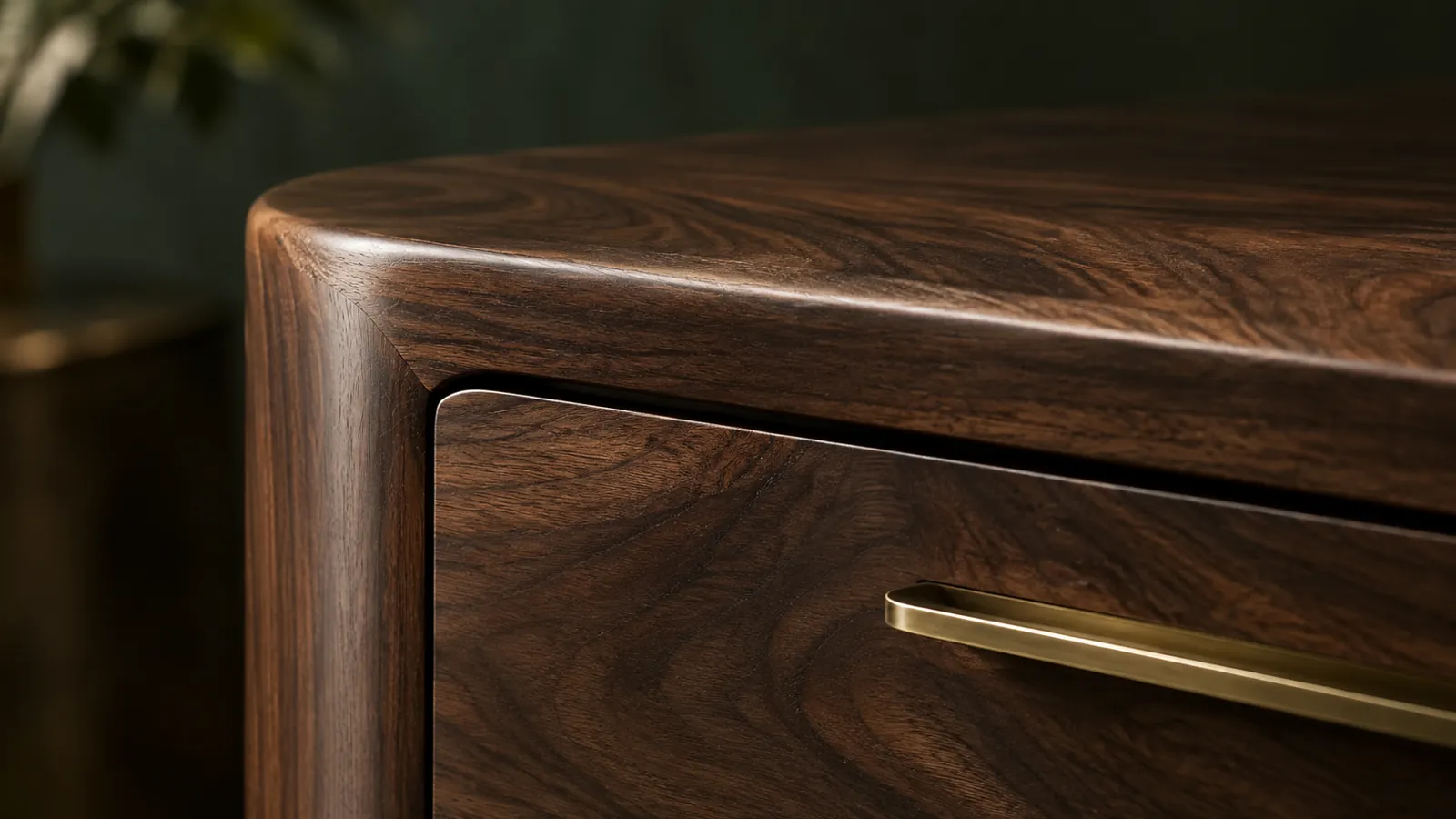
FCI India's materials library lists timbers and finishes available for discussion. Use it to begin the specification, then request the exact proposed construction and care instructions. A species list is not a moisture-performance guarantee.
How should you compare two quotations?
Compare a component-by-component material schedule, not just the item name and total price. The schedule should reveal what the two suppliers are actually offering.
| Component | What to request | What it resolves |
|---|---|---|
| Top or work surface | Surface material, core if present, thickness and finish | Whether the quotations describe the same assembly |
| Doors and broad panels | Face, backing, core and edge construction | What lies behind the visible grain |
| Legs and frame | Timber or other material, joints and fixing details | How the piece is constructed and assembled |
| Shelves and drawers | Material, dimensions, hardware and stated load guidance | Whether the intended storage has been considered |
| Exposed edges | A finished sample or clear construction detail | Whether the edge treatment matches the approved appearance |
Ask suppliers to identify substitutions before they happen. “Equivalent” should mean an agreed specification change, not a surprise discovered when the furniture arrives.
For a bespoke brief, FCI India's custom-furniture service is the relevant commercial starting point. Send the intended use and component questions with your reference images, rather than asking a photograph to carry the whole brief.
What should you inspect on a sample?
Inspect a finished edge and a representative surface, not only a loose colour swatch. Ask the maker to explain what the sample does and does not represent.
Check the proposed sheen, grain direction, visible joins and edge appearance in the room's lighting where practical. Request a drawing for areas a sample cannot show, such as the underside, backing and fixing points.
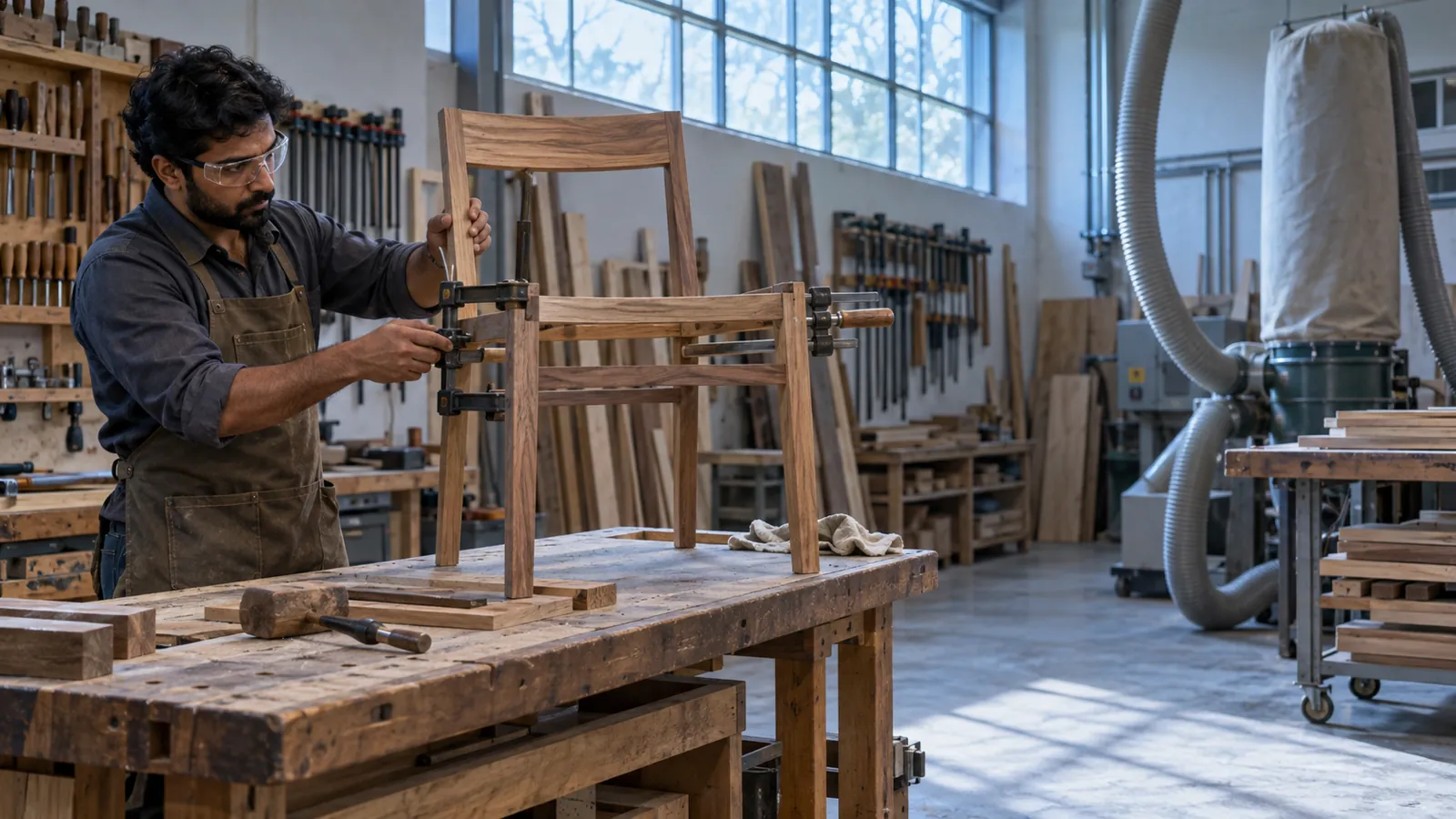
FCI India's process page describes material sampling followed by detailed drawings, specifications and approval before production. That sequence is useful: agree the material first, then confirm how it is used in the actual piece.
Keep a record of the approved sample and specification. If a finish or material changes, have the relevant details approved again rather than relying on a verbal description of something “very close”.
Can veneered furniture be repaired or refinished?
Ask a qualified furniture restorer about the particular surface before assuming it can be sanded, stripped or repaired in the same way as solid timber. The existing finish, surface condition and construction determine the proposed work.
For a new commission, ask who handles scratches, edge damage and future refinishing. Request the care method for the supplied finish and ask what actions could invalidate the warranty. Do not test solvents or abrasive treatments on the finished piece to find out.
Our buying judgement is to choose the aftercare arrangement you are comfortable living with. A written repair route is more useful than an unsupported promise that either material will last forever.
Which option should you put in the brief?
Specify the desired appearance and use first, then ask the maker to justify the proposed construction for each component. Avoid locking the entire project into “all solid wood” or “all veneer” before those details have been considered.
For a broad cabinet front, request the proposed panel assembly and edge detail. For a sculpted frame, request the timber and joint design. For a heavily used tabletop, request the finish, care routine and repair options. These are questions, not a universal ranking of materials.
To compare suitable constructions, contact FCI India with the room photographs, furniture dimensions and component schedule. Ask to review a finished sample and the relevant drawings before signing off manufacture.
Limitations
This article does not test a particular species, veneer, adhesive or finished product. The Wood Handbook provides general material science, primarily in a North American technical context; it is not an Indian product certification or a site-specific furniture design.
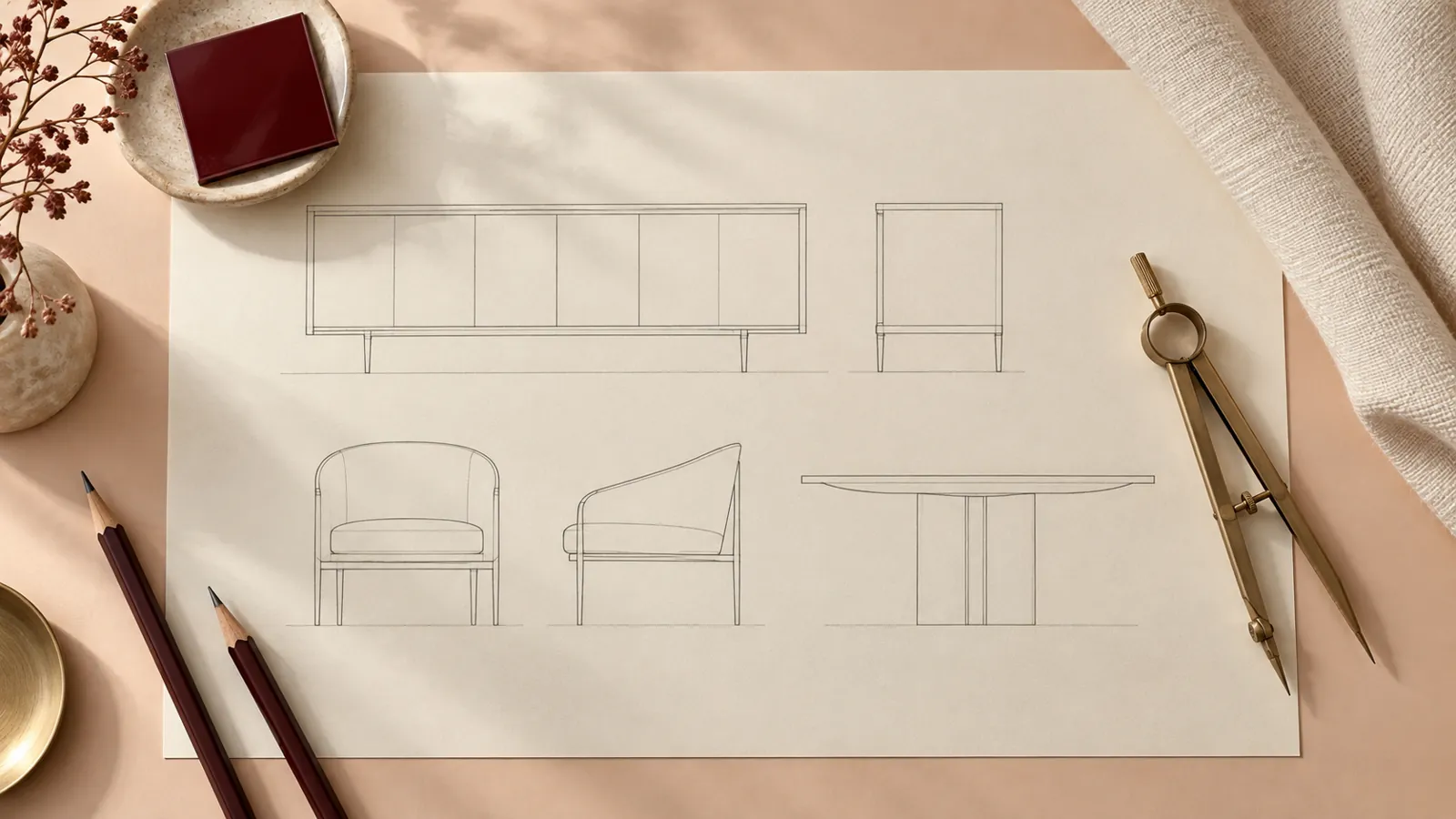
There is no universal lifespan, price advantage or moisture-resistance guarantee for either category. Images are generated editorial illustrations, not evidence of a particular FCI product's construction or photographs of its workshops.
Sources
- Moisture Relations and Physical Properties of Wood, Wood Handbook chapter 4, US Forest Service, Glass and Zelinka, 2021.
- Wood-Based Composite Materials, Wood Handbook chapter 11, US Forest Service, 2021.
- Materials and Finishes, FCI India.
- Custom Furniture Mumbai, FCI India.
- Our Process, FCI India.
- Contact FCI India.