TL;DR: A modular sofa suits a Mumbai home when its individual sections fit the delivery route, connect securely and form useful layouts without blocking circulation.
Key takeaways
- Plan the sofa as named modules with exact dimensions, not as one overall sketch.
- Test the main configuration and at least one realistic alternative on the floor.
- Measure every individual section against lifts, doors, corridors and turns.
- Upholstery, seams and connectors should match everyday use and maintenance.
- Buy extra modules only when the room has a defined job and storage place for them.
What is a modular sofa?
A modular sofa is built from separate seating units that join to create a larger arrangement. Typical pieces may include armless seats, corners, chaise sections and ottomans, although every collection uses its own geometry and connectors.
Modularity can improve layout and delivery flexibility. It does not mean that arbitrary pieces from different ranges will fit together, or that every arrangement will be comfortable.
Ask for a module schedule listing each product code, width, depth, height and connection type. Calling everything section A may feel efficient until the installation team arrives with three different section As.
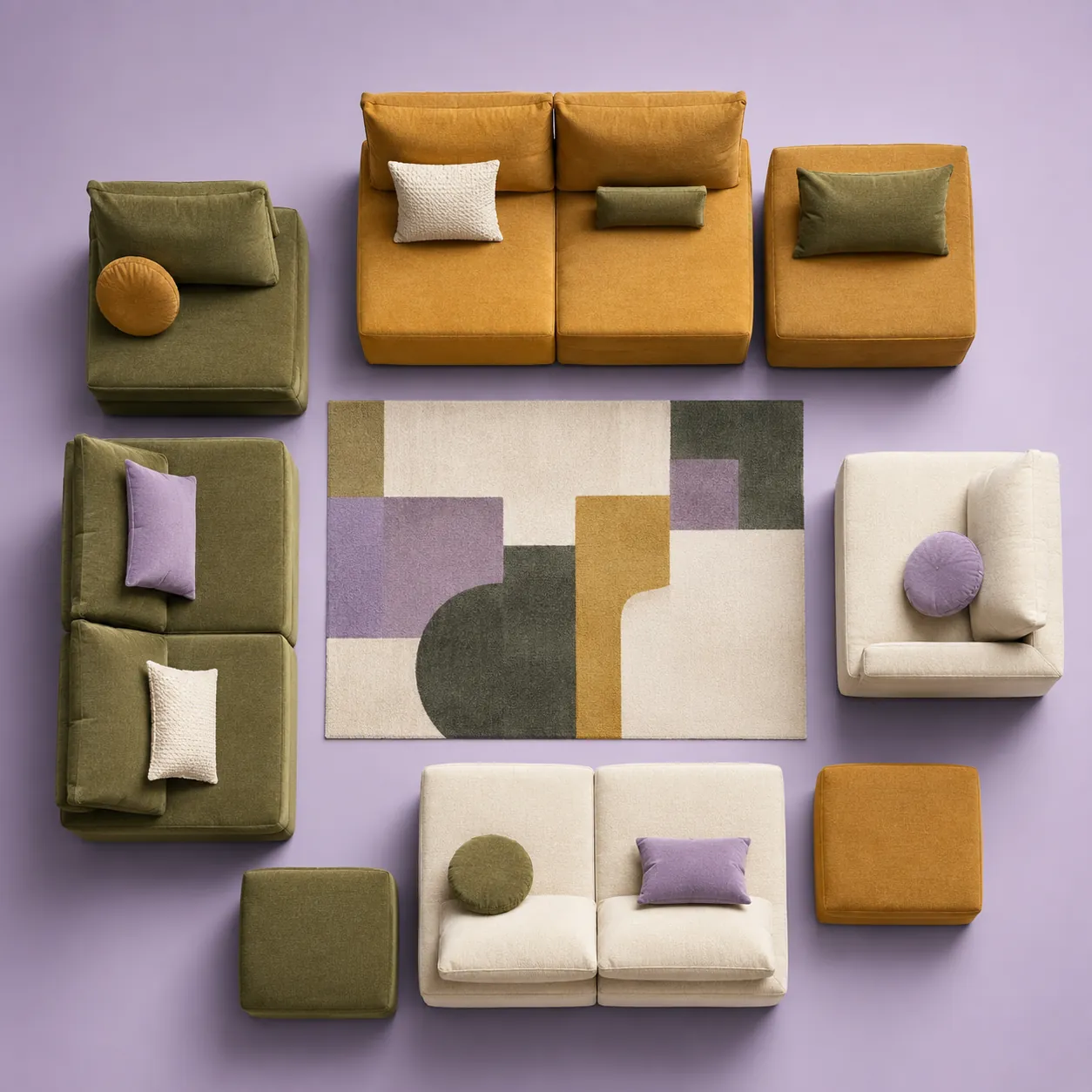
Why can a modular sofa suit Mumbai apartments?
It can suit Mumbai apartments because smaller individual sections may be easier to deliver and can respond to changing room uses. That advantage depends on the actual component sizes and access route.
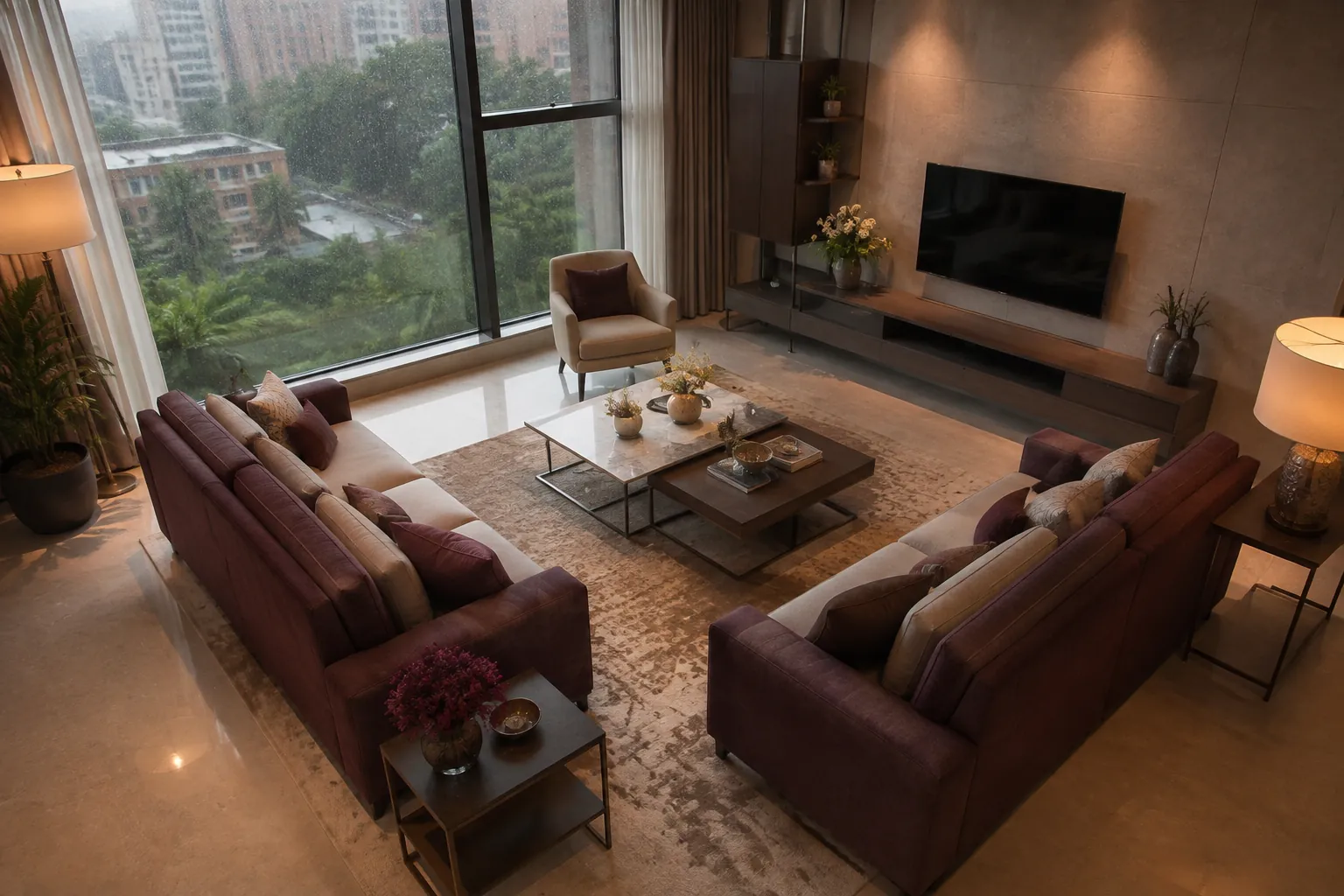
A compact L shape may define a living area without adding separate armchairs. The same modules might form two facing rows for conversation, provided the backs and connectors are designed to be seen and used that way.
Compare the idea with the building realities in FCI India's verified Mumbai furniture delivery access survey. The smallest lift dimension, tightest corner and narrowest doorway matter more than the generous lobby.
How should you plan the configuration?
Draw every module to scale and label its intended position. Mark windows, doors, balcony access, television sightlines, air-conditioning paths and fixed storage.
Tape the main configuration onto the floor. Sit where each seat would be, then test movement from the entrance to the kitchen, bedrooms and balcony. Repeat the exercise for any alternative layout that influenced the purchase.
Do not pay for theoretical flexibility you will never use. A spare chaise needs a destination, not optimism.
Which modules should you buy first?
Start with the smallest complete arrangement that solves the room's normal seating need. Add a chaise, corner or ottoman only when it has a clear function and fits both daily and guest layouts.
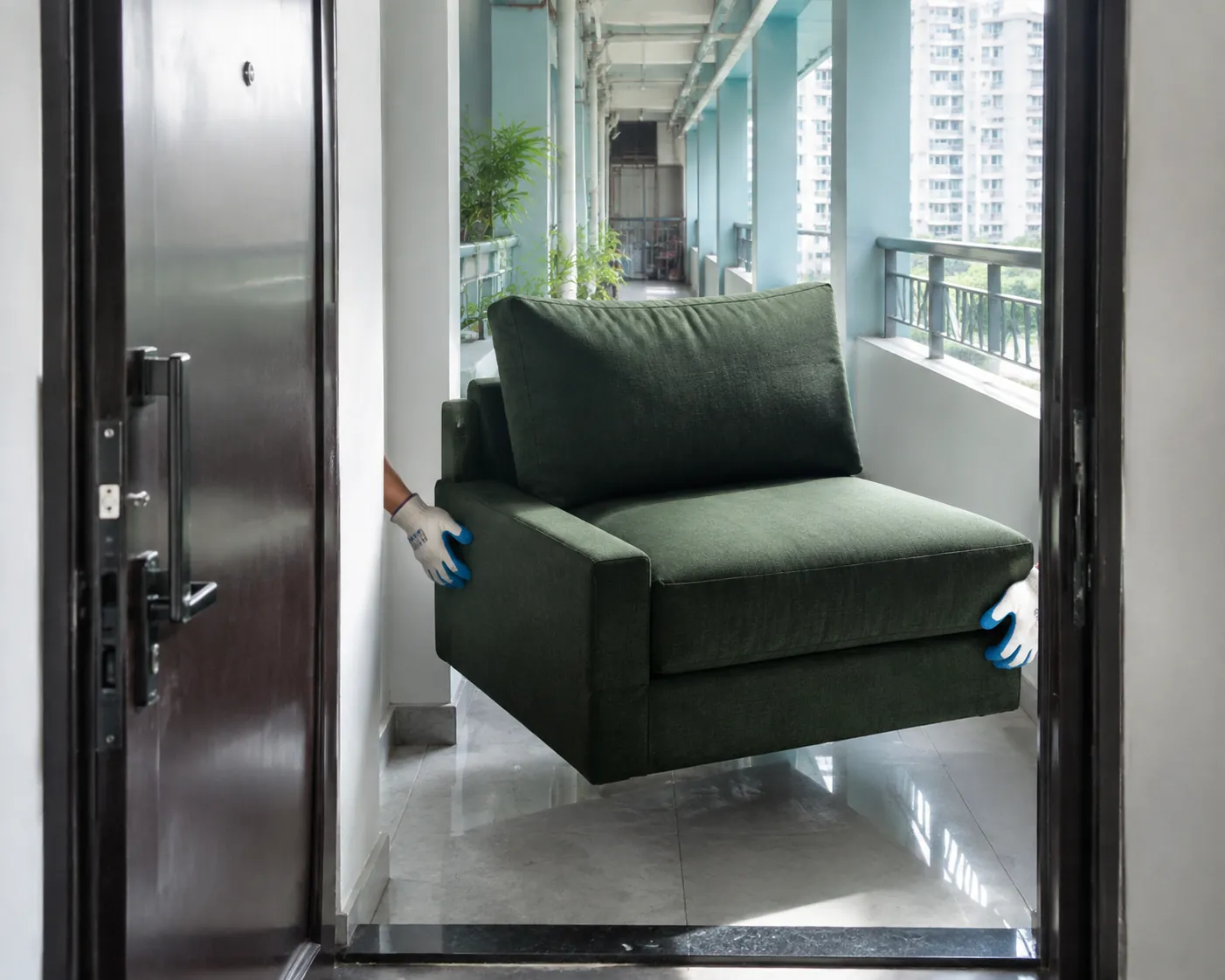
Check whether an armless end looks finished when separated. Confirm whether connectors are reversible and whether modules can stand independently without sliding.
Request a final drawing and component list before approving the order. That document should match the quotation and eventual delivery.
What upholstery works during Mumbai's monsoon?
Choose upholstery from product-specific performance and care information, not from a blanket claim that one fibre is monsoon-proof. Indoor humidity, ventilation, spills, sunlight and cleaning all affect use.
Ask for fabric composition, cleaning instructions, colourfastness or abrasion data where the maker provides it, and physical samples. Inspect seams, zips and removable covers because a modular sofa contains many junctions that collect crumbs and dust with bureaucratic efficiency.
FCI India's sofa fabric guide for Mumbai monsoons explains how to compare fabrics without pretending that a marketing label replaces ventilation and care.
How do connectors affect everyday use?
Connectors should hold modules in alignment while remaining practical for the intended rearrangement. Ask the supplier to demonstrate connection, release and levelling.
Inspect whether gaps open under normal sitting, whether the floor needs protection and whether the feet suit rugs and hard surfaces. Loose pieces can drift; very difficult connectors can make flexible furniture effectively fixed.
If the sofa will often be moved, ask who can do so safely and how the fabric and floor should be protected.

Will every module fit through the lift?
No, modular construction reduces component size but does not guarantee delivery access. Compare each rigid module's packed dimensions with every doorway, lift and turn.
Record removable feet, arms or backs only when the manufacturer confirms they are removable for delivery. Check service-lift booking and building rules separately.
A site survey is especially valuable when a chaise or corner unit has an awkward depth. The word modular is not a magic spell for narrow corridors.
How do you judge comfort?
Test several seats because corner, armless and chaise modules may feel different. Check seat depth, back support, cushion recovery, edge comfort and the effort required to stand.
Use the sofa in the way your household will use it. Sit upright, relax, speak to someone across the arrangement and view the screen where relevant. Comfort cannot be inferred reliably from a photograph or one decorative cushion.
What should the order record?
The order should identify every module, orientation, upholstery, colour, finish, connector and delivery responsibility. Attach the approved layout and access notes.
Confirm care information, inspection steps and how mismatched or damaged components are handled. For custom choices, use FCI India's live materials and finishes page to prepare a focused sample review.
Limitations
This guide cannot establish fit, comfort, durability or delivery feasibility for a particular sofa without its specifications and the home survey. Module systems, connectors, fabrics and building restrictions vary. No universal moisture, stain, safety, lead-time or lifespan claim is made.
Bring a scaled plan, photographs, lift dimensions and your seating priorities to a design discussion. Contact FCI India to review a configuration before it becomes a room-sized assumption.