TL;DR: Plan wardrobe lighting for Mumbai before the cabinets are made, with the light positions, controls, cable routes and maintenance access agreed on the same drawings.
Key takeaways
- FCI India's custom-wardrobe page lists integrated lighting and sensor-operated LED lighting among its options.
- Häfele's lighting-planning guidance separates the lighting purpose, switching, concealed cabling and power supply.
- A lighting specification needs compatible components, not just a strip-light colour.
- Identify the driver location and how it can be reached for maintenance before approving the joinery.
What should wardrobe lighting help you do?
Start with the task the light must serve: finding clothes, using drawers, viewing accessories or using a mirror. Our recommendation is to write that task beside each proposed fitting on the wardrobe elevation.
Häfele's furniture-lighting guidance distinguishes task, ambient and accent purposes at the start of planning. That is a useful organising principle, not a prescription for one light source in every compartment.
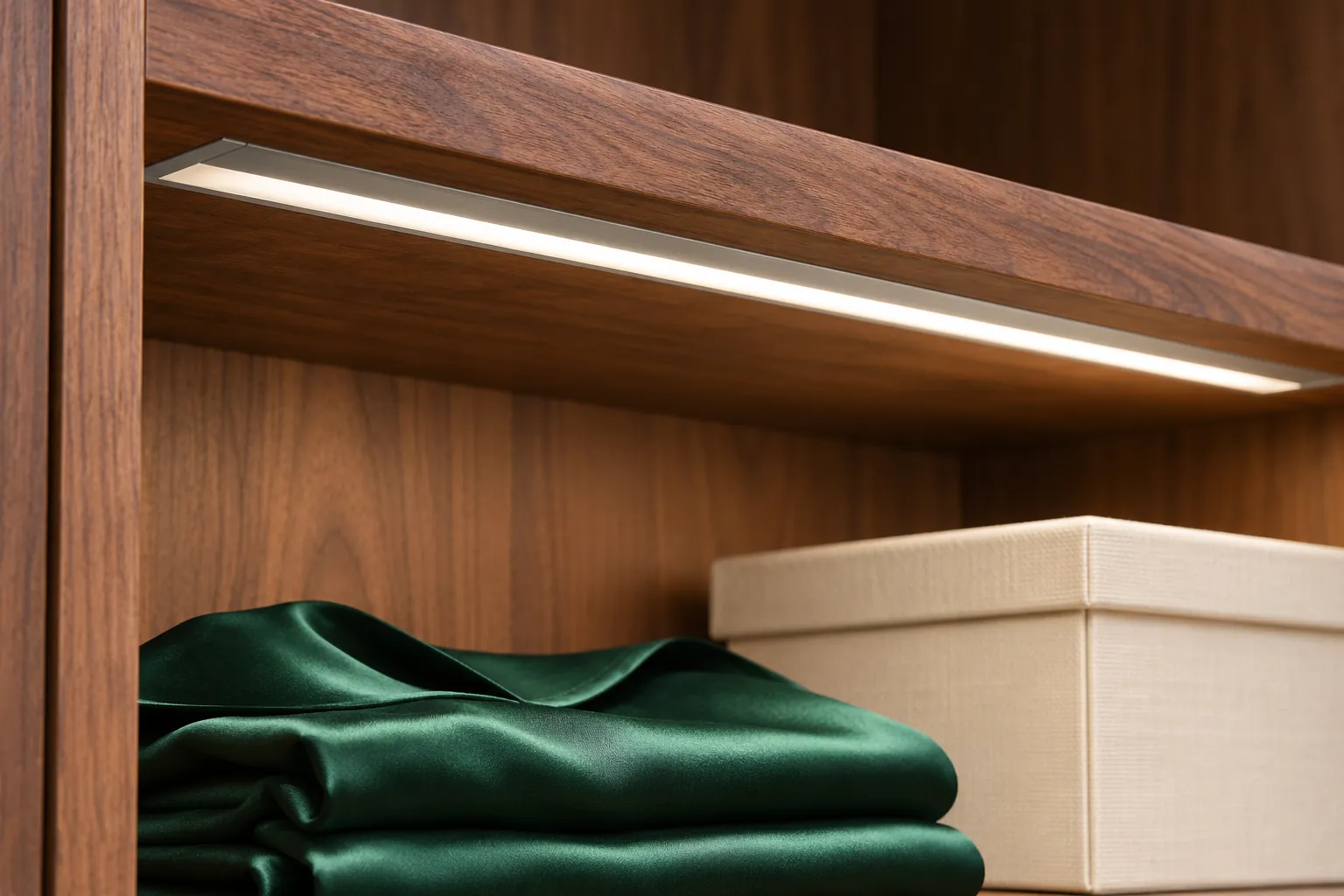
For a Mumbai bedroom where the wardrobe also contains a dressing area, compare the cabinet lighting with the mirror and room lighting together. For a separate walk-in, assess each storage zone. Neither scenario should be specified from a photograph with every shelf empty.
Where should the lights and sensors sit?
Locate them using the actual shelves, hanging rails, doors and intended contents. We suggest reviewing a sample bay with clothing in place before repeating the detail across the whole wardrobe.
Häfele advises planning both switch requirements and switch positions. Its system guidance describes mechanical switches, sensors and dimmers as different control options.
Write down which door or movement activates which light, whether there is a manual control and what should happen when the wardrobe closes. Ask for a demonstration using the selected components. Smart is a pleasant adjective; a switch that behaves as agreed is the useful result.
Why does driver access matter?
The power-supply location needs to remain reachable for maintenance and replacement. Lighting retailer Simple Lighting's wardrobe guide specifically recommends accessible drivers, connectors and cables rather than planning them after fitting the lights.
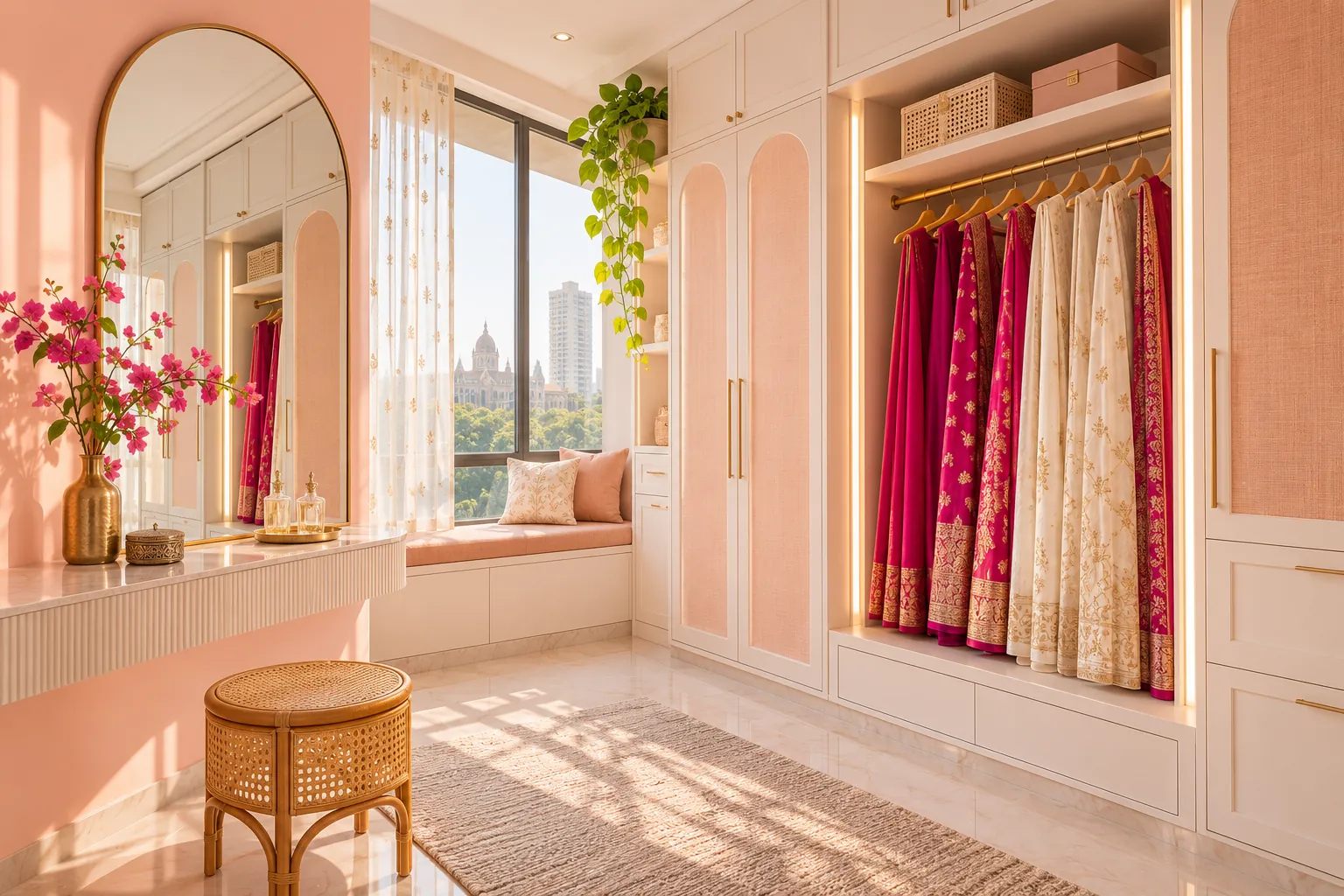
Our purchasing recommendation is to mark the access method on the joinery drawing. Ask whether reaching the driver requires removing a designated panel, clearing a shelf or disturbing finished cabinetry. Agree which of those operations is acceptable before manufacture.
This is a maintenance brief, not permission to open or work on electrical equipment yourself. The installer should resolve safe access, electrical work and the selected manufacturer's installation requirements.
Is an LED strip a complete lighting system?
No, the strip is only part of the specification. Häfele's planning guidance includes concealed cable routes, switching and selecting the appropriate driver for the connected devices.
Ask the project team to identify the lights, profiles, diffusers, drivers, connectors and controls as one coordinated package. Request the component references and compatibility confirmation. Do not mix parts solely because their plugs or colour descriptions look familiar.
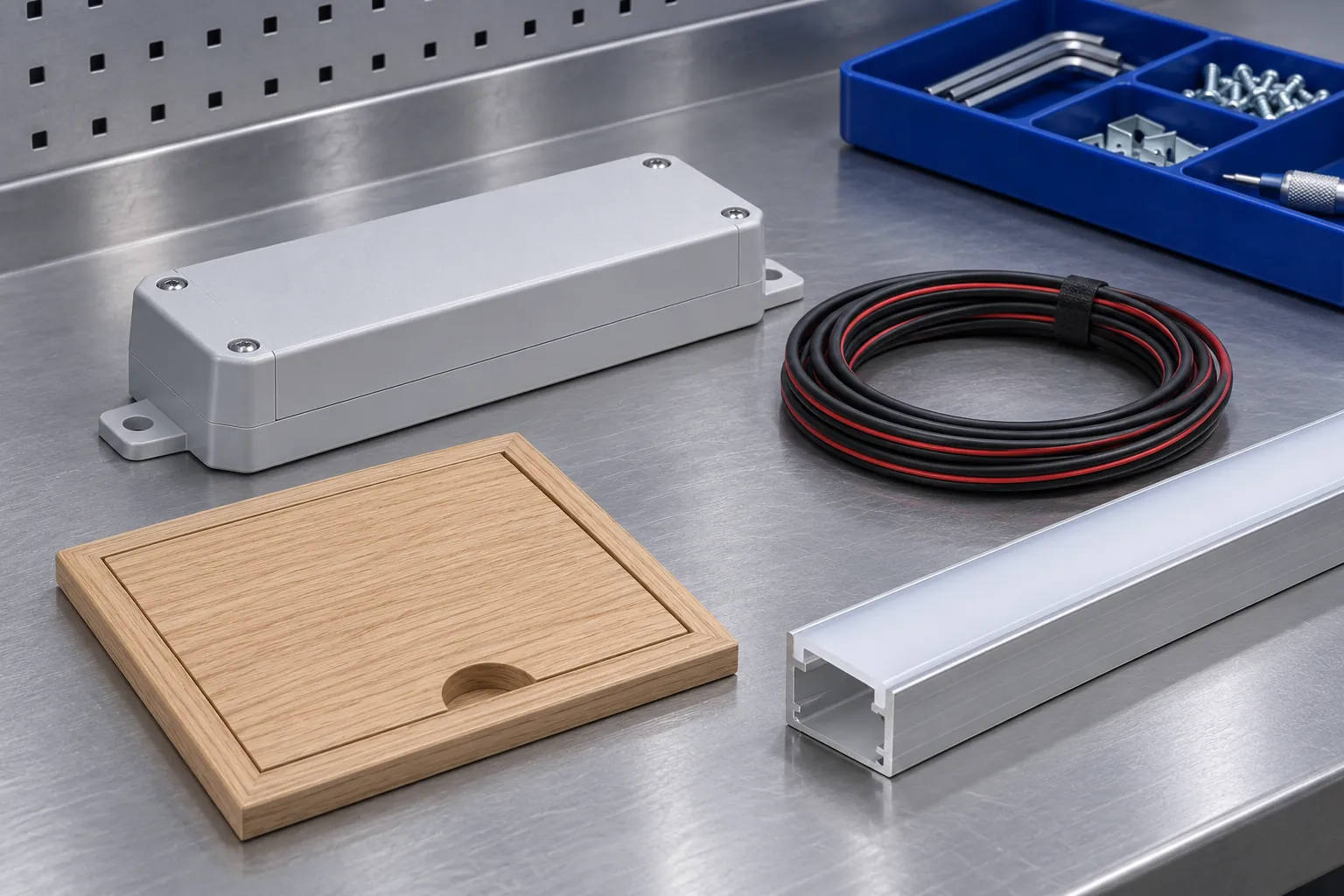
Avoid choosing an arbitrary wattage or cable route from an online example. The correct electrical specification depends on the selected system and site, and belongs with the qualified project professional.
Who should own the lighting handover?
Name the person responsible for coordinating the joiner and electrical installer, then record who supplies, installs, tests and supports each component. This is our project recommendation rather than a claim about a standard industry contract.
FCI India's custom-wardrobe service lists integrated lighting for walk-ins and sensor lighting in its wardrobe offer. Use that discussion to agree the exact package, not to assume every optional feature is included in your quotation.
At handover, request component references, operating instructions, the approved drawing and the agreed service contact. Test the lighting with the doors, drawers and intended contents in their normal positions.
Limitations
This guide does not design electrical circuits, set output levels, specify fire protection or establish suitability for damp locations. Manufacturer examples are not a promise that FCI India supplies those exact components. Confirm the quotation and project-specific professional requirements. Images are illustrative concepts, not installation diagrams or completed projects.
What should you bring to the consultation?
Bring your clothing inventory, room plan and preferred control behaviour to FCI India. Ask for a wardrobe elevation that shows lighting and service access together, before the cabinet specification is signed off.