TL;DR: Plan a custom bed around the mattress, complete frame, daily movement, storage, wall services and installation route before manufacturing begins.
Key takeaways
- Freeze the mattress specification before finalising the frame and support system.
- Mark the complete bed, bedside furniture and open wardrobe doors on the floor.
- Coordinate the headboard with sockets, switches, lights, curtains and wall finishes.
- Test storage movement and access with the mattress and nearby furniture in place.
- Release production only from one approved drawing and finish schedule.
What should a custom bed be designed around?
A custom bed should be designed around the chosen mattress, the people using it and the finished bedroom. Record mattress width, length and depth, then define the support system and the amount of mattress intended to sit above the rails.
The full bed can be wider and longer than the mattress because of upholstered rails, wings, integrated tables or a footboard. Tape that outer footprint on the finished floor. A mattress size is a useful starting point, not a diplomatic exemption from room geometry.

FCI India's current luxury furniture guide for Mumbai specifically notes that bespoke beds can respond to bedroom proportions and headboard scale. The project still needs one dimensioned brief rather than a collection of attractive references.
How much space should remain around the bed?
The room needs useful routes to both sides of the bed, wardrobes, bathroom doors and windows. Draw the bedside tables, open drawers, curtain stack and wardrobe doors as moving objects, not neat closed rectangles.
Test daily actions: getting in and out, making the bed, opening storage and cleaning around the frame. If only one side is regularly used, record that deliberate choice and check whether maintenance remains possible.
Use the walk-in wardrobe Mumbai guide to coordinate nearby doors and drawers. Bedroom furniture is a system. It does not become a system merely because every piece shares the same veneer.
Should the bed include storage?
Bed storage is useful only when it can open, be reached and carry the intended contents. Choose drawers, a lift-up platform or open compartments according to room clearance, mattress weight, frequency of use and the manufacturer's mechanism.
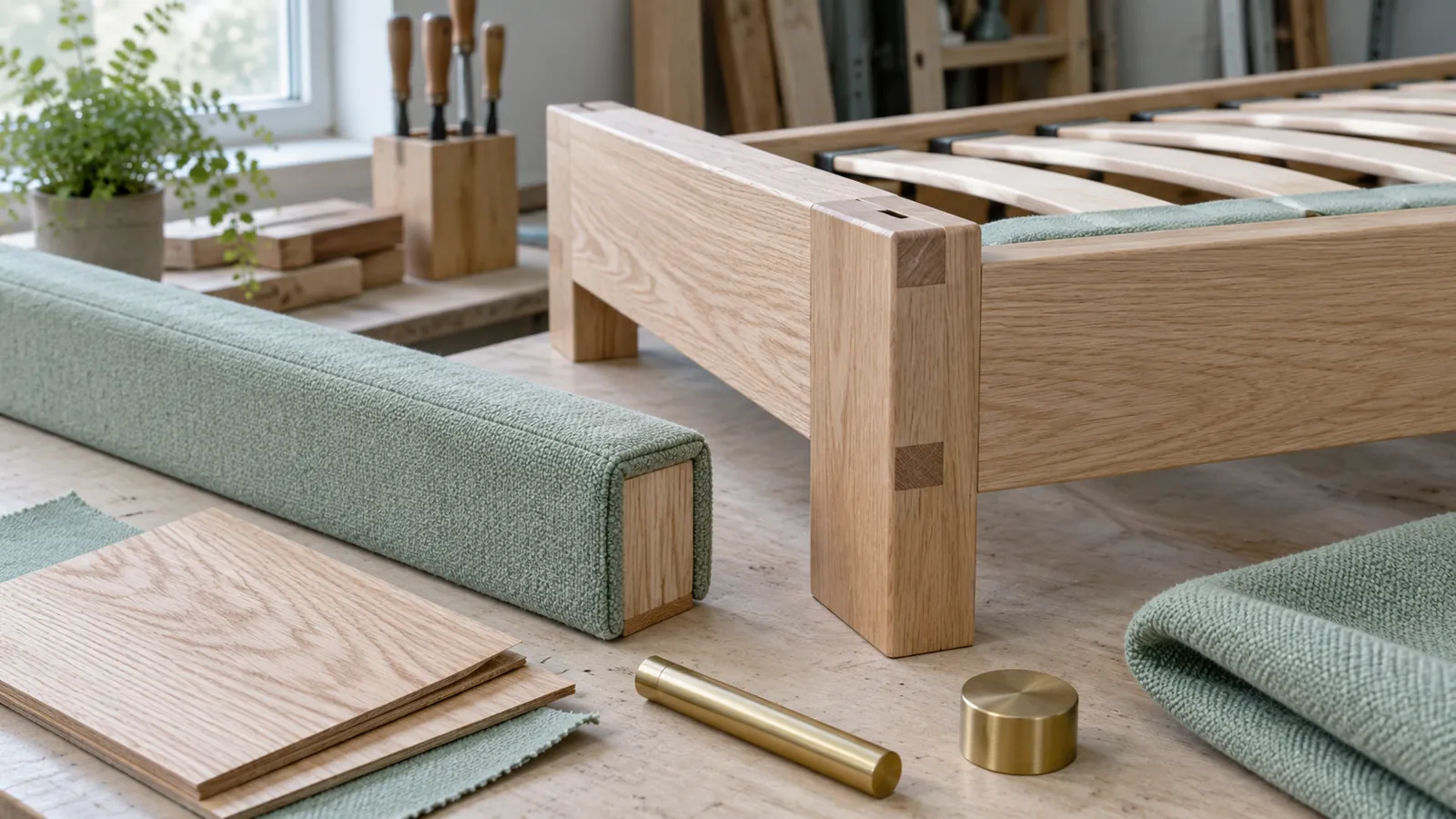
Draw every drawer fully open and show the lifted platform at its operating angle. Check handles, floor rugs and bedside furniture. Ask about safe operation, ventilation, internal finish, load assumptions and access to the mechanism for maintenance.
Do not treat under-bed storage as a spare room with better branding. Decide what belongs there, then size and divide it deliberately.
How should the headboard and services meet?
The headboard should be coordinated on a wall elevation with sockets, switches, reading lights, air-conditioning controls, windows, curtains and decorative panels. Confirm the final mattress height so lights and switches remain reachable from the actual sleeping position.
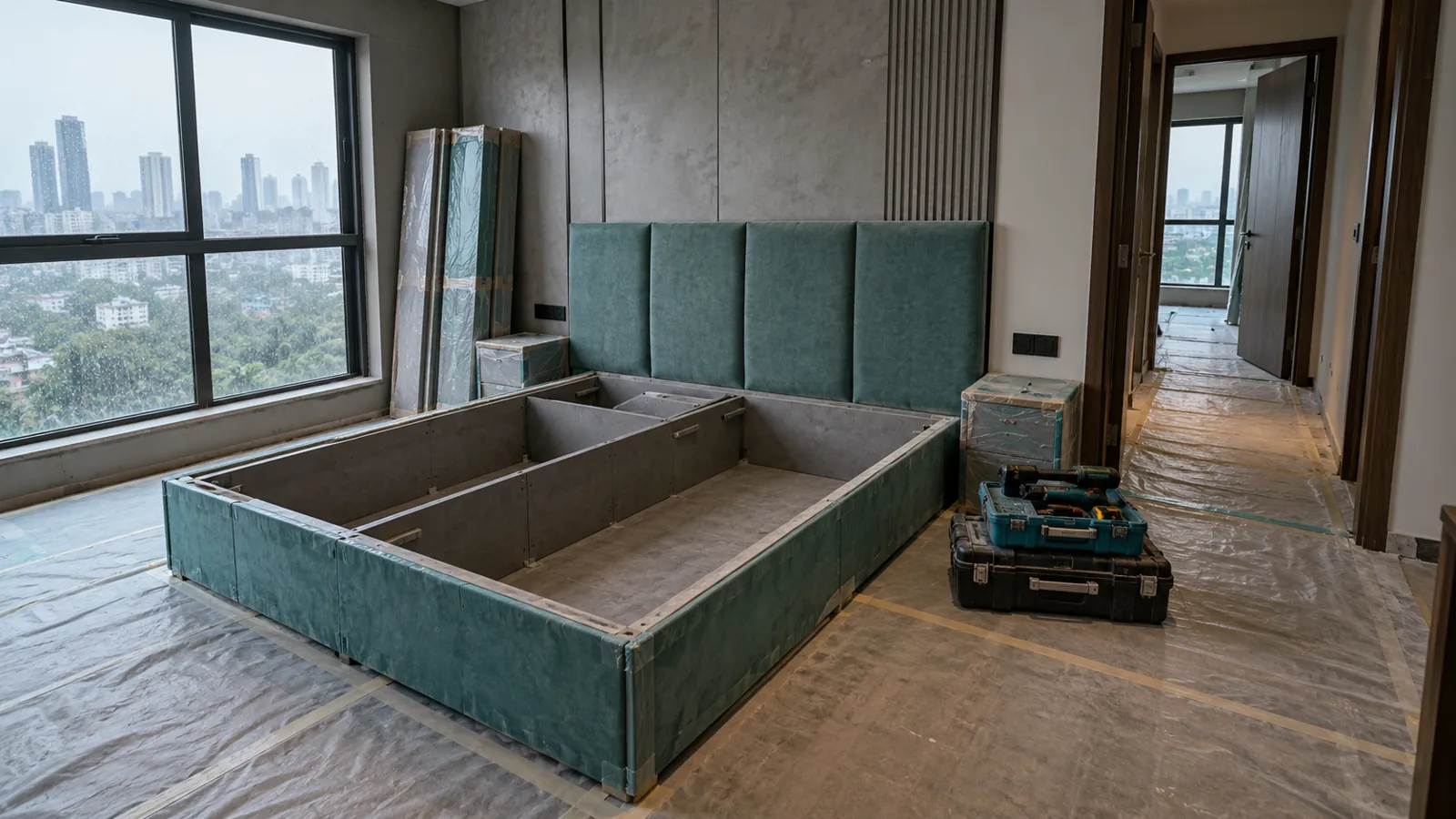
For a wide or tall upholstered headboard, show joints required for transport and installation. Record whether it attaches to the bed or wall, the wall substrate and who provides the fixings.
FCI India's live Bali Bed page confirms a current bed product route, but its visible page does not supply the dimensions or construction needed for this project. Request the exact technical information for any shortlisted model or use it only as design inspiration.
Which materials need written approval?
Approve the timber or veneer, substrate, upholstery, stitching, metal finish, visible edges and internal storage finish as coded samples. The written schedule should state where each material appears.

Review samples in the bedroom's daylight and artificial light. Natural materials vary, while lacquer, laminate, fabric and metal have different care needs. A sample is evidence of an approved direction, not a promise that natural grain will photocopy itself across every panel.
Ask for product-specific cleaning instructions and clarify which components can be repaired or reupholstered later.
What should happen before manufacturing?
Recheck finished room dimensions, floor levels and service positions before production release. Reconcile the plan, elevations, sections, mattress specification, finish schedule, hardware and quotation so one current revision governs the work.
Plan the largest panel and headboard section against the lift, staircase, corridor and bedroom door. Agree delivery protection, installation sequence, wall fixing, electrical coordination, snagging and removal of packaging.
Limitations
This guide does not set structural loads, ergonomic clearances, electrical design, fire requirements, prices or lead times. The right solution depends on the room, users, mattress and building. Generated images are editorial illustrations, not completed FCI India projects or technical drawings.
What is the next sensible step?
Freeze the mattress and room survey, then ask FCI India for coordinated drawings of the complete bed, headboard, storage movement and bedside services before manufacturing.
Sources
- The Complete Guide to Buying Luxury Furniture in Mumbai, FCI India. Current bespoke furniture and local specification context.
- Bali Bed, FCI India. Current bed product route.
- Walk-In Wardrobe Mumbai: Plan Every Zone, FCI India. Verified bedroom storage and installation planning.