TL;DR: A curved sofa works best when its radius, seating positions and circulation are drawn into the room plan before the upholstery and silhouette steal the show.
Key takeaways
- Curved sofas need a room layout, not a hopeful empty corner.
- The curve should support conversation and circulation without blocking routes.
- Full-scale dimensions and detailed drawings should be approved before production.
- Upholstery should be chosen for the room, use and maintenance expectations.
When does a curved sofa work well?
A curved sofa works well when it creates a deliberate seating group and leaves a clear route around it. It can soften a room with strong straight lines, but the shape needs enough space to read as intentional rather than merely inconvenient.
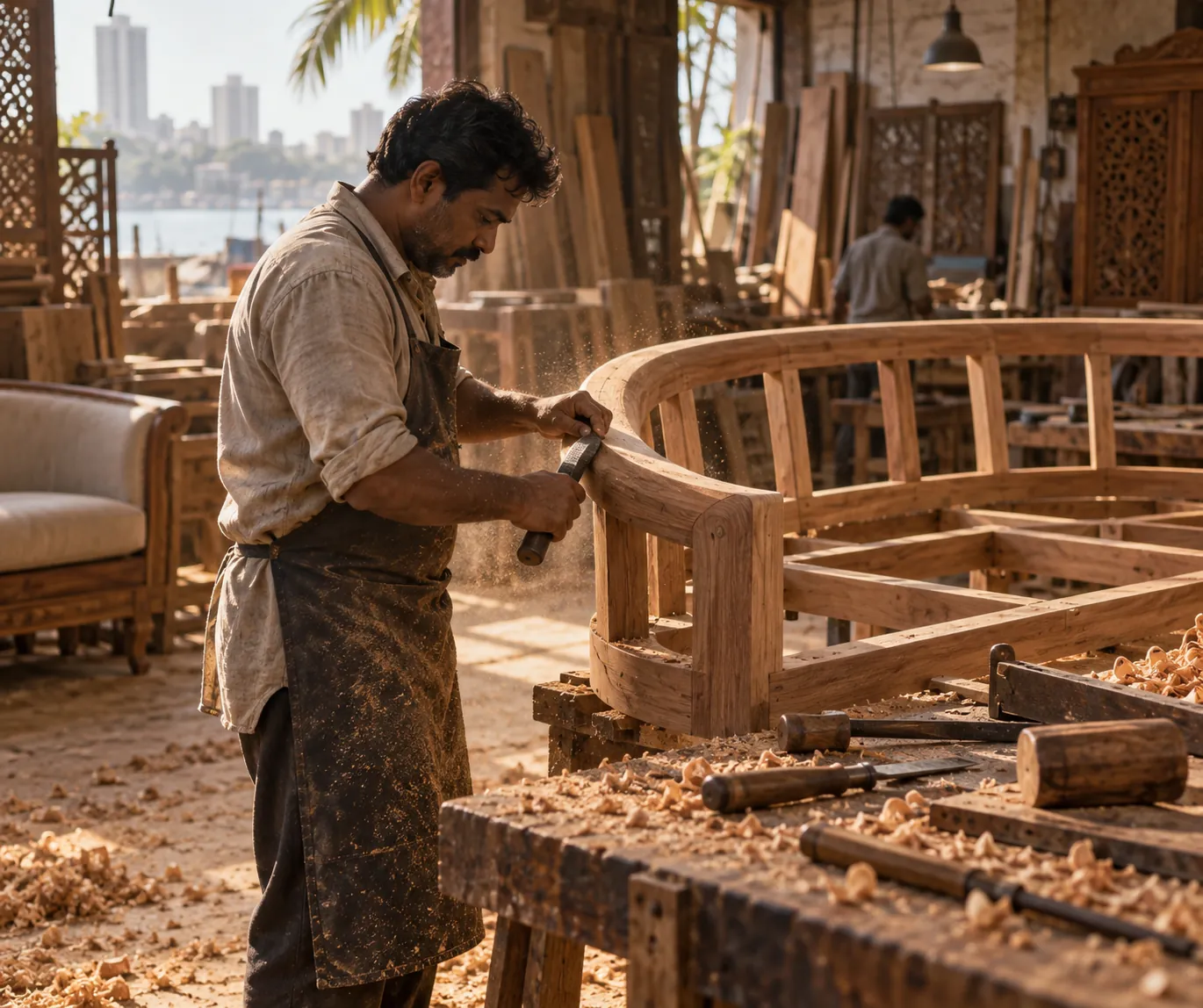
Start with where people enter, sit, talk and pass through. A curve has presence. It is not, sadly, a substitute for a floor plan.
How should you plan the radius and circulation?
Plan the sofa footprint, coffee-table zone and walking routes together. Use a full-size outline on the floor, then test the route from doorways to adjoining spaces before agreeing the dimensions.
Check the likely viewing angle as well. A sofa that faces the room well may need a different radius from one designed around a media wall or a window view.
Why do drawings matter for a bespoke sofa?
Detailed drawings make the agreed size, construction details, material specification and hardware visible before a bespoke piece moves into production. FCI India's bespoke process says this is the stage for revisions, after which the design is frozen for production.
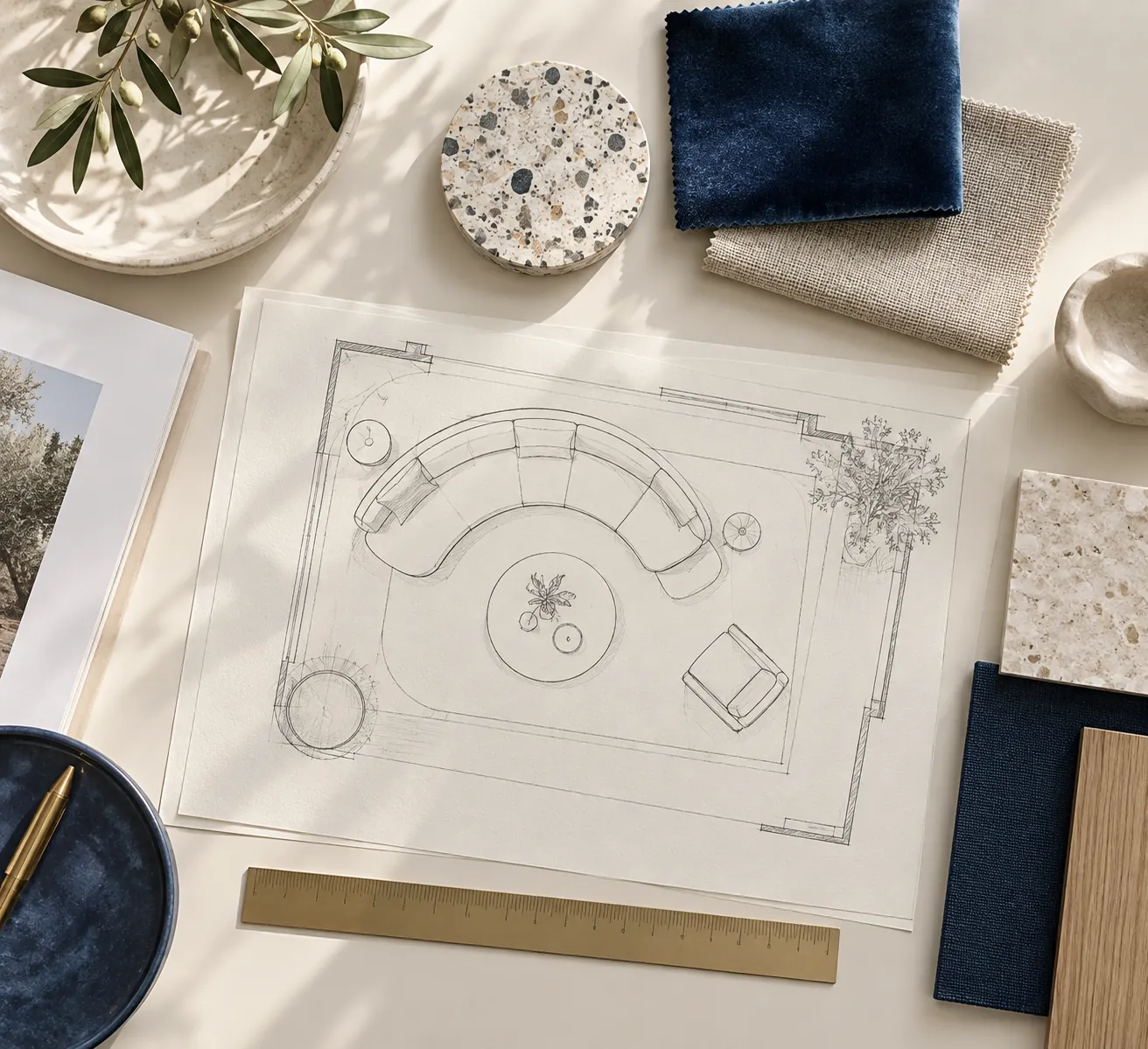
Review the drawing against the actual room and confirm the dimensions in writing. This is much cheaper than discovering a favourite curve has become a corridor.
Which upholstery questions should you ask?
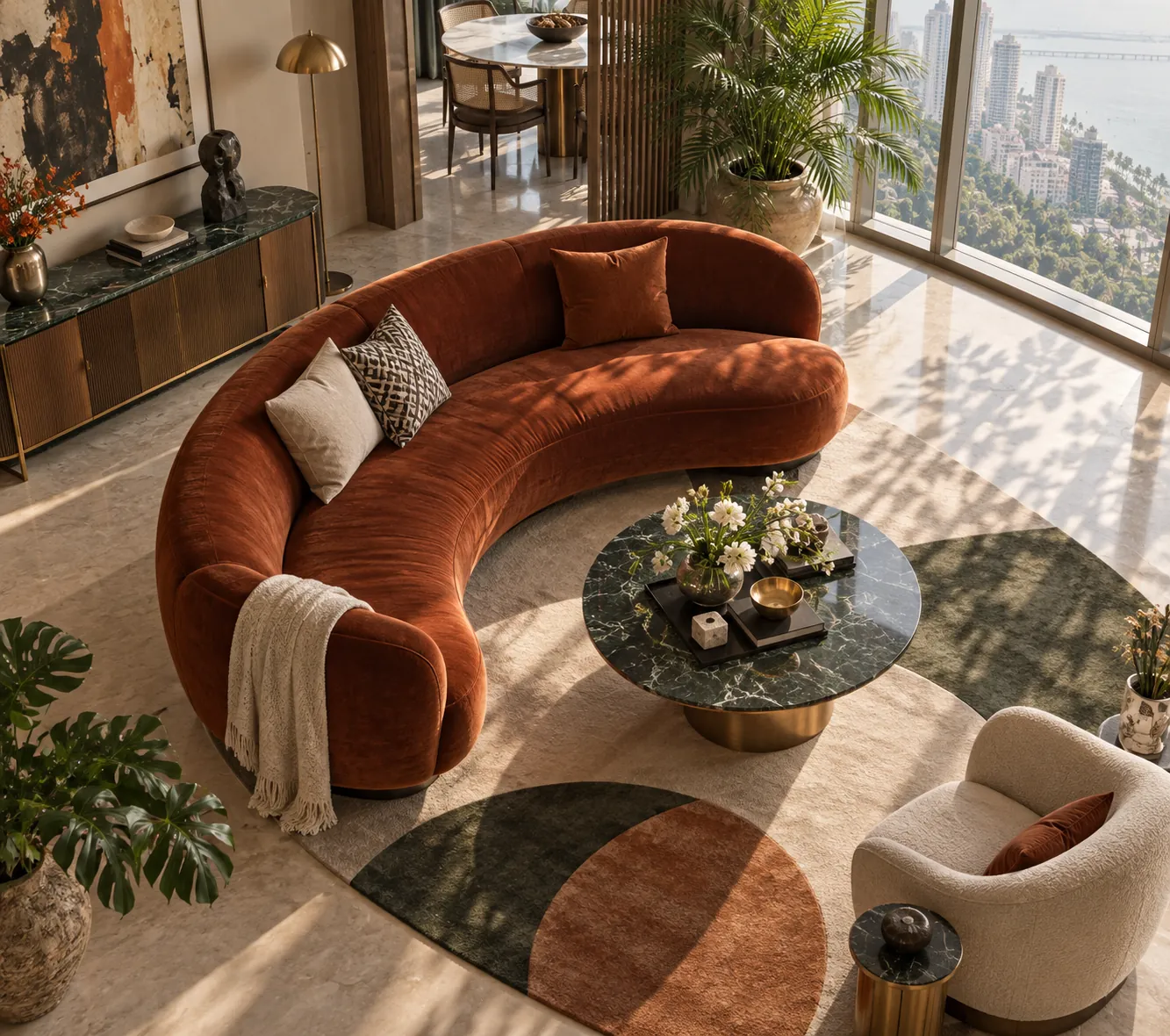
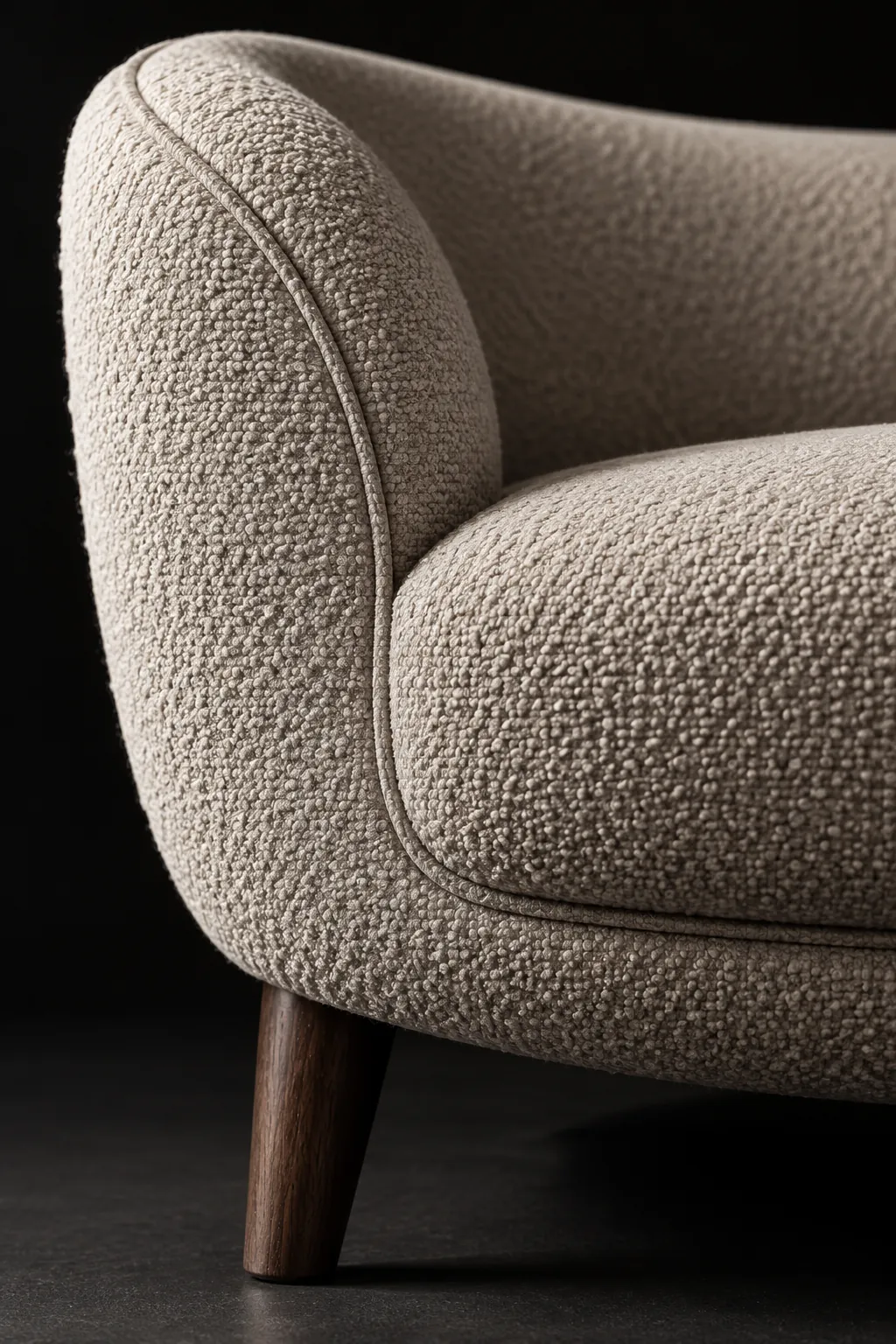
Ask how the upholstery will be used, cleaned and maintained, then view physical samples in the intended room. Light changes colour, texture changes how a sofa reads and daily life is notoriously uninterested in a mood board.
FCI India says its process includes material sampling and uses physical samples for significant pieces. Ask to compare the proposed fabric with surrounding flooring, wall colour and nearby timber or metal finishes.
What should happen before production and delivery?
Before production, confirm the final drawings, sample selection, placement and access route. FCI India says its process includes quality control, final inspection against approved drawings and delivery or installation after the design is signed off.
For complex access, share lift, stair, doorway and turn dimensions early. A modular construction may be considered where the approved design and site conditions call for it.
Limitations
This article is general commissioning guidance. The suitable radius, construction, materials, programme and price depend on the confirmed room, specification, site survey and approved design.
Ready to shape the room around the right sofa?
Book an FCI India consultation with room dimensions, photographs and a clear description of how the space is used. FCI India can develop a bespoke brief before the design is committed to production.
Sources
- Our 6-Step Bespoke Process, FCI India. Consultation, sampling, drawings, production, inspection and installation process.
- FCI India, FCI India. Current Mumbai bespoke furniture and interior-design service context.