TL;DR: Commission a custom sideboard from one approved drawing that coordinates room fit, internal storage, hardware, materials, services, delivery and installation.
Key takeaways
- Define the cabinet's contents and daily use before drawing its exterior.
- Show open doors, extended drawers, skirting and sockets on the room plan.
- Specify the internal build, hardware, ventilation and cable routes in the release drawing.
- Approve physical finish samples in the intended room light.
- Design modules around the Mumbai delivery route and final installation sequence.
When is a custom sideboard worth considering?
A custom sideboard is worth considering when a standard cabinet cannot use the wall, storage brief or material scheme effectively. It can respond to an exact width, awkward column, specific tableware collection or coordinated interior finish.
FCI India's current custom furniture Mumbai page includes sideboards within its made-to-specification dining range. Custom work is valuable because decisions can be tailored. It is not permission to postpone those decisions until the workshop has already started cutting material.
Write a short use brief first. State the room, contents, serving tasks, appliances if any, display requirement and whether the cabinet must conceal cables or equipment.
How large should a custom sideboard be?
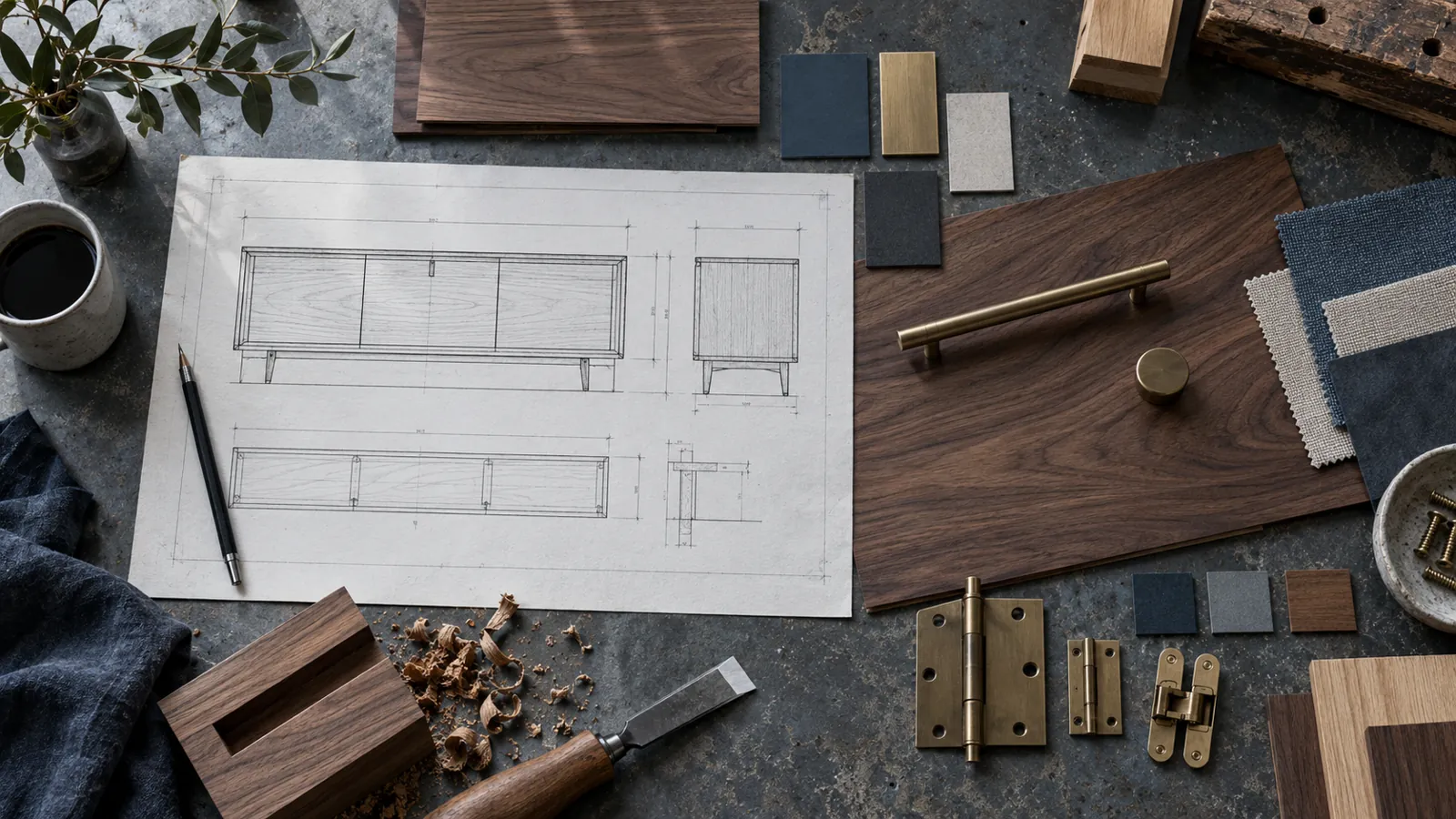
A custom sideboard should fit the finished wall while allowing all doors, drawers, dining chairs and circulation routes to work. Survey the wall, floor, skirting, sockets, switches and nearby openings before setting its dimensions.
Draw the cabinet closed and fully open. Include the person standing at a drawer and the chair pulled back from the dining table. The custom dining table Mumbai guide applies the same useful discipline: approve furniture in the states people actually use, not only as a polite rectangle on plan.
Check visual scale too. The sideboard should relate to the table, wall art, mirror and lighting without turning every available millimetre into cabinetry.
What should the internal drawing show?
The internal drawing should show clear compartment dimensions, shelf positions, drawer sizes, hardware, material thickness and intended contents. Label adjustable and fixed elements, and confirm how shelves are removed or repositioned.
Plan heavy serving pieces low enough to reach safely. Give cutlery, linens, glassware and bottles spaces that match their actual sizes. Nominal external width is not usable internal width once sides, hinges and runners join the meeting.
If equipment sits inside, show its dimensions, cable route, access, heat and ventilation requirements. The relevant equipment and cabinet specialists should approve that arrangement.
Which construction details matter?
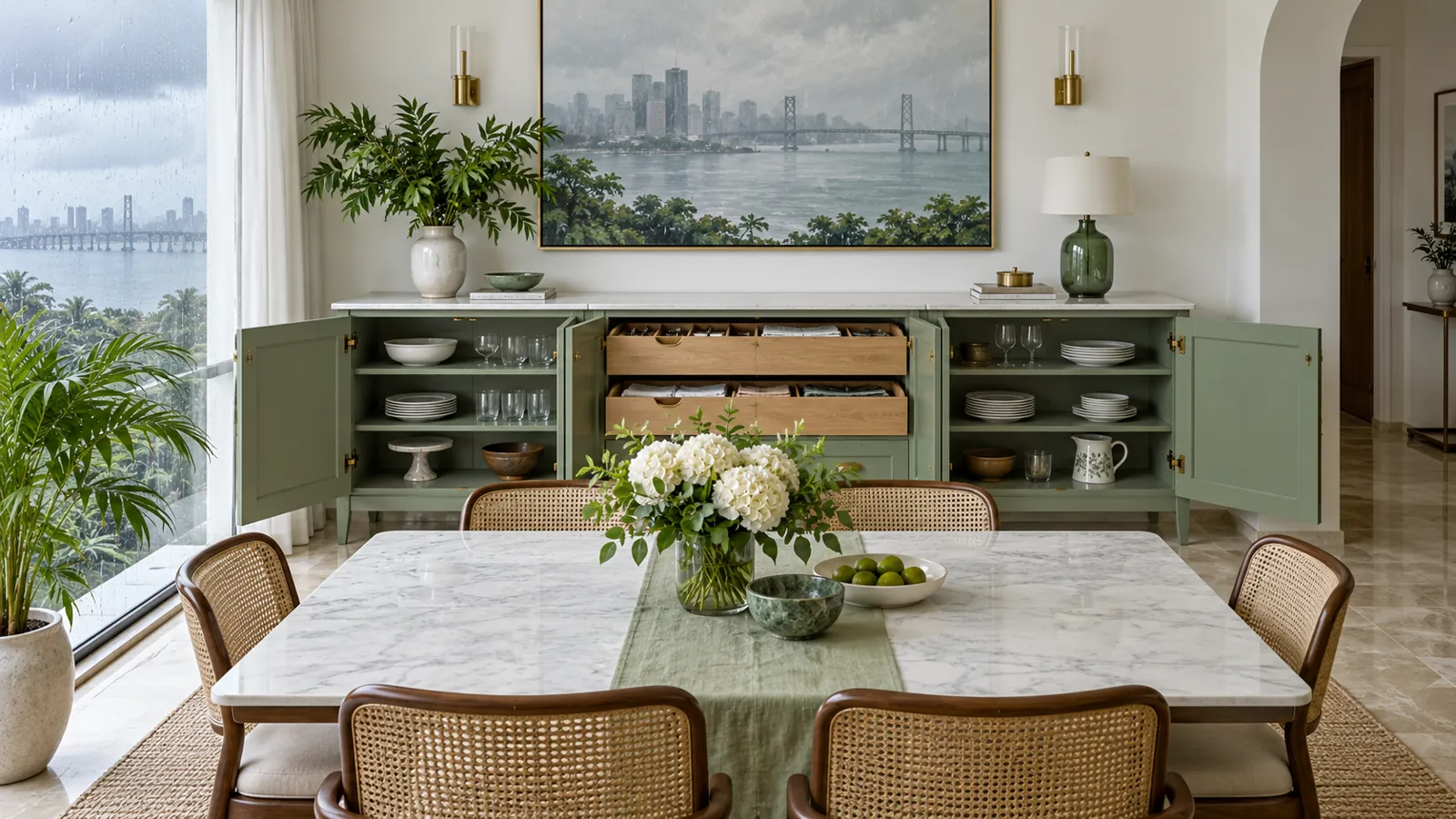
Construction details should cover the carcase, back, doors, drawers, joints, edge treatment, base, floor contact and wall interface. Ask how long spans, heavy tops and wide fronts will remain stable in the approved configuration.
Specify hinge opening, runner extension, soft-close behaviour, handle or pull details and adjustment access. Hardware should be identified by manufacturer and reference where possible, not described as premium and left to develop a personality later.
Agree which parts remain serviceable. A replaceable hinge or removable back panel can matter more over time than an invisible flourish that photographs beautifully once.
How should the finish be approved?
Approve the finish on a physical sample that shows colour, sheen, grain direction, edge detail and the meeting of different materials. Review it beside the floor, wall, table and lighting.
Natural timber and stone vary, so define the expected range and any selection process. For lacquer, metal or veneer, record the exact reference and sample sign-off. Request care guidance for every exposed surface.
Mumbai humidity, sunlight and air conditioning belong in the project brief. The maker should confirm how the specified build and finish are intended to perform under the actual room conditions. A moodboard is persuasive, but it has yet to develop a useful opinion on substrate preparation.
What must be frozen before production?
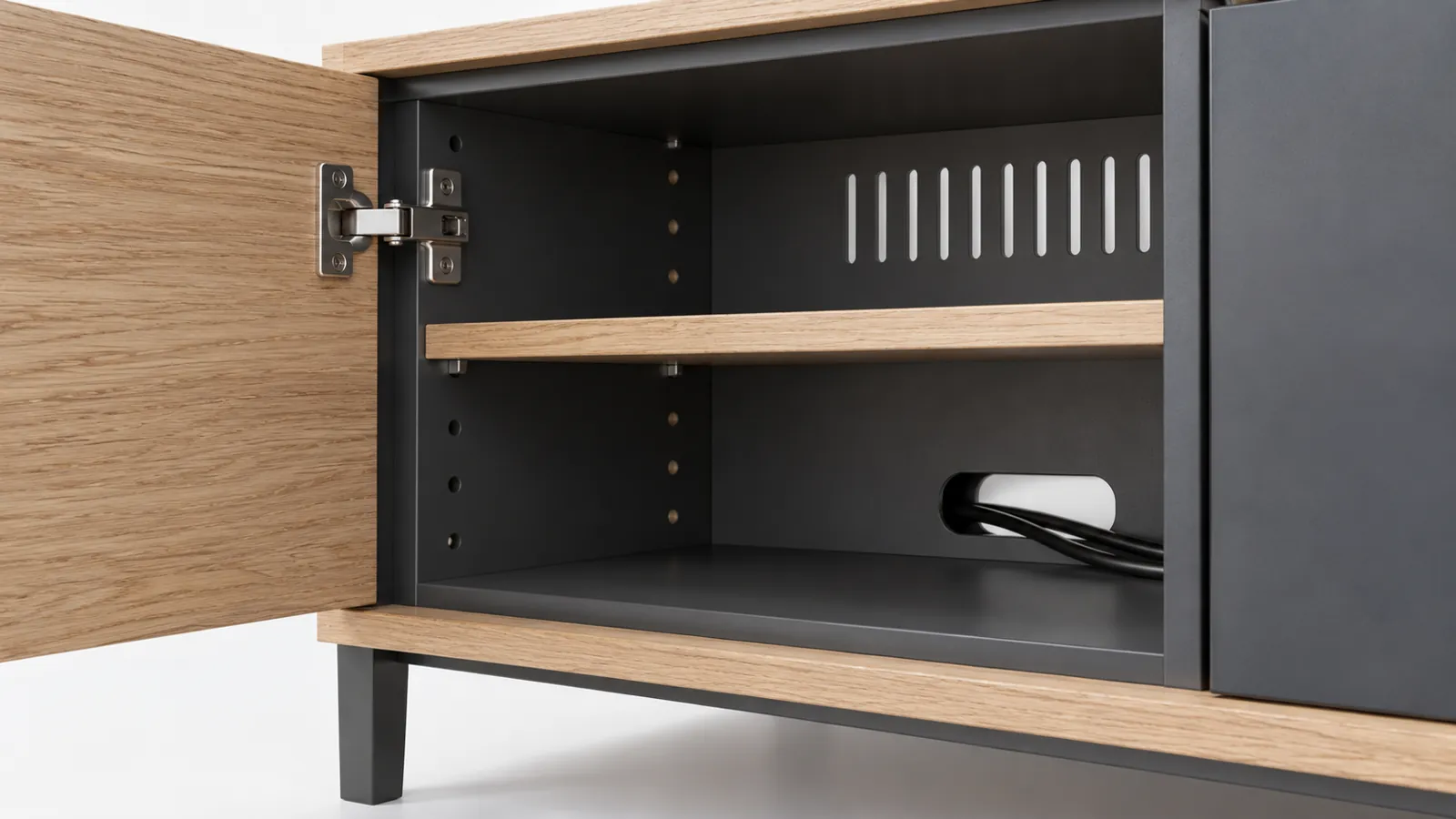
Before production, freeze one coordinated drawing and material schedule covering overall dimensions, internals, hardware, finishes, services, module joints and installation. Resolve conflicts between drawings, messages, renders and quotations.
The release pack should state tolerances, sample references, revision date and who approved it. If a substitution is proposed, assess and approve it in writing before use.
FCI India's custom page says its work is produced in its own facilities. Use workshop checkpoints where useful, such as carcase, pre-finish and final inspection, while keeping the approved release pack as the controlling reference.
How should delivery and installation be planned?
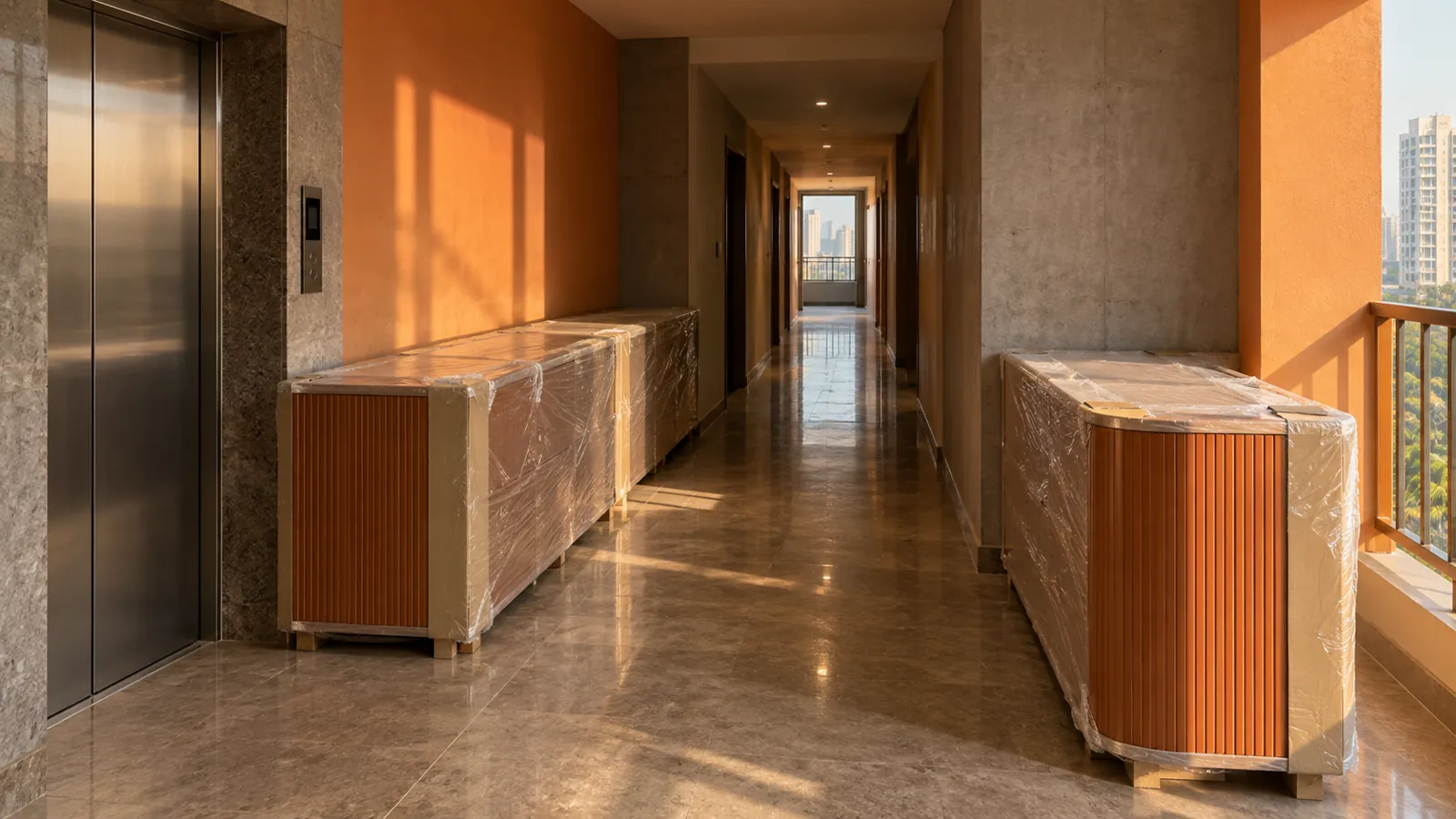
Plan delivery around the largest protected module, not the final assembled cabinet. Measure the loading point, service lift, stairs, corridors, doors and turns, then compare every component.
Confirm where modules join, how the cabinet is levelled, whether wall restraint is required and how the wall construction will be assessed. Record floor and wall protection, installer responsibilities and the final adjustment process.
If the sideboard contains services, test them before handover. Doors, drawers, shelves, lighting and cable access should all be checked in their normal operating state.
Limitations
This guide cannot provide structural design, safe fixing, electrical detail, material performance, tolerances, price or programme for a particular project. Those depend on the surveyed site, approved design, manufacturer and relevant specialists. Generated images are planning illustrations, not completed FCI products or evidence of performance.
What is the next sensible step?
Prepare a measured wall elevation, contents inventory, access survey and material references. Ask FCI India to develop one coordinated custom-sideboard drawing and do not release production until every document agrees.
Sources
- Custom Furniture Mumbai, FCI India. Current custom manufacturing scope, including dining sideboards.
- Custom Dining Table Mumbai: Measure Every State, FCI India. Verified drawing, finish, access and approval guidance.
- TV Unit Mumbai: Plan the Wall, FCI India. Verified published URL from the daily ledger, related wall, cable and storage planning.