TL;DR: The best dining chairs for a Mumbai home fit the table, support real diners comfortably and use materials and construction suited to the room and routine.
Key takeaways
- Test each chair at the intended table height.
- Check arm, apron and table-leg clearance before deciding quantity.
- Specify upholstery from a physical sample with written care guidance.
- Inspect joints, stability and floor contact beneath the decorative finish.
- Survey lifts, stairs and turns for the packed order.
How do you choose comfortable dining chairs?
Sit in a chair long enough to assess the seat edge, depth, back angle and support together. A two-second showroom perch is good theatre but poor evidence.
Check whether feet rest naturally, the front edge presses behind the knees and the back supports your usual dining posture. Ask other household members to try the chair because body proportions and comfort preferences differ.
If meals often continue into long conversations, sustained support may matter more than a dramatically upright silhouette. If chairs move frequently, manageable weight and useful grip points become important.
Will the chairs fit the dining table?
They fit only when seat width, arm height, table apron, legs and base all work together. Measure the clear openings beneath and between structural parts of the actual table.
Armchairs may fail to tuck under a low apron. Broad seats can reduce capacity near corner legs. FCI India's live custom dining table guide explains why table shape, base and seating need to be planned together.
Test the intended combination where possible. A chair and table can each be excellent and still maintain a deeply unhelpful relationship.
How many chairs should you order?
Order for comfortable everyday use first, then plan occasional guests without obstructing circulation. A table's advertised capacity is not automatically the right count for your particular chairs.
Mark the table and pulled-back seats on the floor. Rehearse the route from kitchen to table while each place is occupied. Include a sideboard, wall projection and open balcony or room doors.
If occasional chairs differ, match their seat height and decide where they will be stored. Extra seating should solve a real hosting need rather than become permanent corridor furniture.
Which upholstery suits a Mumbai dining room?
Choose upholstery according to touch, spill response, sunlight, indoor moisture, cleaning tolerance and frequency of use. The material name alone does not establish performance.
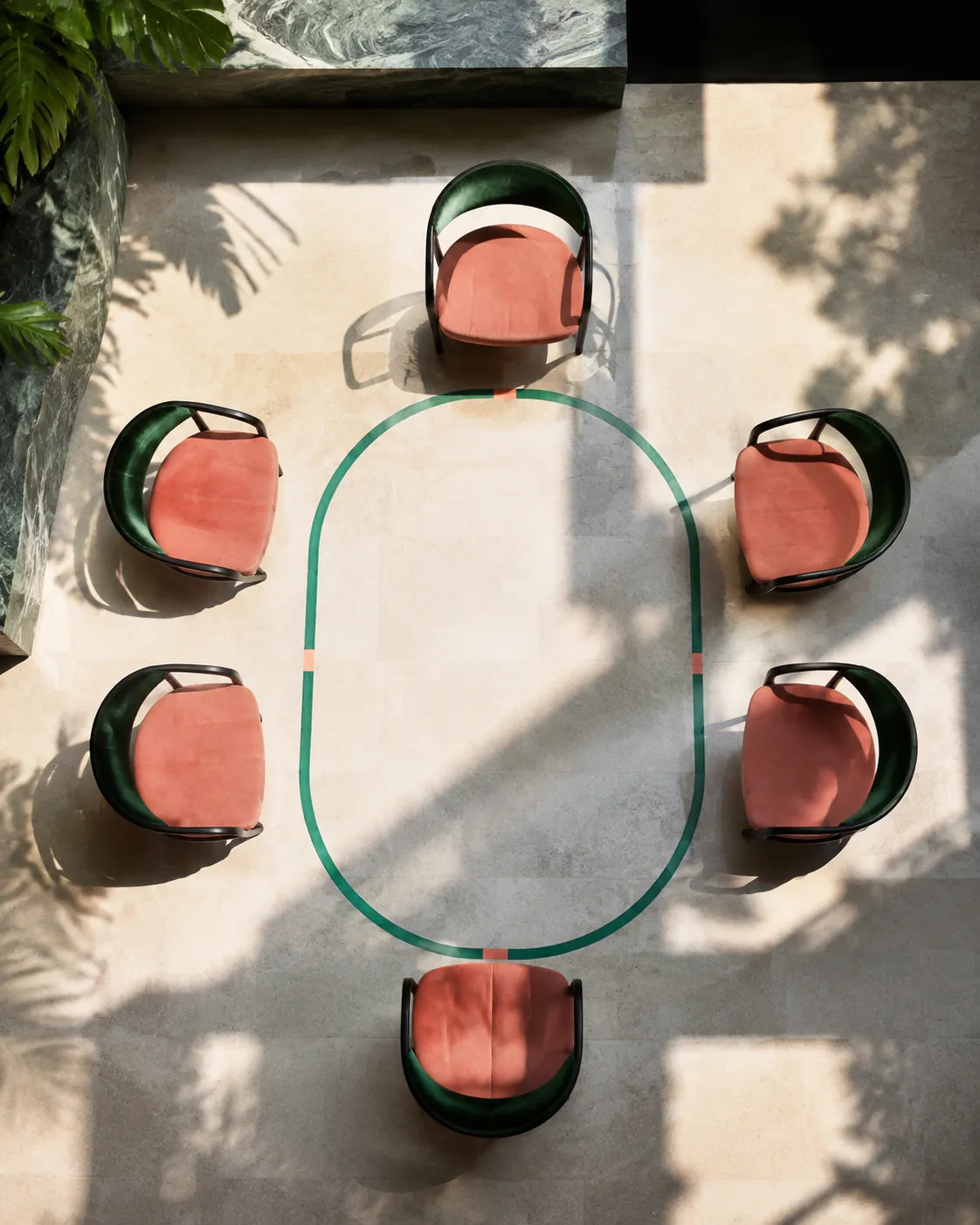
Request composition, care instructions and warranty exclusions for the exact fabric or leather. Review the sample in the home's daylight and evening lighting, then place it beside flooring, curtains and the tabletop.
Removable covers may help in some households, but their fit and cleaning method must be confirmed. Never assume a general cleaner is suitable for a specific finish.
What joinery and construction should you inspect?
Inspect stability, visible joints, underside finishing and floor contact before approving decorative details. Sit, shift weight normally and listen for unwanted movement or noise.
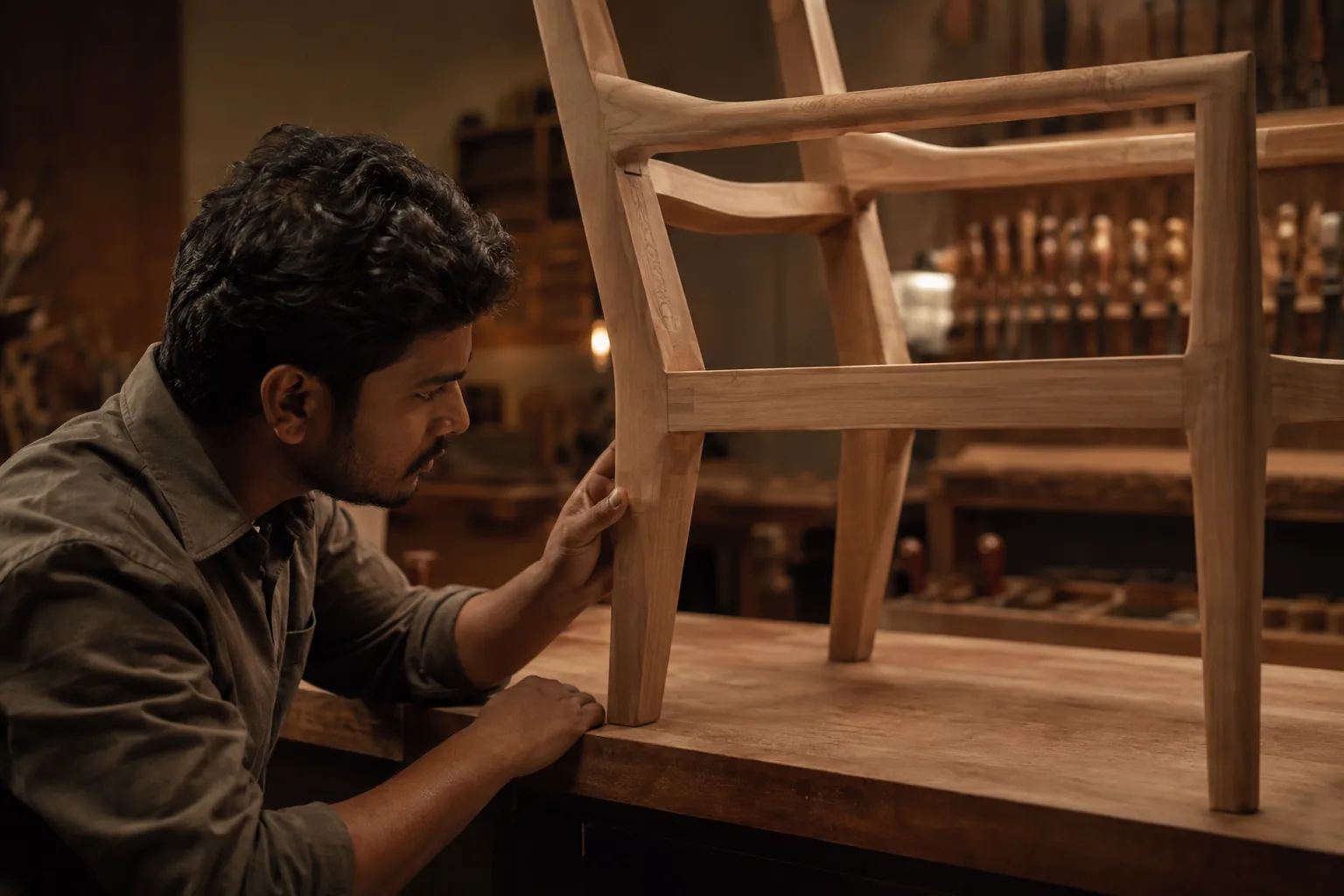
Ask what the frame is made from, how joints are formed and whether upholstery can be repaired. Examine where the legs meet the seat structure and whether protective feet suit the flooring.
Weight alone is not a strength test. Construction quality, material selection and workmanship matter, which is why a physical sample or prototype is valuable for a bespoke order.
Should dining chairs all match?
They need not match, but every chair should remain compatible with the table and the people using it. End chairs can have arms while side chairs remain slimmer, or one upholstery family can appear in related colours.
Repeat at least one clear element, such as frame profile, timber tone, seat height or fabric family. Then view the complete arrangement from the main entrance.
Variation can make a dining room feel collected. Random seat heights mostly make dinner look like a poorly funded panel discussion.

How should bespoke chairs be approved?
Approve a dimensioned drawing, material samples and a physical prototype or representative sample where the maker offers one. Record seat height, width, depth, back height, arm height, finish and upholstery code.
Test the prototype at the intended table. Check stitching, piping, pattern direction, glides and the view from behind, because dining chairs are often seen from every side.
For custom work, keep approvals tied to named samples and drawings. Verbal descriptions such as warm walnut can cover an impressively broad diplomatic territory.
Will the order fit through the building?
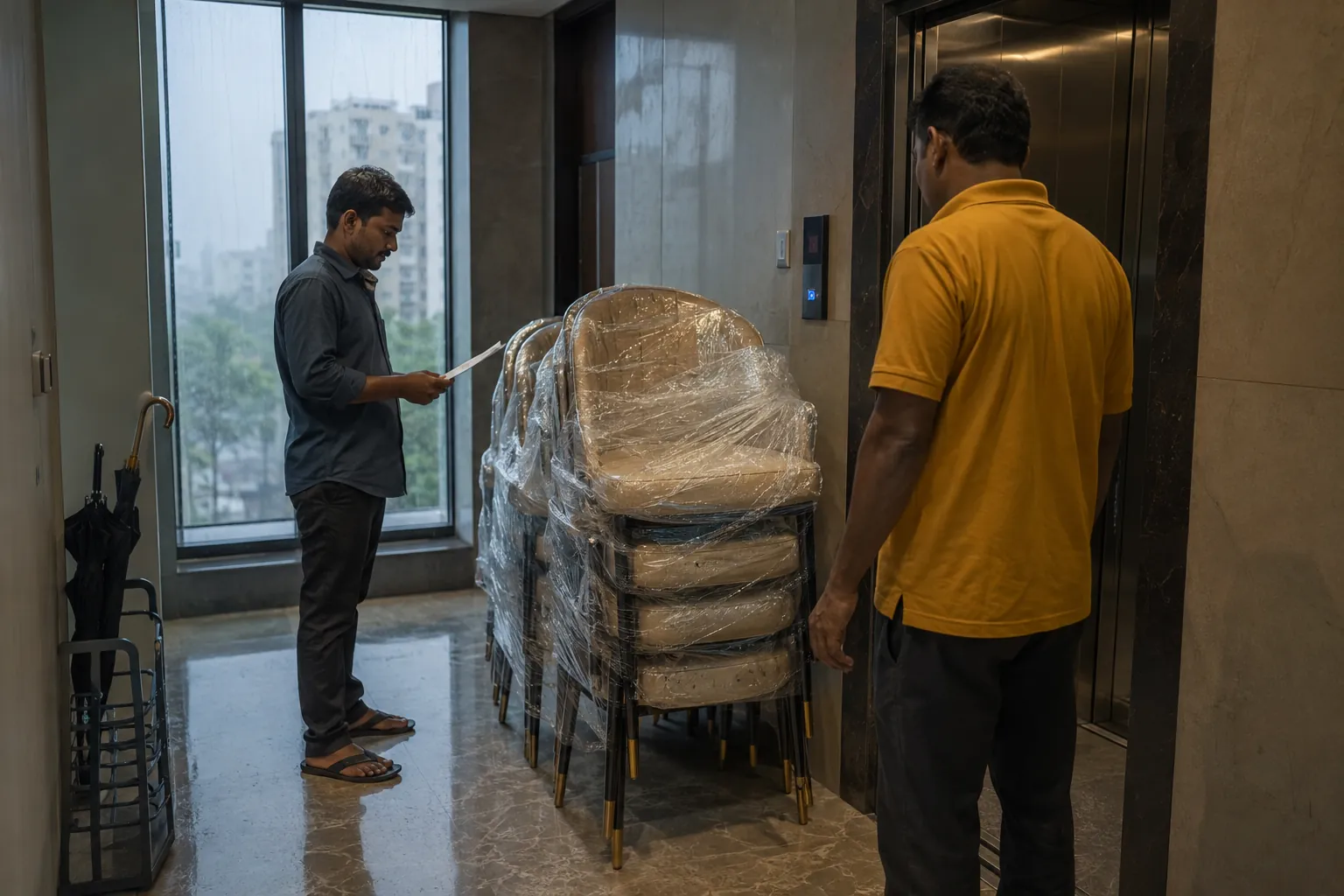
Compare packed chair dimensions and quantity with the narrowest lift, stair, corridor and doorway. Confirm whether chairs arrive assembled, stacked or boxed and where unpacking will occur.
FCI India's Mumbai furniture delivery access survey provides a room-to-vehicle checklist. Plan temporary storage so the installation team can inspect chairs without crowding finished surfaces.
At handover, check stability, upholstery, finish and floor contact on every chair, not only one representative piece.
Where can you discuss custom dining chairs?
Bring the table drawing, room measurements, seating count and finish references to a design consultation. FCI India's verified contact page describes its Mumbai showroom, material library and design consultation route.
Ask for current lead times, care instructions, warranty terms and the approval sequence for the exact project. Do not infer these from a different model or older order.
Limitations
This guide cannot establish the comfort, strength or durability of a particular chair without physical assessment and current maker information. People, tables, materials and buildings differ. Confirm dimensions, samples, care, warranty and delivery for the actual order.