TL;DR: Specify wardrobe handles for a Mumbai home by checking their projection through the door's movement, not just their appearance on a closed wardrobe.
Key takeaways
- Show the handle's projection and location on the wardrobe drawings.
- Check the door and handle together against nearby walls, furniture and neighbouring fronts.
- Confirm that internal drawers remain accessible with the specified door opening.
- Match any opening restriction to the exact hinge and cabinet configuration.
Why does wardrobe handle projection matter?
Handle projection matters because the handle becomes part of the moving door's envelope. Our design recommendation is to draw the door and handle together, then compare that outline with the finished room.
This is not merely a theoretical collision. Blum's opening-angle guidance describes how a door can meet neighbouring protruding handles, and explains model-specific opening stops intended to address particular collisions.
For a Mumbai bedroom, include the bedside cabinet, dressing furniture and finished wall position in the review. These are details to measure in your room, not reasons to assume a standard clearance will suit every apartment.
Which handle dimensions should appear on the drawing?
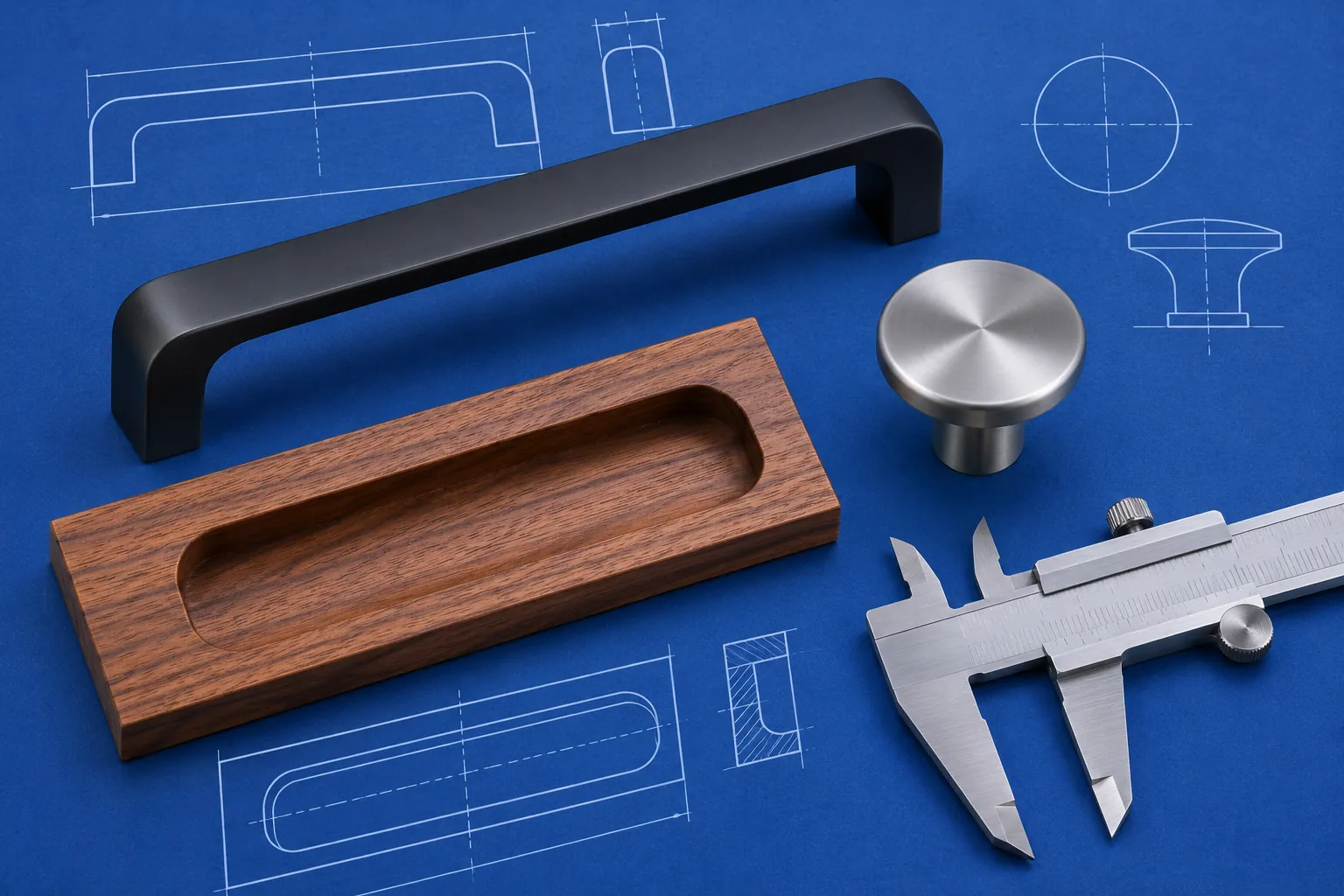
The drawing should record the selected handle's overall dimensions, projection and mounting position. Our suggested approval pack also identifies the product reference, finish and fixing information supplied by its manufacturer.
Do not approve only a front elevation. Request a plan or detail that makes the projection visible, especially near a side wall or another tall unit. A beautiful straight-on drawing can conceal quite a lot of sideways inconvenience.
Compare a sample where possible. Ask to handle it in the intended orientation, rather than deciding from a small finish image. If more than one person uses the wardrobe, include them in that practical review.
Can an opening stop solve a collision?
An opening stop can address some collisions, but it must suit the exact hinge and opening requirement. In its 155-degree hinge example, Blum distinguishes different stops and explains their specific applications, including avoiding a neighbouring handle while maintaining the hinge's zero-protrusion function.
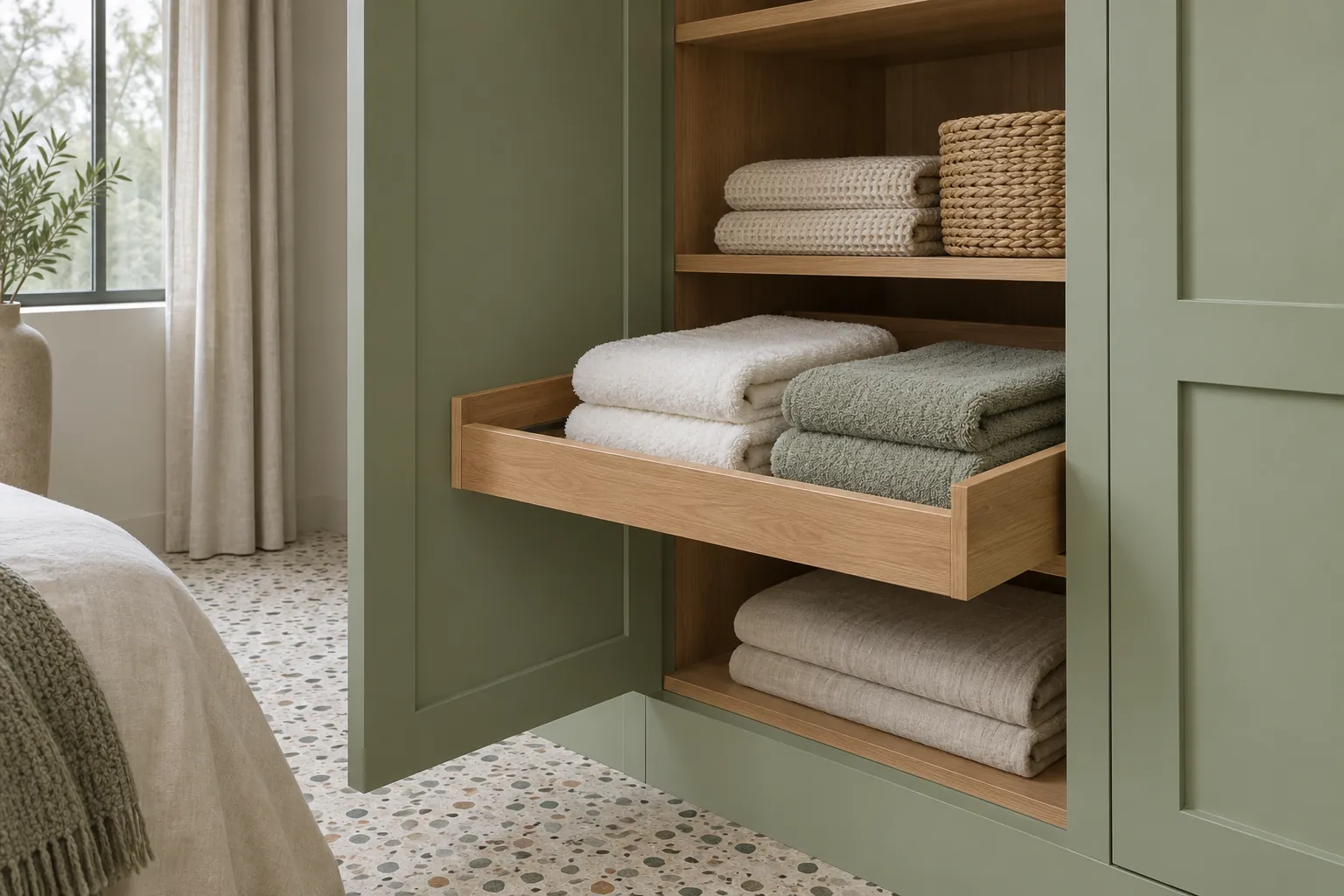
That is a product-specific example, not a recommendation to fit the same part to an unknown wardrobe. Ask the designer or installer to confirm the actual hinge, compatible stop and resulting access. A restriction that prevents one collision must not be assumed to preserve every other function.
Do not buy hardware from the angle alone. The complete door and internal arrangement need to work together.
What happens to internal drawer access?
Internal drawer access needs a separate opening test using the proposed door and hardware. Our recommendation is to request an open-state drawing with the inner drawer fully extended and the door in its permitted position.
Blum's guidance explicitly connects zero protrusion with avoiding a drawer-to-door collision for its stated hinge arrangement. The broader buying lesson is to ask for compatibility evidence, rather than transferring one manufacturer's example to every cabinet.
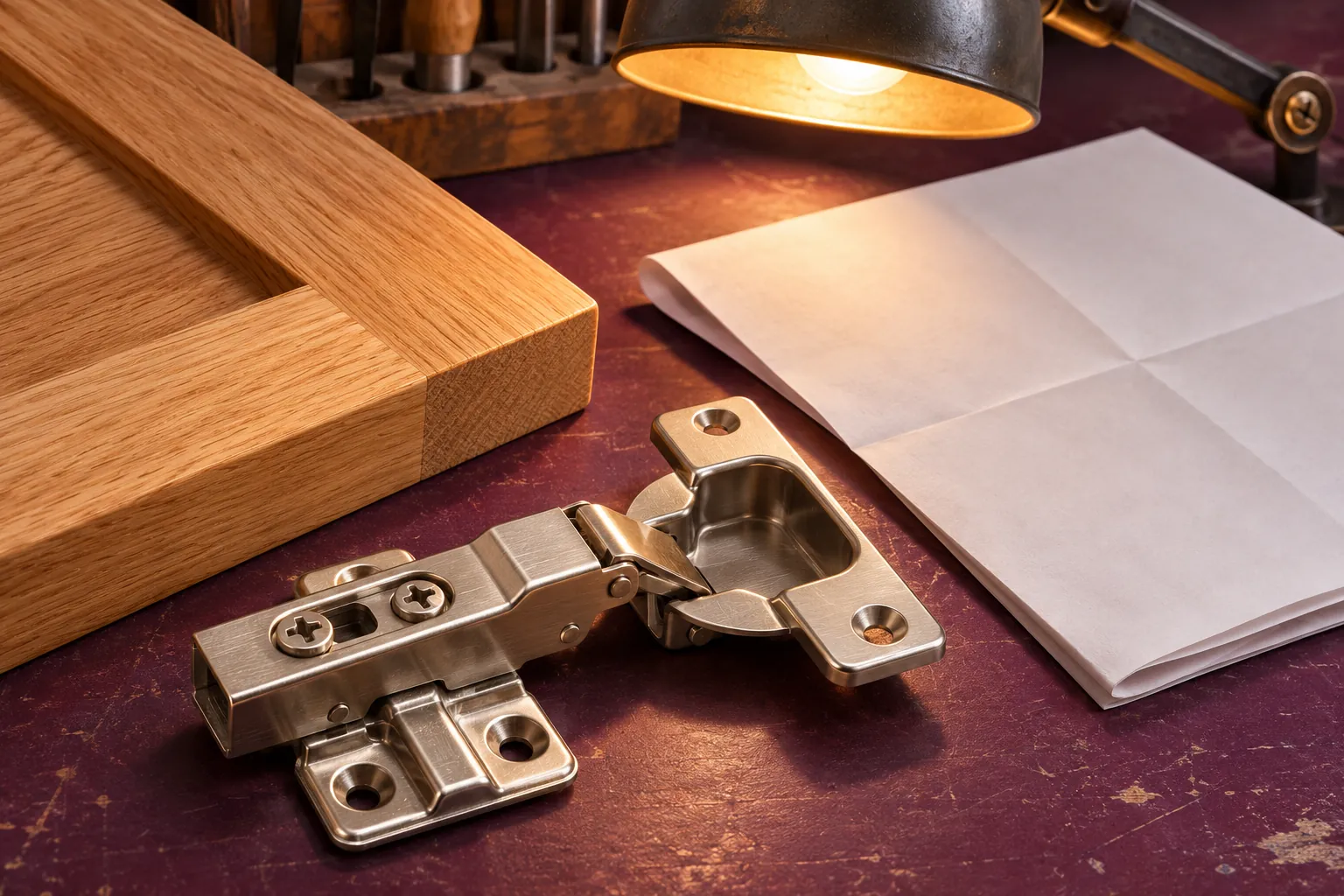
Include neighbouring handles and any room obstruction in that review. Storage capacity on paper is not the same thing as convenient access on a weekday morning.
Should you choose handleless doors instead?
Choose handleless doors only after reviewing the alternative opening method and how you will use it. Our judgement is that removing a projecting handle changes the specification; it does not remove the need to test opening and access.
Ask how the proposed front is gripped or activated, which fittings are required and what maintenance access is needed. Compare the complete arrangement with a handled version before approving either. Minimalist should describe the appearance, not the information on the quotation.
What should you send with a Mumbai furniture brief?
Send the room plan, finished wall dimensions, wardrobe layout and photographs of nearby furniture. Add the shortlisted handle and the locations where collisions are a concern.
Review FCI India's bespoke furniture services, then contact the Mumbai team to discuss the design. Ask for a coordinated handle, hinge and internal-access review before the final drawings are approved.
Limitations
This article is a commissioning guide, not a hardware installation instruction. It does not specify a universal gap, endorse a particular hinge for your wardrobe or confirm that a proposed fitting is available through FCI India. Exact compatibility, fixing requirements and final dimensions need project-specific confirmation.