TL;DR: Choose a valet stand for a Mumbai bedroom by deciding which clothes and small items it must hold, then checking the loaded footprint, usable hanging space and route beside it.
Key takeaways
- Specify a valet stand around an actual outfit and accessories, not an empty product photograph.
- Check the space occupied by hanging clothes as well as the base.
- A tray, mirror or seat changes the brief and should be identified separately.
- Do not assume that a stand is suitable for sitting, leaning or carrying bags unless the supplier confirms the intended use.
- For a custom piece, approve the component layout, finish sample and stability requirements before production.
What should a valet stand do?
A valet stand should give a defined set of clothes and accessories a temporary, orderly place between use and storage.
Our recommendation is to write the brief as a routine. Perhaps it needs to hold tomorrow's jacket and trousers, a watch and a belt. Perhaps it is simply somewhere to put one outfit while changing. Those are more useful starting points than a vague request for bedroom storage.
If the real requirement is a week's clothing, luggage or laundry, reconsider the furniture category. A small stand should not inherit every task that the wardrobe has declined to perform.

For a Mumbai bedroom commission, start by locating the dressing routine on the actual plan. Consider the wardrobe, bathroom door and bedside route rather than selecting a stand for the last unoccupied corner.
Which features are worth asking about?
Ask about the features you will use, and distinguish a simple clothes support from a combined valet, tray, mirror and seat.
As a documented design example, Porada's Sam combines a coat hanger, trouser hanger, a coin tray with mirror and an upholstered stool. Porada says its elements can be interchanged except for the stool, and describes Canaletta walnut with brushed bronzed-brass details. Those are Sam-specific facts, not promises about every stand or confirmation that FCI India supplies that model.
The point is not to accumulate accessories. It is to decide which functions belong together in your own room. If you already have a suitable seat and mirror, a simpler stand may be the more coherent brief.
FCI India's current furniture and design service page describes custom furniture made to specification. Use manufacturer examples to discuss functions, not to request a copy of another designer's work.
How much floor space does it need?
The useful footprint includes the loaded clothes, any projecting tray and the space needed to approach and use the stand.
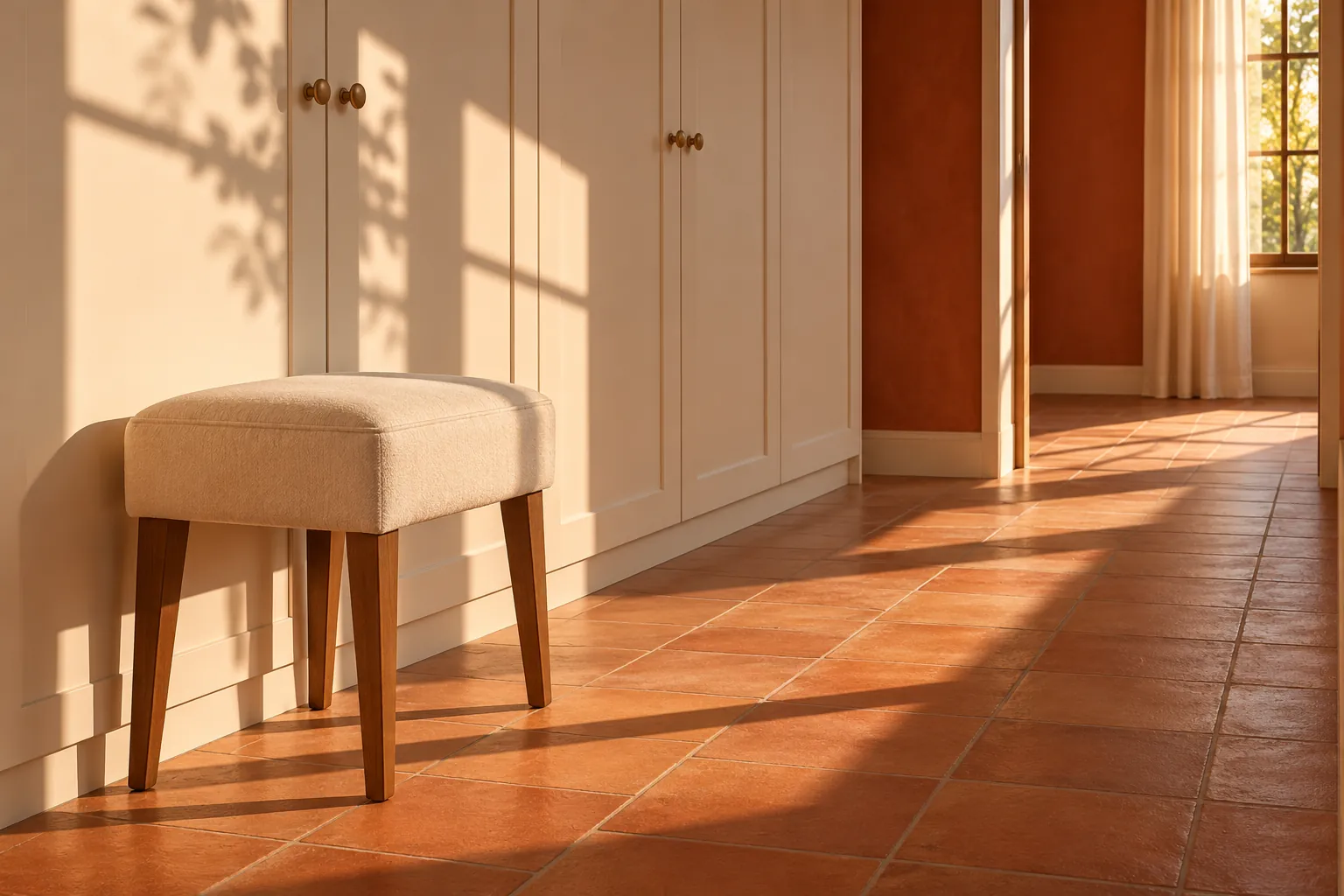
Mark the base on the floor, then add the likely projection of a jacket, hanging trousers and anything placed on the rail. Open nearby wardrobe drawers and doors. Test the route from the bed to the bathroom without relocating the mock-up.
Our judgement is that this loaded-footprint test matters particularly when a stand sits in a compact dressing corner. A narrow base can still carry a wide garment. Furniture catalogues are understandably fond of showing the base; jackets have other ideas.
If a seat is part of the design, include the occupied seated position and the movement needed to stand up. Ask for the intended use and capacity of the selected seating element. Never treat a tray or horizontal rail as an improvised perch.
What should you check on the hangers and tray?
Check the hanger shape and clear hanging space against the actual garments, and size the tray for the objects it needs to contain.
Bring an example jacket and trousers to the discussion or provide their relevant dimensions. Ask to see the contact surfaces, edge treatment and separation between garments. For a custom stand, request a drawing showing the hanging lengths and the positions of rails and supports.
Make an accessory inventory. A watch, keys and glasses need a different arrangement from a tall bottle or a handbag. Ask the maker to identify what the tray is designed to hold and how its lining or surface should be cared for.

Do not add a bag hook simply because there is an unused pole. Any extra load or off-centre use needs to be considered in the design, not discovered after delivery.
What belongs in a Mumbai custom-furniture brief?
A useful brief records the routine, garments, room position and component requirements before it records the preferred timber colour.
Ask for the overall and loaded dimensions, materials, joinery approach, hardware, intended loads, floor contact, stability provisions and care instructions. Confirm whether any assembly or fixing is required and who assesses it for the site.
If the stand will share a room with a desk, compare finish samples and storage roles using our Mumbai writing-desk brief. The aim is coordinated furniture, not two places collecting the same small objects.
For delivery, agree the route through your building and apartment, including any assembled sections and protective packaging. Ask the project team to confirm access and installation scope for your particular Mumbai address.
What is the next sensible step?
Send FCI India a room photograph, rough plan, outfit inventory and the features you genuinely need, then request a dimensioned custom proposal.
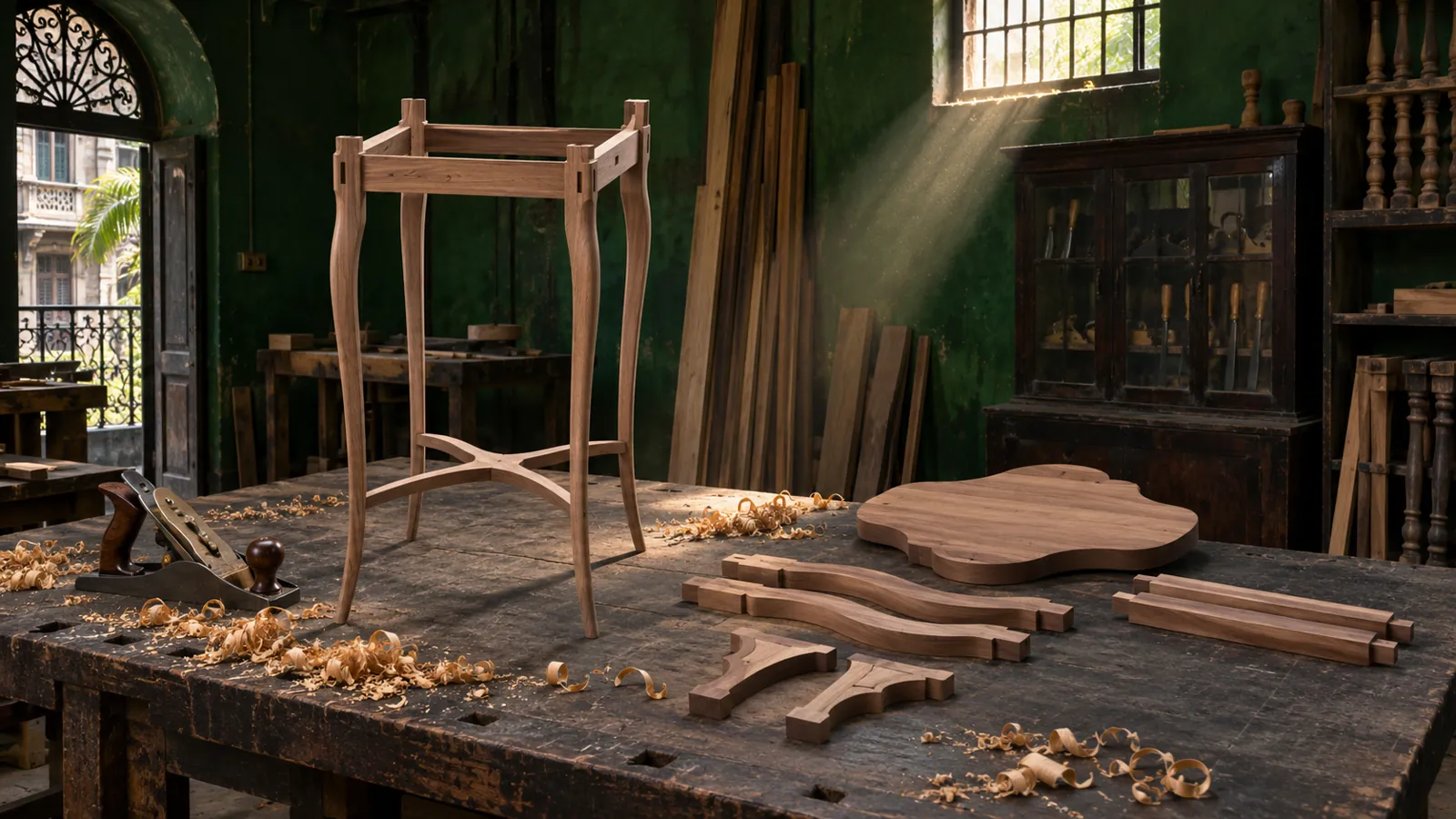
Approve the design and sample before production. Keep the final specification so the intended use is clear when the piece arrives.
Limitations
This guide does not establish stability, load capacity, seating suitability, garment-care performance, pricing or availability for an individual design. The overseas product example illustrates functions, not FCI India's catalogue. Images are generated design concepts, including the workshop scene, not actual products or FCI premises.