TL;DR: Design a record cabinet in Mumbai around upright sleeve storage, the collection's weight and the operating space required by your actual audio equipment.
Key takeaways
- The Library of Congress recommends storing discs upright and using shelving that can support their concentrated weight.
- Measure the largest outer sleeve, boxed set and equipment component before agreeing internal dimensions.
- Storage capacity and equipment operating space are separate parts of the cabinet brief.
- Ask the maker to specify shelf support and loading rather than judging strength from appearance.
- A custom cabinet is not automatically a climate-controlled enclosure or an acoustic upgrade.
How should vinyl records be stored?
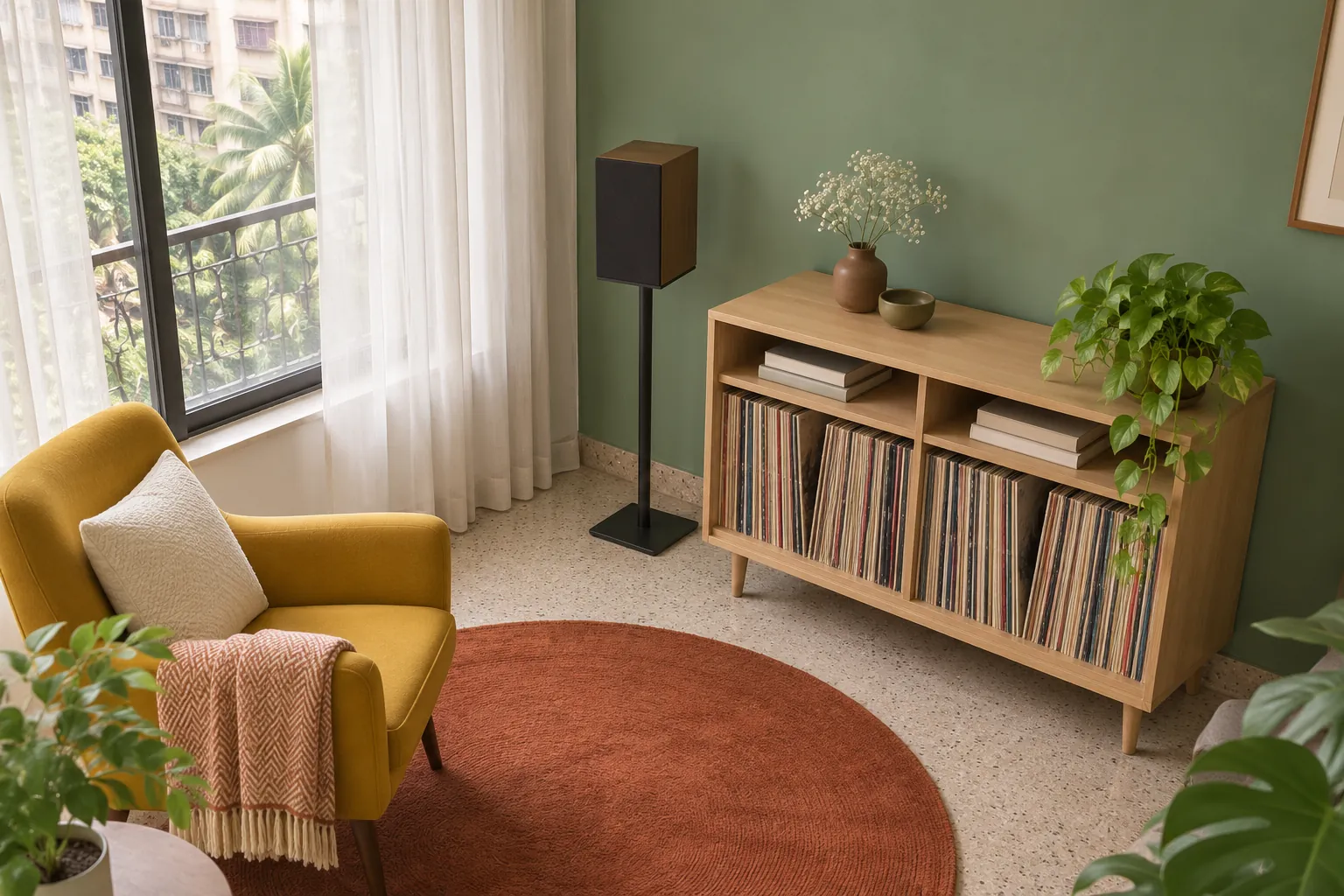
Store discs upright, supported and away from unsuitable environmental conditions. The Library of Congress collections-care guidance recommends upright storage, sturdy shelving and dividers that support the full face of a grooved disc in its sleeve.
For a cabinet commission, our recommendation is to bring representative records to the design discussion. Include the largest protective outer sleeve, thick gatefolds, box sets and any smaller formats. The disc diameter alone does not describe the space the collection actually occupies.

Ask the maker to show the clear internal opening after hinges, stops, dividers and shelf edges are included. A nominally generous compartment can become less generous once the hardware arrives. The record sleeve should not have to audition for entry.
Keep different formats explicit in the brief. The Library of Congress advises against storing grooved discs of different diameters together; discuss separate supported sections rather than one undifferentiated cavity.
How strong should the shelves be?
The shelves and their supports should be specified for the intended loaded collection. There is no universal shelf thickness in this article that can establish adequate strength.
The Library of Congress warns that audiovisual collections concentrate weight and can overload unsuitable shelving. Our practical recommendation is to record the present collection, the planned capacity and the actual load information available to the maker. Ask how that information becomes a shelf, support and cabinet specification.
Discuss the length of each unsupported span, the divider arrangement, back construction and overall stability. A thick front edge is not proof of how the shelf is built behind it. Agree what needs professional checking, particularly for wall-mounted or unusually large cabinetry.
For a Mumbai apartment, settle the intended installed position before commissioning. Moving a fully loaded cabinet should not be an assumption hidden in the design brief. Ask for instructions for safe use, loading and any necessary unloading before movement.

Can the turntable sit on the cabinet?
It can be considered if the exact cabinet-and-equipment arrangement meets the equipment maker's requirements. Furniture style alone cannot establish that.
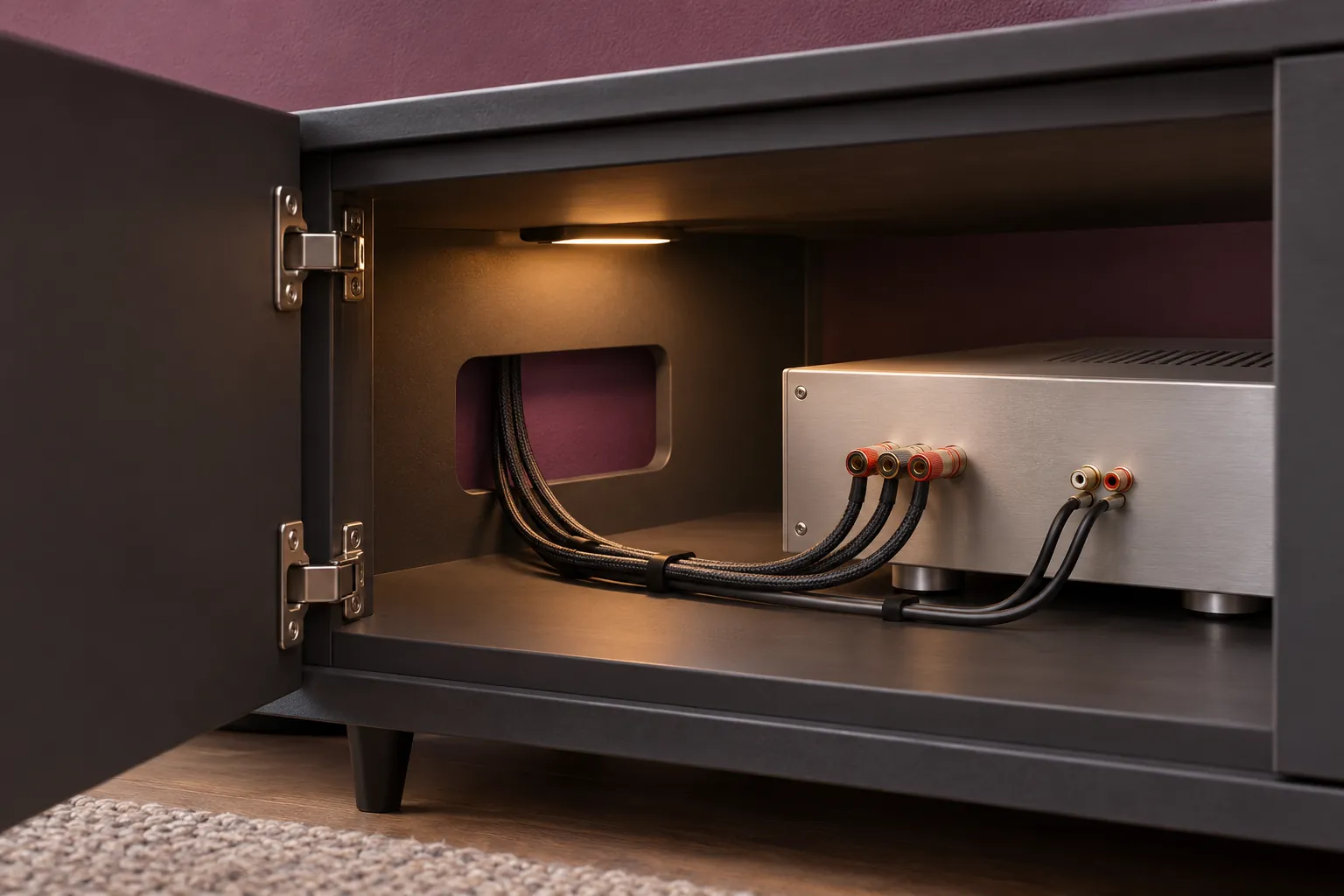
Measure the turntable with its dust cover in every intended position, including fully open if that is how you use it. Record the rear connections and the space required to handle a record. Include the amplifier, separate power supplies and anything else expected to share the unit.
Our preference is to separate three zones on the drawing: record storage, equipment placement and access for operation or servicing. For each component, provide the current manufacturer instructions rather than asking the cabinet maker to guess ventilation or clearance requirements.
This guide makes no claim that a particular timber, cabinet shape or shelf will improve sound quality. If equipment positioning or vibration control matters to your system, have the relevant audio specialist review it. A furniture quotation should not quietly become an acoustic guarantee.
Where should a record cabinet go in Mumbai?
Choose the location by reviewing the collection's environment and the room's everyday use together. The Library of Congress recommends a clean, stable, relatively dry environment with minimal light exposure and no direct or intense light.
Our local planning recommendation is to discuss the actual room conditions, including seasonal humidity concerns, windows and any history of leaks, before choosing a wall. Do not assume that a decorative timber cabinet regulates humidity. It is furniture unless a separately specified system establishes otherwise.
Check the listening position, walking route and access to curtains. If the cabinet sits near a window, assess the changing light rather than the room at one convenient hour. Avoid turning this into a claim that every Mumbai apartment has identical conditions or requires the same construction.
What should the custom drawing include?
The drawing should show usable storage, equipment operating space and the agreed support strategy. Our suggested approval record includes compartment dimensions, dividers, shelf loading assumptions, door movement and rear access.
Add finish references and cleaning instructions for the supplied surfaces. Ask how the rear of the unit can be accessed without dismantling the whole scheme, and who coordinates any separate electrical work. Confirm the delivery route and the size of the largest component before manufacturing.
FCI India's custom furniture service provides a route to discuss room-specific cabinetry. The music-system requirements should come from your own equipment and instructions, not from a reference photograph.
What should you send for a quotation?
Send a room plan, sleeve samples or measurements, the collection inventory and the exact equipment model details. Include the intended capacity, preferred finish and any installation constraints.
Contact the Mumbai team to discuss a bespoke proposal against that brief. Ask the quotation to distinguish furniture manufacture, equipment setup and any specialist site work so the responsibilities are clear.
Limitations
This is a commissioning framework, not structural engineering, conservation treatment, climate-control design or audio installation advice. The Library of Congress source covers several audiovisual formats; this article uses its disc-storage guidance, not every instruction for tape or other media. No particular cabinet, finish or equipment arrangement has been tested. Generated images are concepts, not completed FCI projects or technical specifications.