TL;DR: Plan a writing desk in Mumbai around the work you actually do, then test the chair, storage, cables and delivery route before approving its dimensions.
Key takeaways
- A desk for occasional paperwork needs a different brief from a workstation with a separate monitor and keyboard.
- Useful surface depth depends on the equipment and objects you need to arrange.
- A drawer pedestal occupies space that might otherwise be available to the seated user.
- Cable access should allow equipment to be changed, not merely hidden.
- A custom desk needs an agreed drawing and a workable route into the room.
What will your writing desk need to hold?
Your desk brief should begin with an inventory of working objects, not a preferred width. Set out the laptop or monitor, keyboard, paper files, lamp and anything you need to keep open at the same time.
Our recommendation is to distinguish a writing surface from a full-time computer workstation before discussing furniture details. A shallow occasional desk may suit letters and a notebook but be the wrong starting point for several pieces of equipment. This is a scope decision, not a claim that one furniture style improves health or productivity.

FCI India's custom furniture service includes study and office desks and storage. Use that flexibility to specify a real task, rather than simply requesting a smaller version of a photograph.
How much space should the desk occupy?
The desk should occupy the space you can use with the chair pulled out and nearby furniture operating normally. Tape out the proposed top and place the intended chair beside it before approving the footprint.
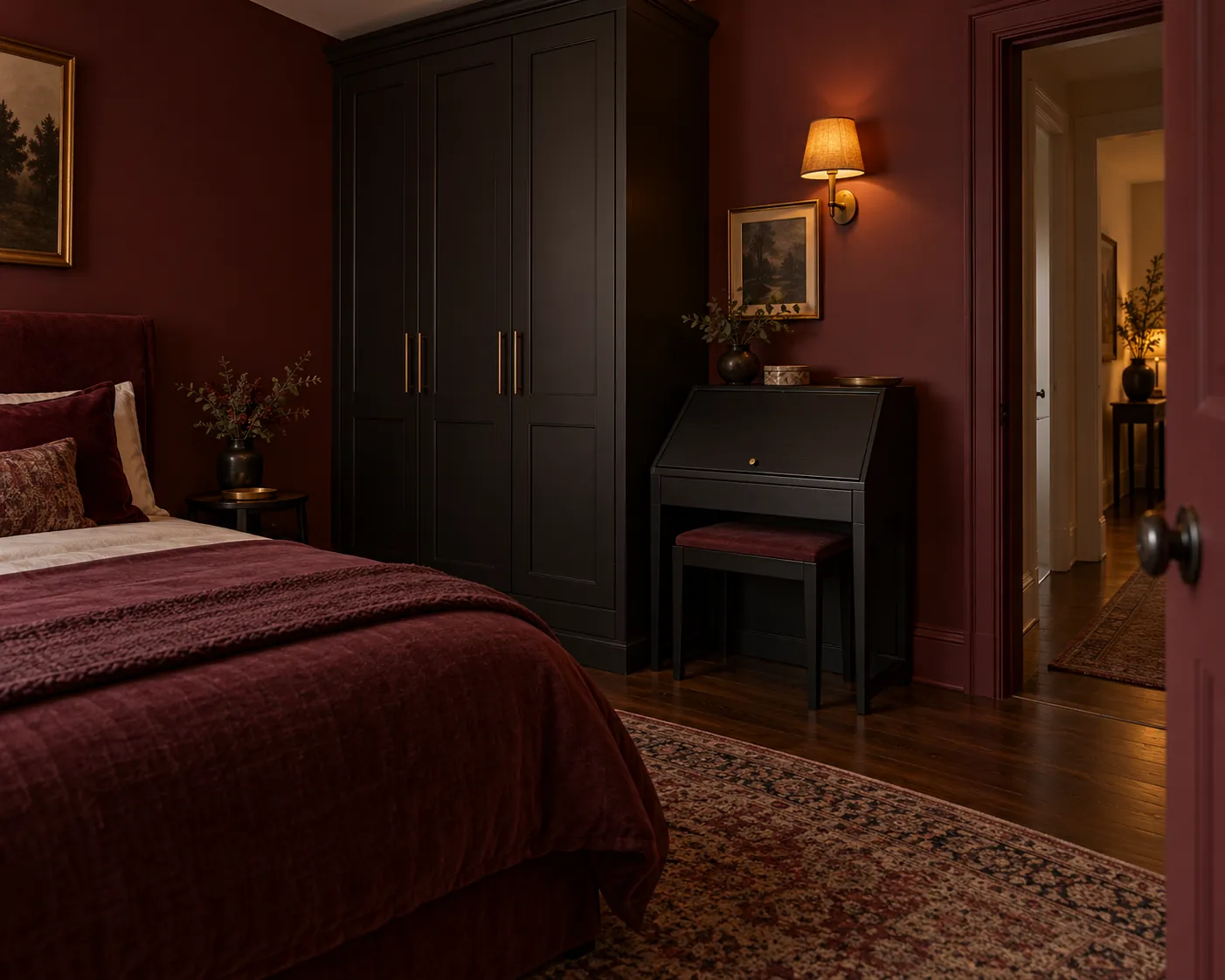
For a Mumbai bedroom that doubles as a study, we would test the wardrobe door and the route around the bed while someone is seated. In a living room, test the desk from both sides: the user needs access, but the room also needs to work when the desk is empty.
Do not make one flattering closed-state view carry the entire decision. If the desk forms part of a larger zoning scheme, our room-divider planning guide considers the importance of designing both visible sides.
Should a writing desk have drawers?
Choose drawers only after deciding what they will hold and where your legs and chair need to go. A pedestal may provide useful storage while reducing the open space beneath the top.
Ask for usable internal drawer dimensions, opening direction and the position of handles. Try reaching the intended storage from the chair without assuming every drawer needs to be accessible while seated. Files, stationery and a laptop stored after work are different storage jobs.
For a concrete design reference, FCI India's Attica desk page describes a teak wood desk with three teak-veneer drawers and different polish finishes. That describes that model, not every custom desk, its current stock or its suitability for your room. Request the relevant drawing and quotation separately.
How should cables be planned?
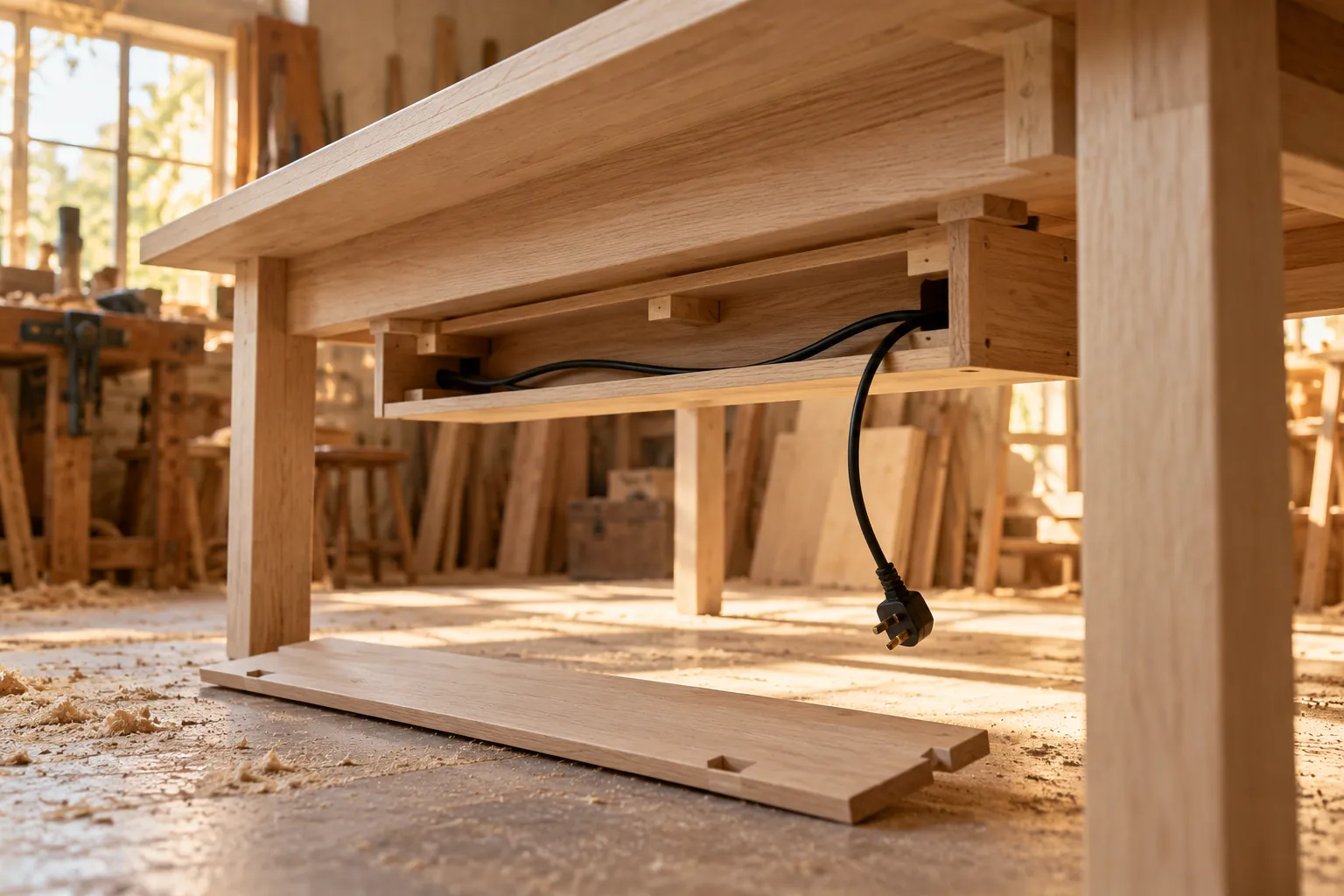
Cable planning should keep connections accessible as well as visually orderly. List the devices, plug positions and cables that must move when the laptop is removed or a monitor is changed.
Agree access openings and removable covers on the drawing. If a desk is freestanding, review what will be visible from behind. A cable hole drawn in the wrong place is a surprisingly durable commitment.
Any changes to sockets or fixed electrical installations need appropriate professional assessment. A furniture drawing does not substitute for that work, and this guide does not specify electrical alterations.
What should you approve before manufacture?
Approve a drawing that identifies the finished dimensions, storage arrangement, material build-up, exposed edges and agreed cable access. Keep a record of the chosen finish rather than relying on the colour of a screen image.
For an apartment delivery, include doorways, lift access, stair turns and any building restrictions in the discussion. Ask whether the proposed desk arrives assembled or in sections, and who is responsible for site assembly.
Start a desk commission discussion with FCI India using a room photograph, equipment list and measured plan. Ask the team to confirm the project-specific scope, price and lead time rather than borrowing them from another piece.

Limitations
This article is a commissioning checklist, not a workstation assessment or a promise of comfort, material performance or delivery access. Individual requirements need individual review. Images are illustrative design concepts and do not show completed FCI commissions or guaranteed product specifications.