TL;DR: A dining bench should fit both the table and the people using it, with enough access to sit down and leave without rearranging the meal.
Key takeaways
- A freestanding dining bench and a fixed banquette need different layout decisions.
- Check table legs, the underside of the table and the bench's full frame, not just its seat length.
- Test sitting down, standing up and leaving a middle seat before choosing a layout.
- Specify upholstery, finish care and movement requirements alongside the dimensions.
Is a dining bench right for your Mumbai home?
A dining bench is worth considering when its seating arrangement works better for your household than separate chairs. Our recommendation for a compact Mumbai dining area is to test access first, particularly where the table shares space with a kitchen route or living room.
Do not assume a bench automatically saves space. Draw the bench where it will sit during a meal, not only where it looks neat when pushed in. The empty-room photograph does not have to get up halfway through dinner.
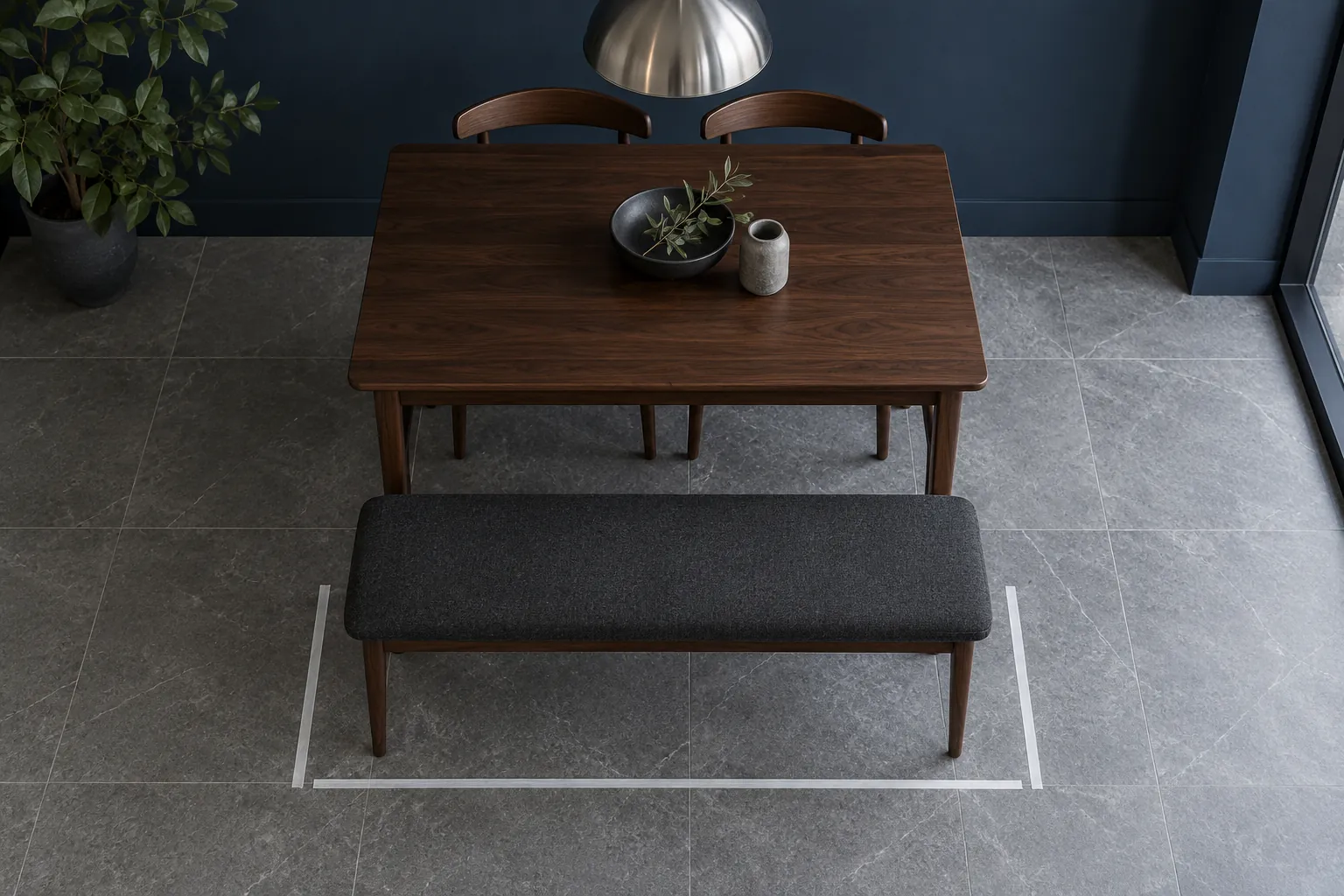
This guide concerns movable benches. A fixed banquette has different support and access questions. FCI India describes bespoke dining furniture and residential manufacturing among its services; the right starting point is a brief for your room, not a generic seat count.
Will the bench fit under your table?
A bench fits under a table only if its full frame clears the table's actual underside and supports. Measure the opening between table legs, the space beneath any apron and the bench at its widest and highest points.
Check the ends of the bench as well as the middle. Splayed legs, arms or a backrest can change the usable fit. If you want the bench to tuck away, ask for a drawing showing the tucked position and the position during use.
With a pedestal table, check where the diners' feet will go. A generous top does not necessarily provide generous space beneath it. The tabletop and the base are a team, even when the catalogue photographs prefer to discuss only one of them.
How do you test comfortable seating?
Test a proposed bench with the table height and the users who will actually sit there. Seat height, depth, back support and the tabletop relationship need to work together; there is no single measurement in this article that can establish comfort for everyone.
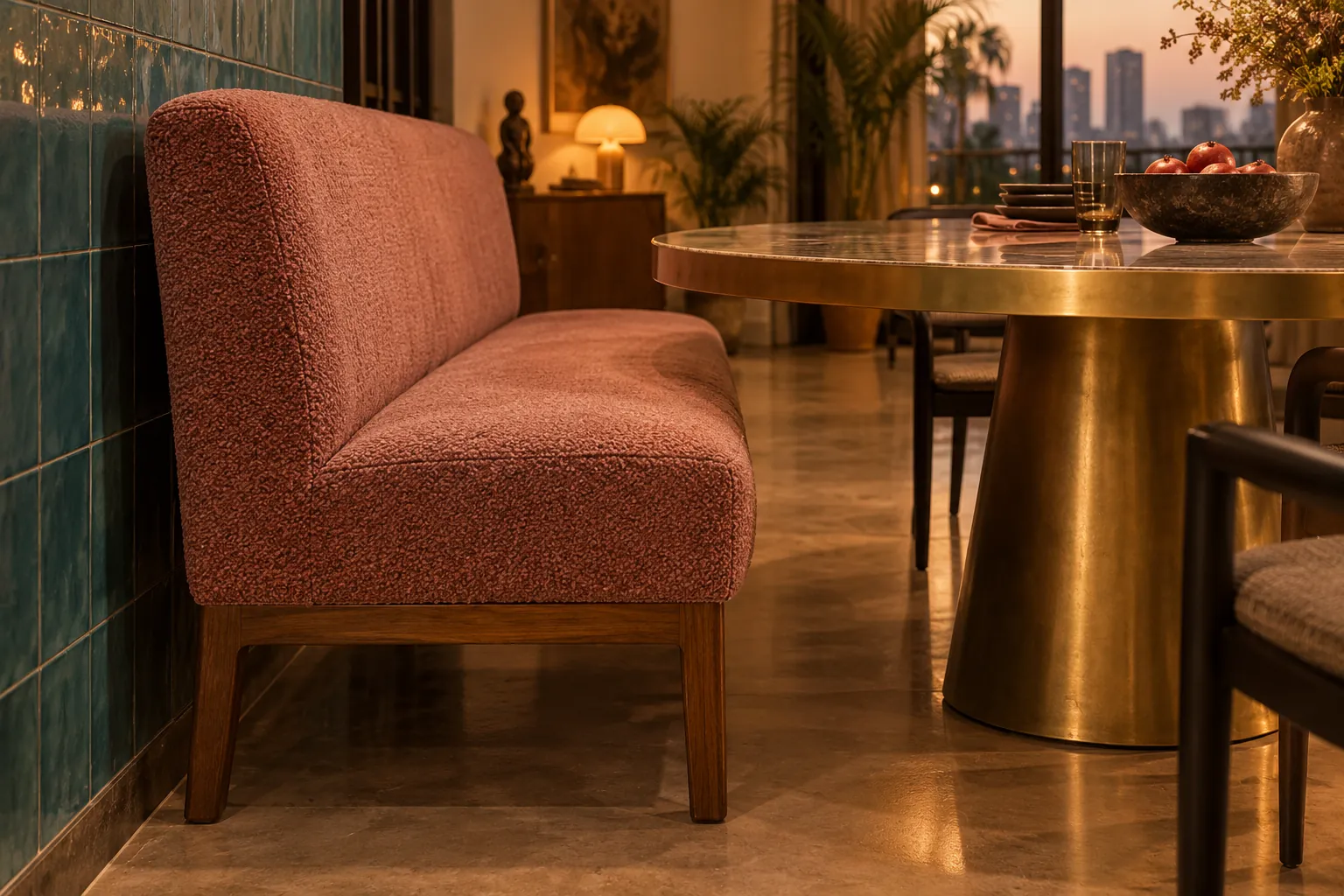
Try the actions, not just the pose. Sit down, reach towards a place setting, stand up and move past the end. If the bench will serve several people, ask a middle-seat user to leave while the others remain seated.
Our preference is to make the access test decisive. If leaving a seat requires moving furniture every time, reconsider the bench length, table base or mix of chairs and bench seating. More theoretical places are not necessarily more usable places.
What changes when the bench is movable?
A movable bench needs a practical handling plan as well as a place to sit. Ask how the finished piece should be lifted, whether it can be moved by the intended users and what protection is appropriate for your floor.
If you intend to move it to another room, measure that route too. Do not assume a dining bench is suitable for standing on, outdoor use or another purpose unless the maker specifies that use.
For a Mumbai home, include the actual room conditions in the brief: for example, proximity to an open balcony or a frequently cleaned kitchen area. Ask the maker to recommend a finish for those conditions rather than relying on a broad material label.
Which finish should you specify?
Specify the exact finish and its care requirements, not simply a timber species or fabric colour. FCI India's materials and finishes library describes timber, upholstery and surface-finish options, with an invitation to view materials in person.
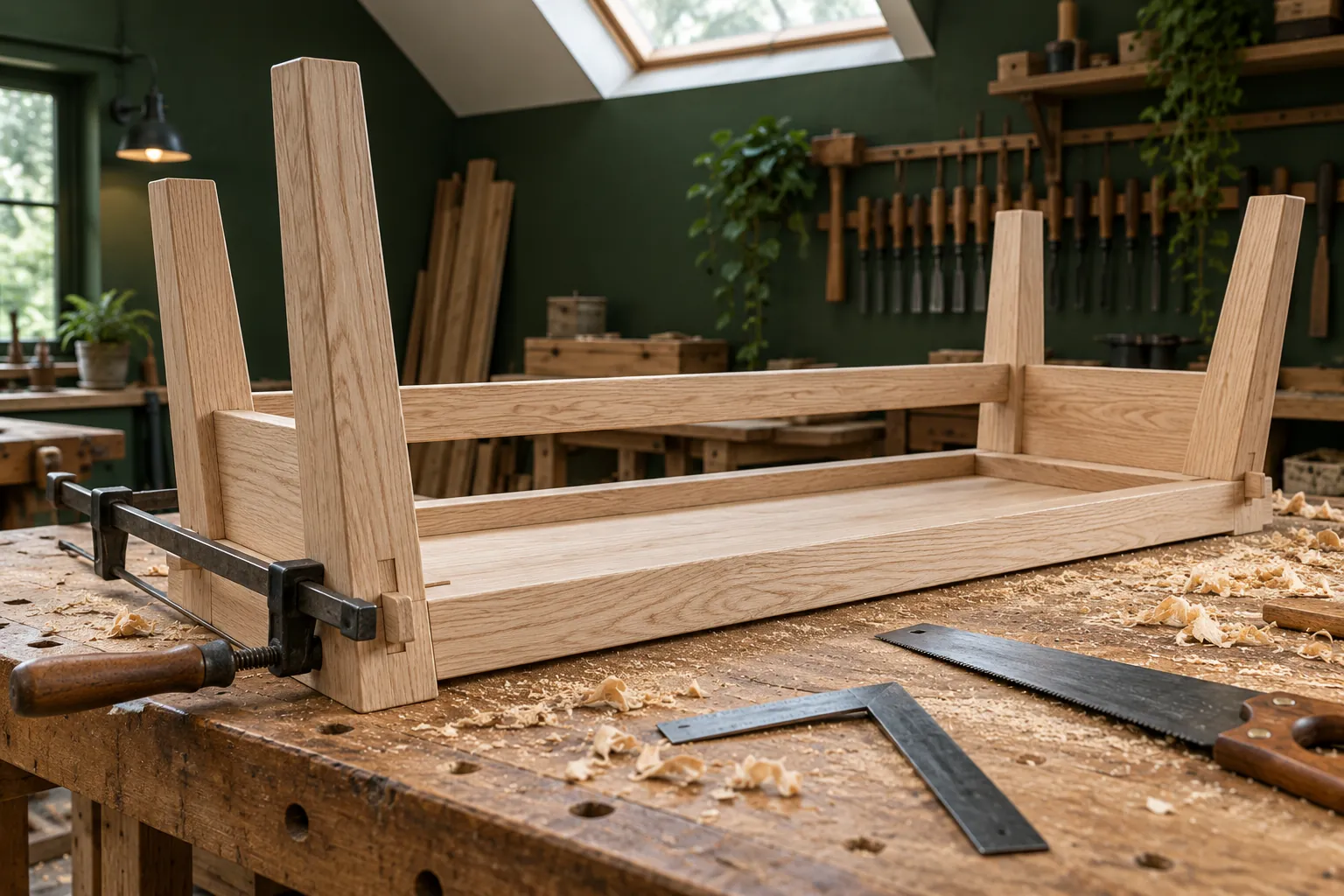
Request samples and ask how to deal with food spills, routine cleaning and wear on the seat edge. For upholstery, ask about the selected fabric's cleaning instructions and whether covers or individual upholstered components can be serviced. Do not infer stain resistance from a smooth marketing photograph.
Bring the flooring, tabletop and upholstery samples together where possible. Matching every surface is optional. Knowing what each surface requires is rather less optional.
What should you send for a bespoke quote?
Send a room plan, table dimensions and a description of how the bench will be used. Include photographs of the table base, the route around the table and the delivery access.
Ask the quote to identify the construction, finish, upholstery if applicable, dimensions, scope of delivery and any unresolved design decisions. Separate confirmed specifications from preferences still awaiting a sample or sitting trial.
Use the FCI India enquiry page to discuss a bench around your existing table or as part of a coordinated dining scheme. Request a fit-led proposal before committing to the final finish.
Limitations
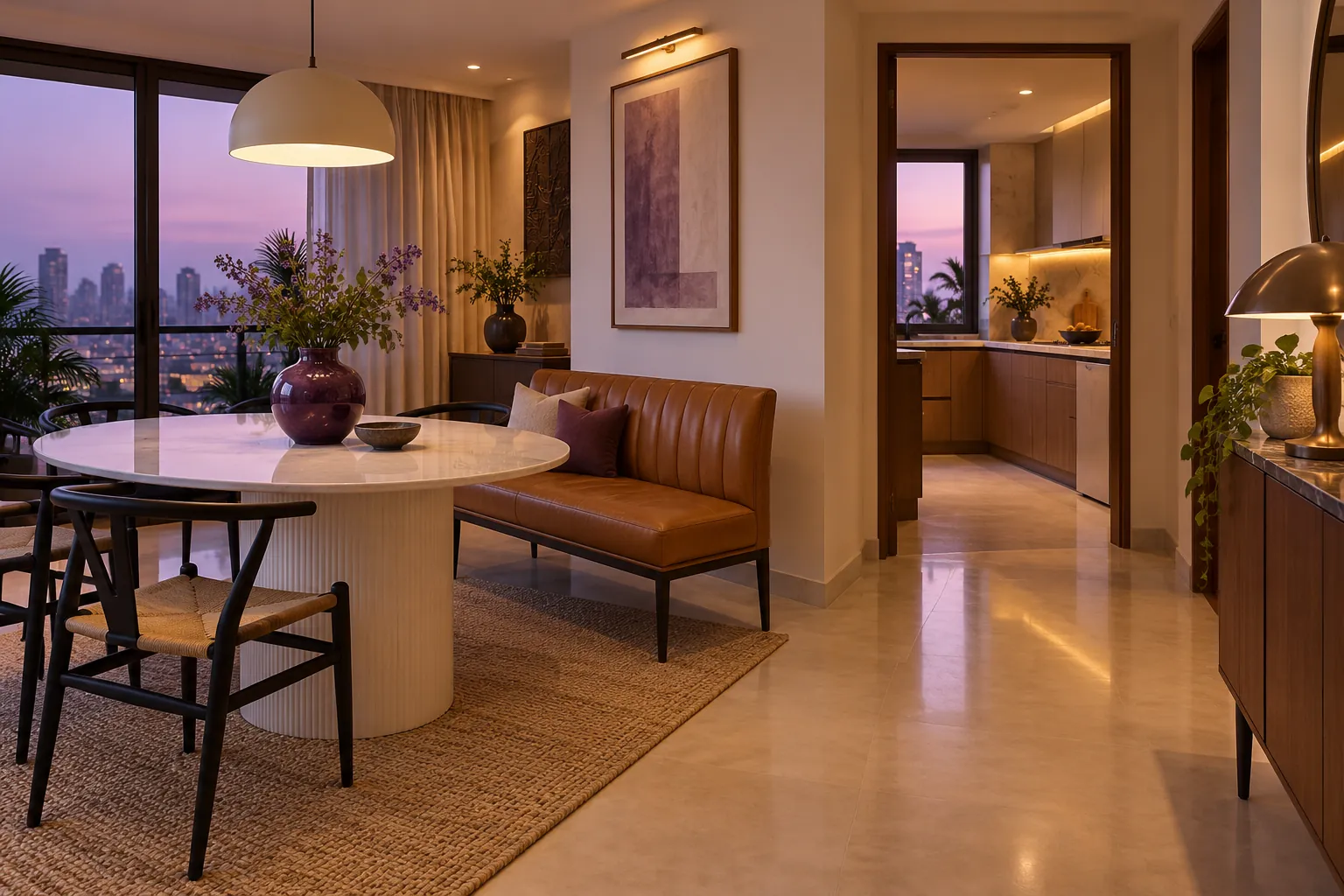
This guide does not establish structural capacity, ergonomic suitability or dimensions for an individual household. A drawing and a physical trial may reveal issues that photographs cannot. Prices, availability and suitability require confirmation for your project. Images are conceptual illustrations, not records of FCI products, workshops or installations.