TL;DR: Specify wardrobe hinges around the finished door's weight, dimensions and required movement; soft close is a feature, not a complete hardware specification.
Key takeaways
- Blum says door weight is a key factor in hinge count, while dimensions and materials also matter.
- Include handles and other added weight in the door calculation; Blum's guidance explicitly says to account for them.
- Blum's Indian CLIP top BLUMOTION range includes different hinge applications, so a brand name alone does not identify the correct fitting.
- For a Mumbai bedroom, approve the wardrobe with doors and internal drawers open, not only the closed elevation.
- Record hinge and mounting-plate references, installation responsibility and aftercare in the bespoke furniture brief.
Why do wardrobe hinges deserve an early decision?
Wardrobe hinges should be selected while the door and interior are being designed, rather than added as an unspecified finishing detail. Our recommendation is to resolve the complete door assembly before signing off the final drawings.
A tall painted door, a lighter panel and a door with added decorative material should not be treated as interchangeable simply because their fronts look similar in a rendering. Blum's planning guidance identifies weight, dimensions and material as factors affecting the required hinges.
For a Mumbai apartment, we would give the opening arrangement the same attention as the storage volume. A beautifully organised interior is not much use if its drawers cannot be reached comfortably with the bed in place.
FCI India's bespoke furniture service includes wardrobes and custom storage. Bring the hardware questions into that design conversation rather than treating them as a separate purchase at the end.
Does soft close tell you which hinge to choose?
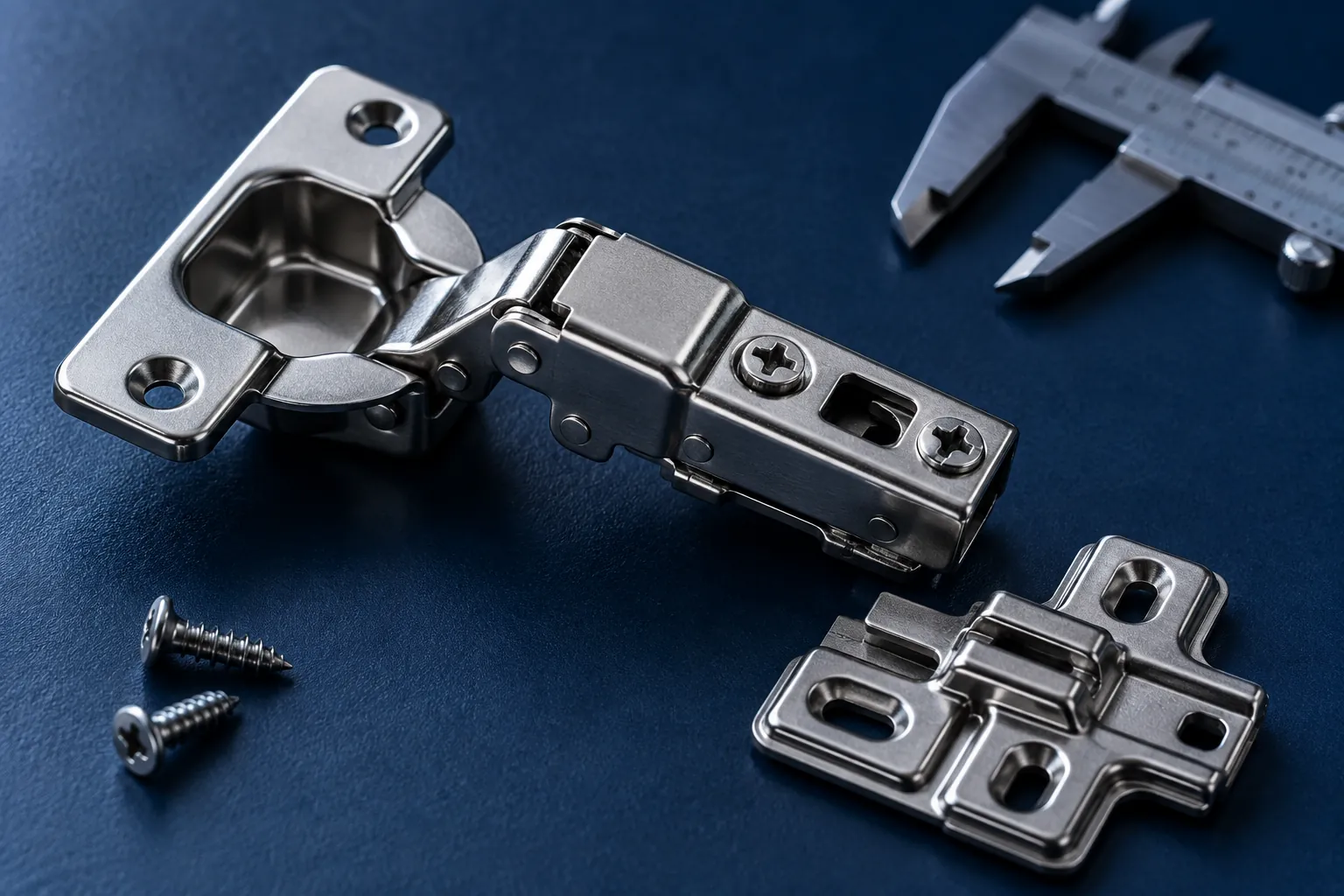
No, soft close describes a closing function, not every aspect of a hinge's compatibility. Blum explains that CLIP top BLUMOTION integrates its soft-close function into the hinge boss, the part fitted into the door.
The same range includes different applications. Blum's Indian page says its 110-degree hinge can accommodate doors up to 24 mm thick depending on the application, while separately describing a 107-degree hinge for different requirements. Those are product-specific examples, not universal limits for wardrobe doors.
The useful question is therefore which exact fitting works with the chosen door and cabinet, not simply whether the quotation includes branded soft close.
Ask the designer or manufacturer to confirm the hinge reference, compatible mounting plate, door thickness, fixing method and relevant installation guidance. Do not assume that two fittings are substitutes because they share a finish or a soft-closing action.
How many hinges does a wardrobe door need?
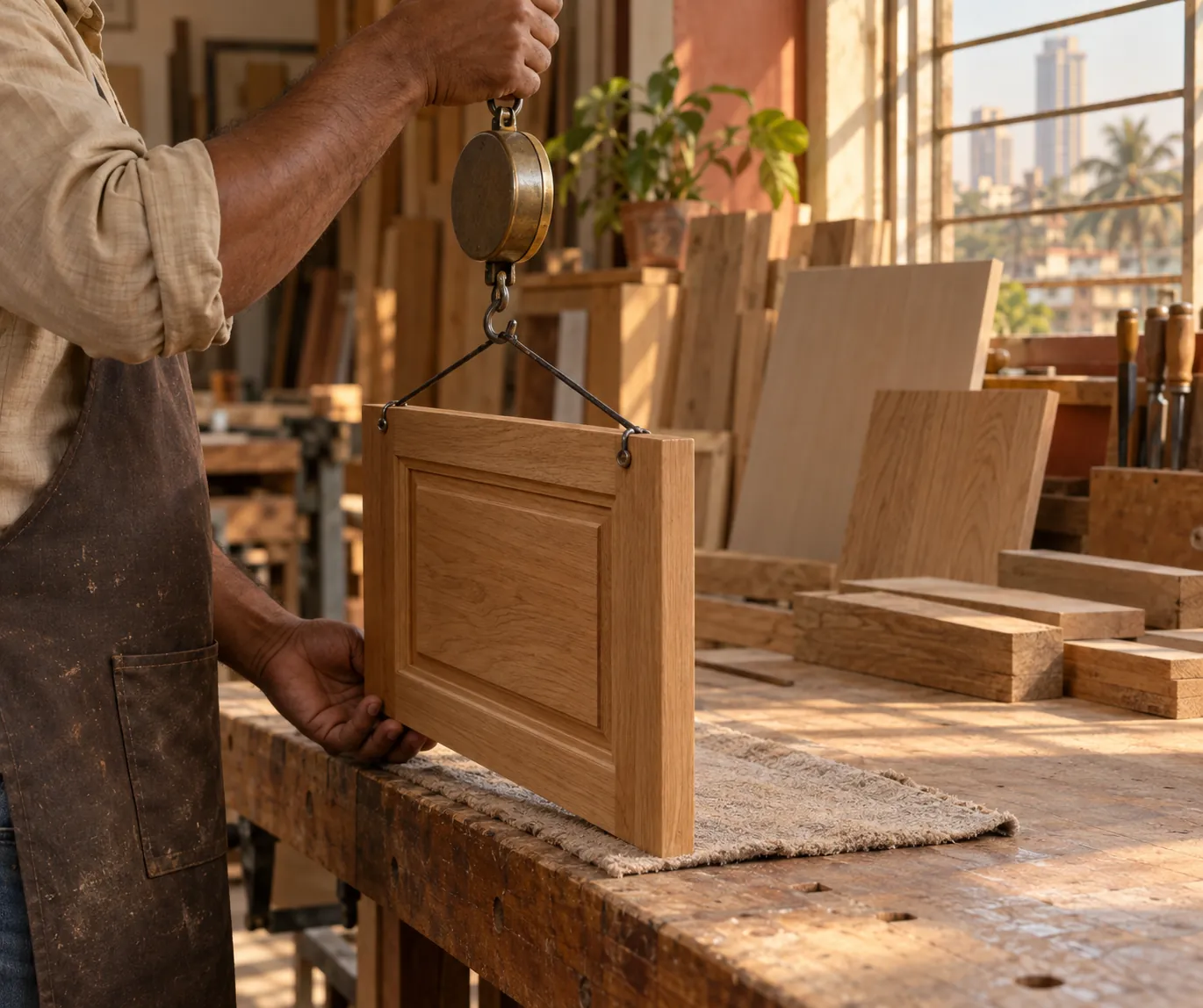
There is no single hinge count that suits every wardrobe door. Blum's guidance makes door weight central to the decision and also considers height, width and material.
Its published examples have stated width limits and require the weight of additions such as handles to be included. Copying a hinge count from an unrelated door therefore leaves important conditions behind.
Our suggested request to the cabinetmaker is a door-by-door hardware schedule. It should connect the finished door's dimensions and calculated weight to the selected hinge system's current planning information. Where the construction is unusual, ask how compatibility has been checked rather than guessing a number yourself.
That record is especially useful when the design changes. A heavier handle, different door finish or revised panel size should trigger a specification review before manufacture, not an assumption that the first hardware choice still applies.
What should you check around the door swing?
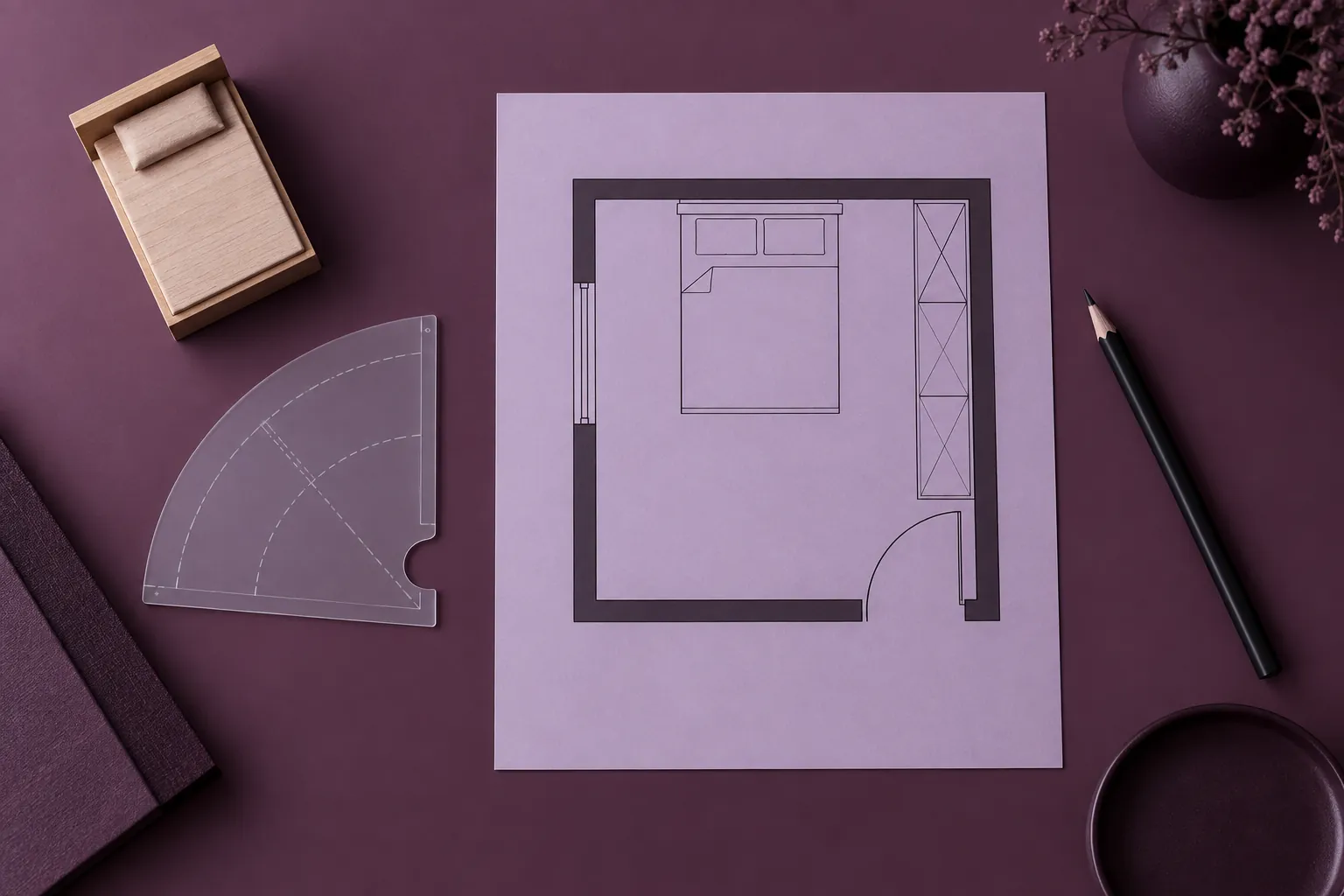
Check the fully open wardrobe against the actual room and everything inside it. Our preferred review uses a plan showing the bed, bedside furniture, adjacent walls and the intended door movement together.
For a compact Bandra bedroom, for example, the question may be whether you can stand in front of the wardrobe and use a drawer without moving around the bed. In a larger dressing area, adjacent doors and internal pull-outs may be the more useful test. These are design scenarios, not claims about every home in those locations.
Ask the designer to demonstrate:
- How far each door can open in its installed position.
- Whether a wall, handle or adjacent door interrupts that movement.
- Whether internal drawers and pull-outs can travel fully.
- Where someone stands while using the storage.
- Whether any restrictor or different hinge application is needed.
The opening angle printed for a hinge is not a substitute for checking the assembled wardrobe in the room. The practical goal is usable access, not the largest number in a fittings catalogue.
Does the door material change the hardware conversation?
Yes, the material and finished weight belong in the hinge decision. Blum's guidance specifically includes door material among the factors that affect planning.
Our advice is to keep the door specification and hardware schedule together. Identify the panel, finish, dimensions and any added components, then ask the cabinetmaker to confirm the appropriate fixing and hinge arrangement for that construction.
Do not assume that naming plywood or medium-density fibreboard, usually shortened to MDF, settles the whole issue. Nor should a dark hinge finish be treated as proof of any particular corrosion performance. Request product-specific information for any environmental requirement you want the manufacturer to meet.
Our plywood versus MDF wardrobe guide covers the separate material discussion. For this decision, the important link is that a change to the door can require another look at the hardware.
What should you test at installation?
Ask the installer to demonstrate each door and internal component in the completed wardrobe. Our suggested acceptance check is to open and close every door normally, use the drawers and pull-outs, and compare the installed hardware with the agreed schedule.
Check for visible contact between neighbouring parts and ask the installer to address any inconsistent movement. Do not alter hinges or add fittings yourself to compensate for a problem that the manufacturer should assess.
One useful example of why adjustment is product-specific comes from Blum's CLIP top BLUMOTION page: it says the soft-close feature can be deactivated for smaller or lighter doors. That is not a general instruction to change your wardrobe settings. It is a reason to have the responsible installer explain the selected system and its adjustment procedure.
Keep a record of the model references and the contact responsible for aftercare. A photograph can help identify a component later, but it should accompany the specification rather than replace it.
What belongs in the written wardrobe brief?
Include enough information to connect the room, door and hardware into one agreed design. We suggest recording:
| Item | What to ask for |
|---|---|
| Door assembly | Dimensions, material, finish and calculated finished weight |
| Hinge system | Manufacturer, exact reference and compatible mounting plate |
| Movement | Required opening and any restrictions in the real room |
| Interior access | Confirmation that drawers and pull-outs work as intended |
| Installation | Named responsibility for fitting, adjustment and demonstration |
| Aftercare | Contact route and process for identifying replacement components |
This is a purchasing checklist, not a substitute for the manufacturer's technical planning tools. It also does not promise that a particular part will always remain available.
Limitations
This article does not calculate hinge loads or certify an installation. Blum's examples concern its own systems and stated conditions; they are not a universal design rule for every wardrobe brand or door material.
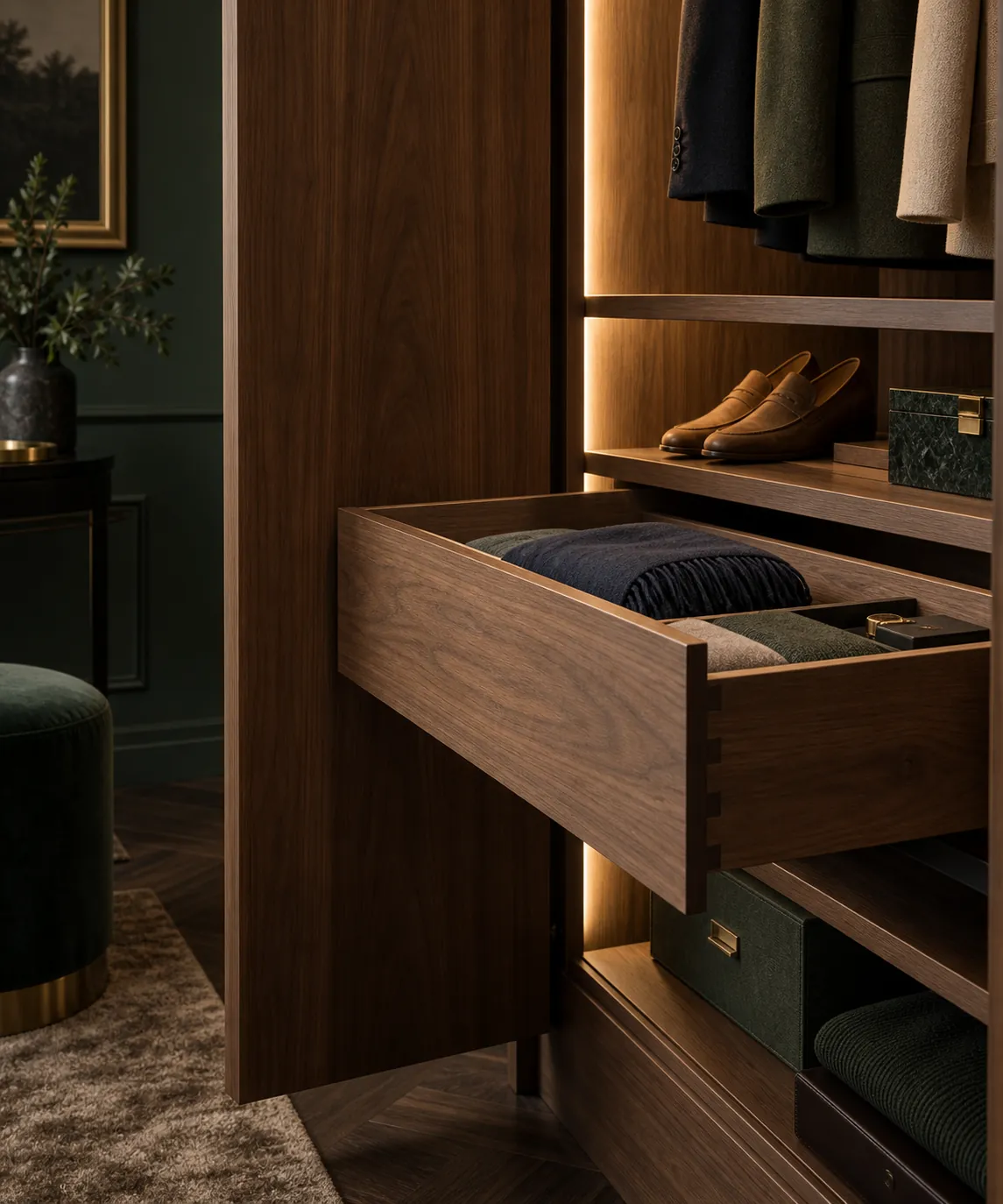
No hardware brand is promised as standard in an FCI order. Confirm the actual specification in your quotation. Generated images are illustrative, not FCI installations, tested hinge assemblies or technical drawings.
What should you send FCI India first?
Send the room plan, preferred door finish and a list of the storage you need to access when you contact FCI India. Include the position of the bed and nearby furniture, not only the available wall width.
Ask to review the wardrobe's closed appearance and open operation together. That is the point at which a hardware specification becomes a useful part of the design rather than a line that simply says soft close.
Sources
- How many hinges should be used for a door?, Blum EASY ASSEMBLY. Door weight, dimensions, material, added weight and the limits of published hinge-count examples.
- CLIP top BLUMOTION Hinges, Blum India. Soft-close function and application-specific hinge examples.
- Custom Furniture Mumbai, FCI India. Current bespoke furniture and wardrobe service scope.
- Plywood vs MDF: Specify Your Wardrobe, FCI India. Related material-specification reading.
- Contact FCI India, FCI India. Project enquiry route.