TL;DR: Choose plywood versus MDF for each wardrobe component, using the named board grade, finish and moisture limits, rather than insisting that one material must do every job.
Key takeaways
- Plywood uses bonded wood veneers, while medium-density fibreboard, or MDF, uses wood fibres and resin: Greenply's material explainer.
- A plywood carcass with MDF doors is one possible combination, not a compulsory formula for every wardrobe.
- Moisture-resistant MDF exists, but that does not mean waterproof: MEDITE MR's product guidance explicitly distinguishes the two.
- A Mumbai wardrobe quote should name the board used in the carcass, doors, shelves and back, with its thickness, finish and fixing details.
Is plywood or MDF better for a wardrobe?
Neither label is enough to choose a whole wardrobe: the component, board grade and design matter. Greenply describes using plywood for the internal structure and MDF for painted shutters, while MEDITE also lists wardrobes, cupboards and shelving among applications for its named moisture-resistant MDF product.
Those sources should stop an overly simple argument before it starts. They do not establish that every plywood is suitable, that all MDF is unsuitable or that either board can be specified without considering the finished construction.
Our recommendation for a Mumbai commission is to choose by component. The door's visual finish, the shelf's intended contents and the back panel's location are different design questions. They deserve more than a single material name on the quote.
What is actually inside plywood and MDF?
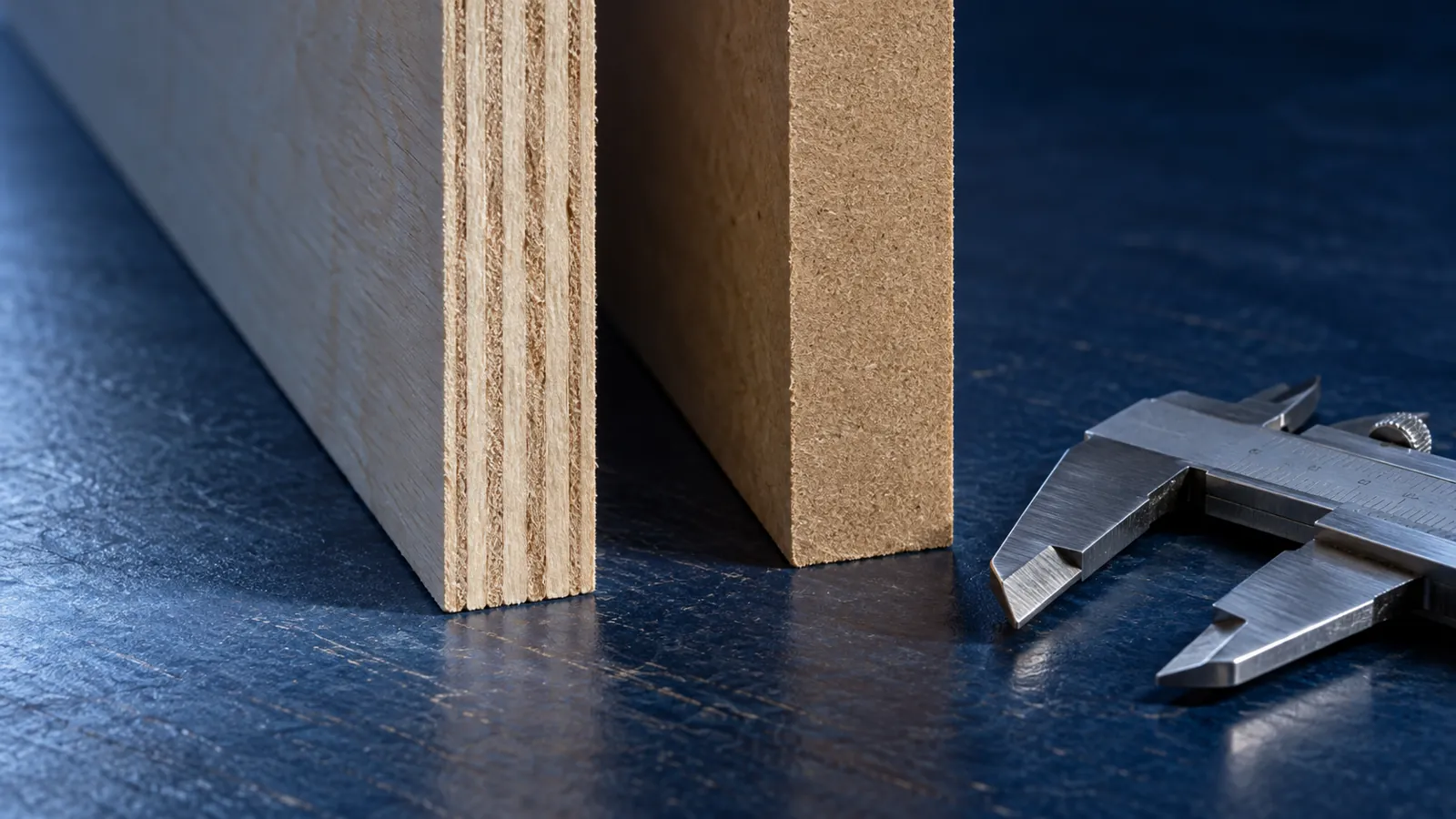
Plywood is made from layers of wood veneer, while MDF is made from fine wood fibres bonded into a board. Greenply's explanation describes plywood's alternating grain directions and MDF's uniform, grain-free surface.
That construction difference is useful when discussing edges and finishes. Ask to see a labelled offcut of the proposed board as well as the decorative sample. A beautiful veneer sample tells you about the visible surface, not necessarily the board beneath it.
Our solid-wood-versus-veneer guide explains that separate decision. Veneer, plywood and MDF are not three competing colour choices on the same sample card.
The finished wardrobe may use several materials for good reasons. What matters is whether those reasons are recorded and appropriate to the design, not whether the quotation wins a purity contest.
Does moisture-resistant mean monsoon-proof?
No: moisture resistance has a defined product scope, and it is not permission to ignore wetting or installation conditions. MEDITE MR's FAQ says its board is for interior humid conditions, is not waterproof and should not be used outside.
That is a specific manufacturer's product description, not an endorsement of any board a supplier calls MR. Ask for the exact product name and its current technical sheet. Avoid treating an abbreviation or a green board colour as the entire evidence pack.
For a Mumbai wardrobe, tell the designer about any known water ingress, damp wall or nearby bathroom before selecting boards. Our recommendation is to resolve the site condition with the appropriate professional rather than asking cabinetry to conceal it.
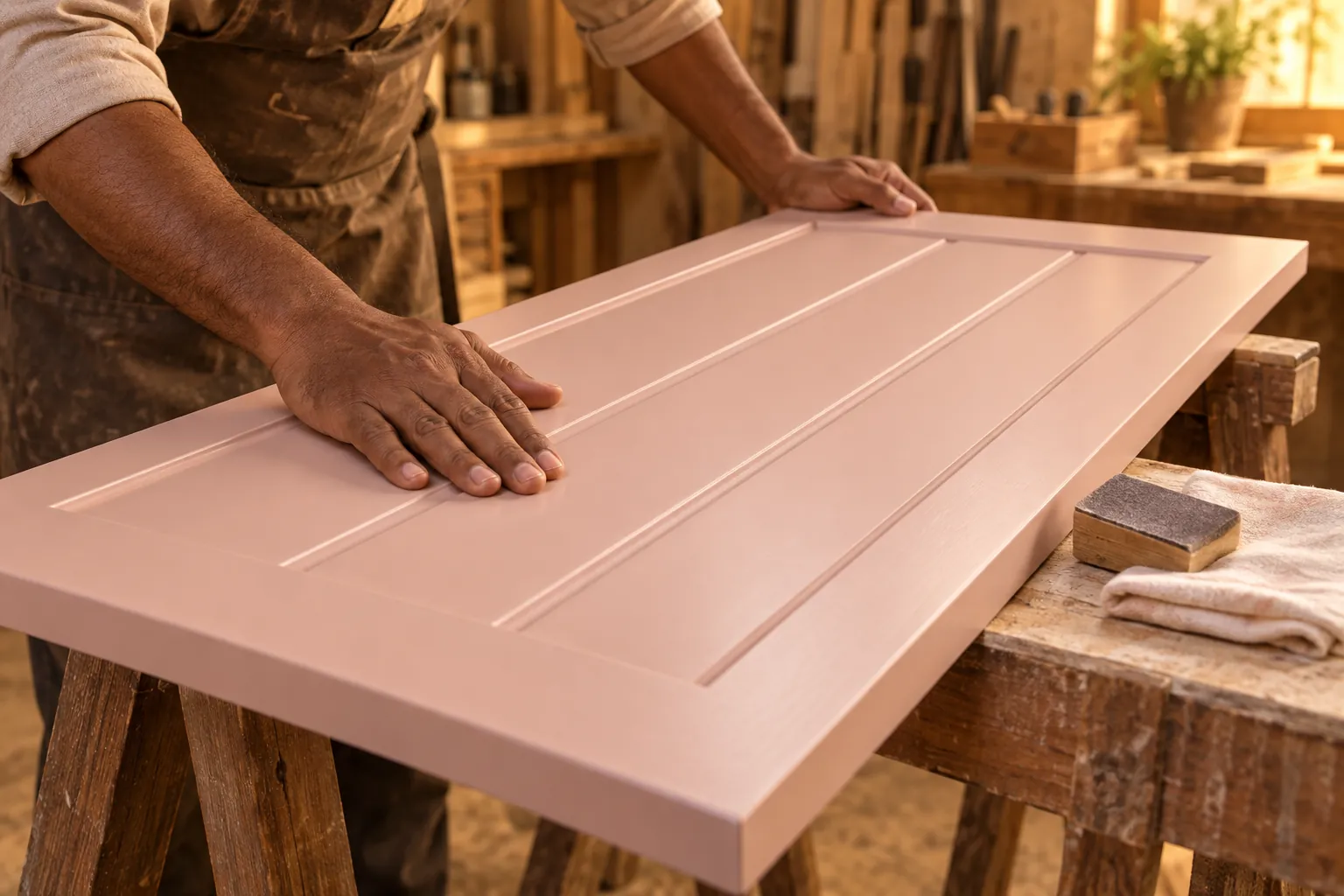
The MEDITE MR datasheet illustrates why installation matters: it specifies sealing, priming and painting its surfaces before installation, with particular attention to placement next to damp plaster. Follow the requirements for the actual selected product, not a borrowed recipe from this example.
When does MDF make sense for painted wardrobe doors?
MDF can be a sensible candidate where the specified board and design suit a smooth painted or routed finish. MEDITE MR describes a uniform surface for painting, laminating or veneering, along with routing and profiling applications.
This is the stage to compare actual finish samples. Look at the face, the edge, a routed groove and the back of the door. Ask which coating system is proposed and how exposed edges, hinge recesses and handles are treated.
Do not assume that an attractive front face settles the whole door design. Ask the maker to confirm panel dimensions, weight, hinge selection and fixing details as one assembly. These are questions for the project specification, not a universal door-thickness rule.
Our judgement is that a painted-door decision should be made with the workshop's finish sample and proposed hardware in view. Glossy photography is rather quiet about hinge recesses.
Why not use plywood for absolutely everything?
You can ask for an all-plywood proposal, but it should still justify the finish, grade and construction for each part. Greenply's comparison presents a mixed-material approach as one way to combine an internal structure with painted MDF shutters.
Treat that as a design option, not proof that it is always cheaper or longer-lasting. If a supplier proposes a different construction, ask them to explain the relevant board specification and finishing process.
For two competing quotes, compare equivalent door designs, finishes, hardware and installation scope. A lower board price alone does not tell you the completed wardrobe price. Do not make a materials substitution after approving the design without confirming the consequences with the maker.
What belongs in a component-by-component specification?
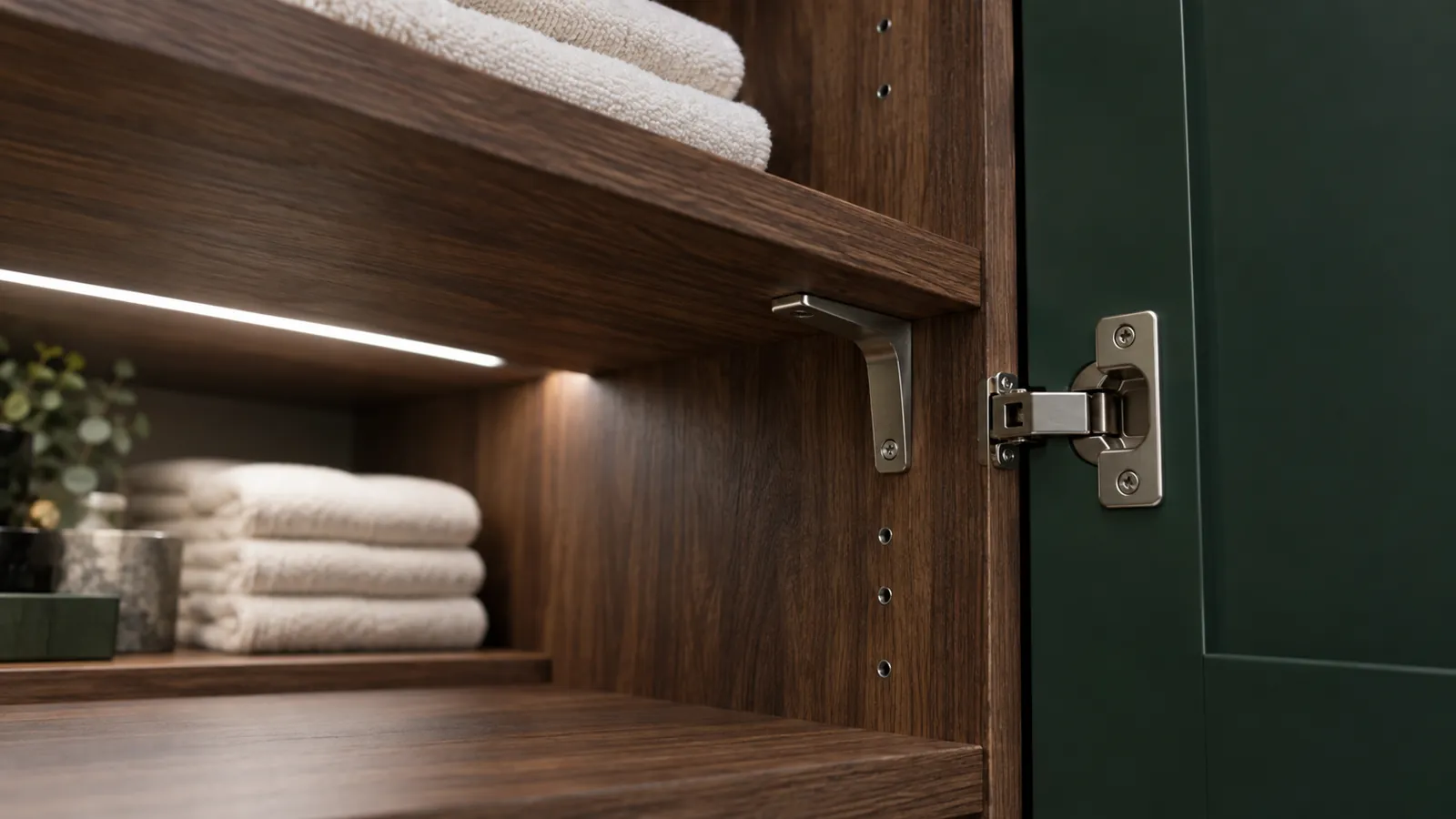
A useful specification identifies what each part is made from and how it will be finished and supported. Our suggested schedule is:
| Component | Details to confirm |
|---|---|
| Carcass, the main cabinet body | Named board, grade, thickness, finished faces and fixing arrangement |
| Doors or shutters | Board, dimensions, coating system, edge treatment and hardware |
| Shelves | Board, thickness, clear span, supports and intended contents |
| Back panel | Material, thickness, finishing and installation detail |
| Plinth and site junctions | Material, floor and wall interfaces, and treatment required by the chosen system |
The table is a briefing tool, not an engineered design or a set of prescribed dimensions. Ask the furniture maker to complete and approve it for your project.
Keep the wardrobe-format decision separate too. Our built-in-versus-freestanding guide covers the wider choice between fitted construction and a movable piece.
Limitations
This article compares construction concepts and selected manufacturer guidance. It does not independently test boards, calculate shelf capacity or establish a universal thickness, service life or moisture tolerance.
MEDITE is used as a documented example of a named MDF grade, not a claim of FCI stock, local availability or equivalence to an Indian standard. Greenply's article is manufacturer-authored, not an independent comparative trial. Final suitability requires the actual technical documents and project design.
Generated images illustrate materials and joinery ideas. They are not FCI manufacturing records, certified samples or proof of a completed installation.
What should you ask FCI India next?
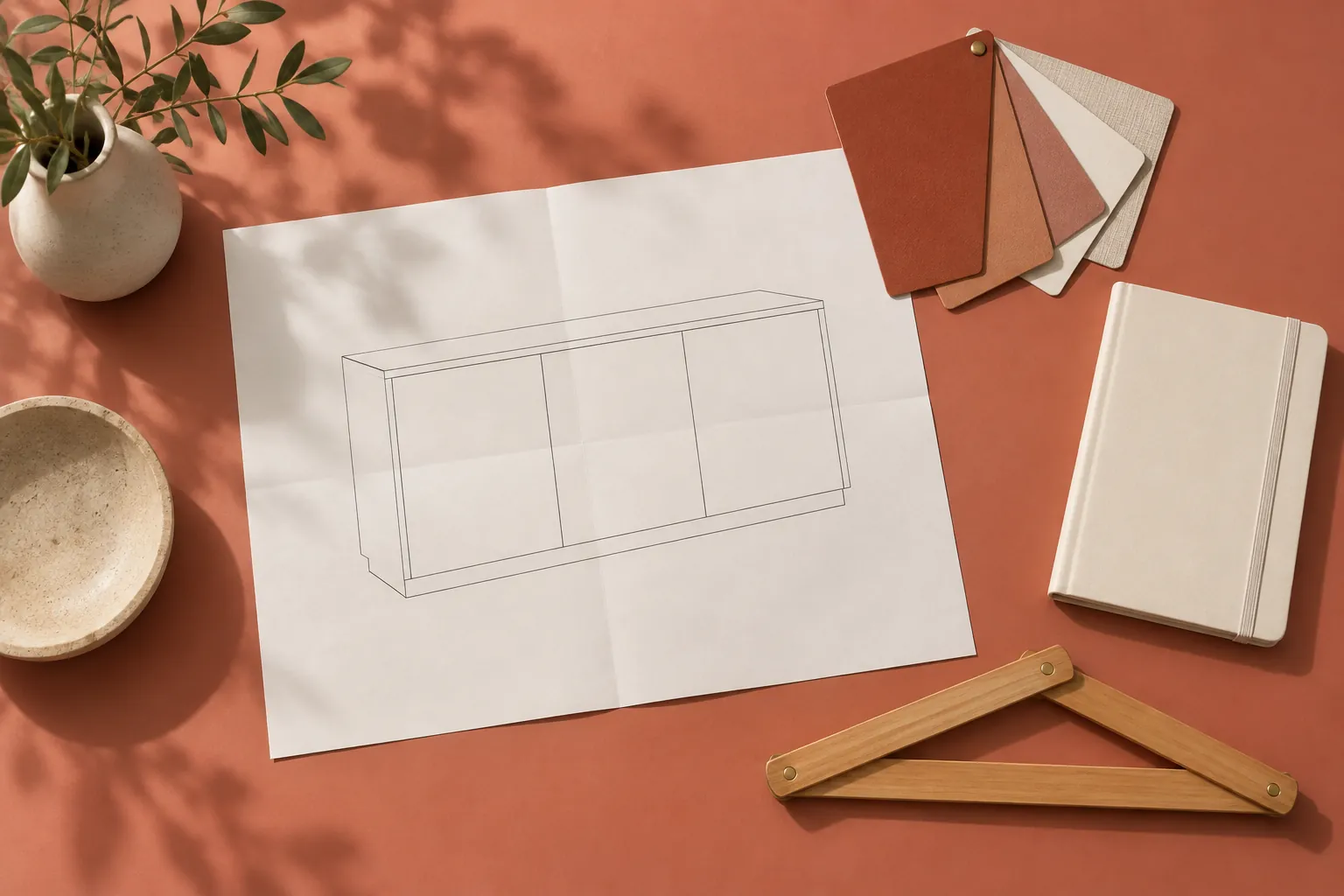
Ask for a wardrobe proposal that separates the carcass, doors, shelves, back and hardware. FCI India's current services page includes bespoke manufacturing and built-in furniture and joinery.
Contact FCI India with your layout, preferred finish and any known site moisture issues. Request a component-level materials schedule before approving the final quote, so plywood versus MDF becomes a documented design decision rather than a showroom argument.
Sources
- Plywood vs MDF for Wardrobe: Which Is the Smarter Choice for Indian Homes?, Greenply Industries, 30 June 2026. Manufacturer material definitions and construction options.
- MEDITE MR, MEDITE SMARTPLY. Product applications and moisture limitations.
- MEDITE MR datasheet, MEDITE SMARTPLY. First-page application and finishing requirements.
- Solid Wood vs Veneer: Look Deeper, FCI India.
- Built-In vs Freestanding Wardrobe: Mumbai Guide, FCI India.
- Bespoke Furniture Services, FCI India.
- Contact FCI India.