TL;DR: Restore when the piece is structurally recoverable and its original material or history matters; replace or commission new when structure, dimensions or daily use make the original unsuitable.
A loose chair is not automatically rubbish, and an old cabinet is not automatically an heirloom. In Mumbai, where access is compact, seasons are humid, households are active and storage during works is expensive, the wrong call cuts both ways. A beautiful restoration that cannot survive daily use is as much a mistake as a replacement that erases a meaningful original. The right decision depends on significance, structure, material, intended use and the quality of the proposed intervention.
Key Takeaways
- Decide what you are trying to preserve before requesting a quotation; "make it look new" can destroy the very surface that makes a piece important.
- Run the piece through five gates: structural recoverability, material importance, intended use, whether the work can be maintained or reversed, and whether a new commission wins on the whole brief.
- There are four legitimate outcomes, not two: conserve, restore, reupholster, or replace and reproduce.
- No option is universally cheaper or greener; a durable new commission can be rational when the original is unsafe, materially compromised or wrong for the use.
- Mumbai logistics, from lifts and stairs to storage and moisture, can change the answer, so plan access before moving the piece.
- A credible proposal is written and detailed; a one-line "full polish and repair" quote is not enough for an important object.
What are you actually trying to preserve?
Decide this first, because value can come from different places:
- family history and emotional association;
- design authorship, maker or provenance;
- rare material or craftsmanship;
- a shape that fits the room unusually well;
- comfort and function; or
- the patina and evidence of age itself.
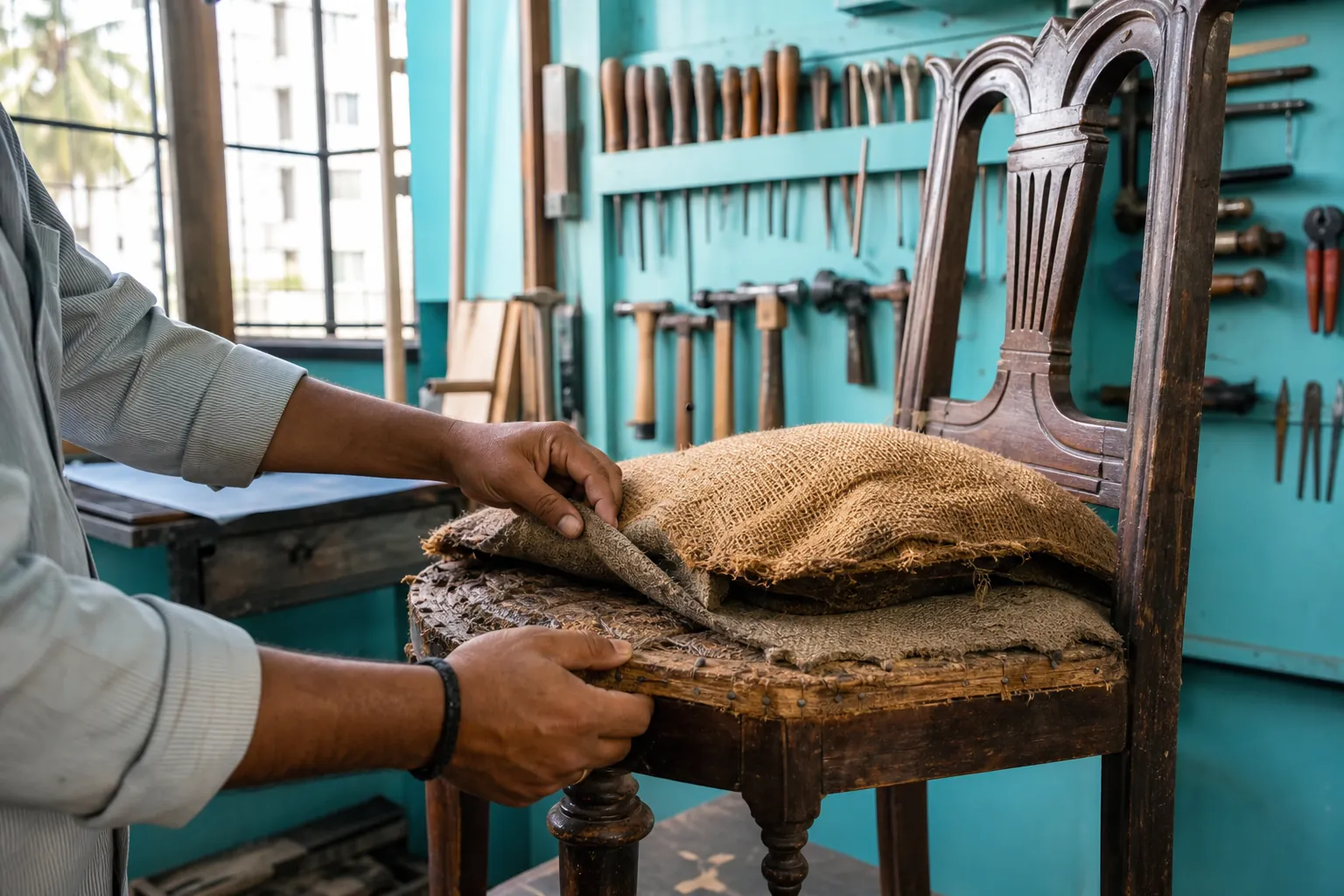
Write these priorities down before asking for a quotation. "Make it look new" can destroy the very surface that makes a piece important. The Canadian Conservation Institute notes that original finishes may carry historical, aesthetic and monetary value. Conservation can range from minimal stabilisation to more extensive restoration; the least intervention compatible with the goal is often the sensible starting point.
Which five gates should every decision pass through?
Run the piece through five decision gates before you commit to restoring or replacing it.
1. Is it structurally recoverable?
A qualified inspection should distinguish loose joints from split structural members, surface veneer loss from failed substrate, and tired upholstery from a compromised frame. Look for prior screws, nails, injected adhesives, concealed water damage, pest activity and altered parts.
Do not sit on an unstable chair to "test" it. Do not inject household glue into an antique joint before assessment; it may obstruct a durable repair.
2. Is the original material important?
An old finish, hand-cut veneer, carving, hardware or upholstery fragment may be evidence worth retaining. Replacement should be documented and proportionate. Ask which elements will remain, which will be removed, whether removed parts are returned, and how additions will be identified in the record.
3. What will the piece do after treatment?
Display, occasional use and daily family use are different briefs. A fragile heirloom may be conserved for light use while a new piece takes the daily load. Conversely, a well-built recent sofa with a sound frame may justify reupholstery.
FCI India lists restoration and reupholstery among its furniture services. Bring the intended load, users and room conditions into the assessment, not just photographs of the damage.
4. Can the intervention be maintained or reversed?
Not every treatment is fully reversible, but you should understand future options. Ask for named materials, finish system, upholstery construction, cleaning method and maintenance interval. A quick high-gloss coating may be hard to remove without affecting an older surface.

5. Does restoration beat a new commission on the whole brief?
Compare more than the first quotation:
| Factor | Restore | Replace or commission |
|---|---|---|
| significance | retains original history and material | creates a new story, loses original use |
| fit | known dimensions | can be redesigned for access and ergonomics |
| uncertainty | hidden damage may emerge | specification risk before production |
| time | investigation and specialist work | design, approval and manufacture |
| maintenance | depends on old/new material interface | can be planned as one new system |
| evidence | condition and treatment record | drawings, samples and warranty |
No universal option is cheaper or greener. Restoration can preserve material, but repeated unsuitable repairs, transport and replacement parts also carry impacts. A durable new commission can be rational when the old piece is unsafe, materially compromised or wrong for the use.
Restore or replace: aren't those the only two options?
No. There are four legitimate outcomes, and naming the right one is half the decision.
Conserve
Stabilise deterioration while retaining as much original material and appearance as practical. Appropriate for significant pieces where evidence matters more than a flawless finish.
Restore
Recover legibility, strength or function through a documented treatment. The endpoint should be agreed: museum-like restraint, sympathetic household restoration or a clearly renewed appearance.
Reupholster
Retain a sound frame while replacing worn fillings and covering as specified. Before stripping, record labels, markings, layers and original details. Decide whether tufting, piping and proportions remain faithful or deliberately change.
Replace or reproduce
Commission a new piece when structure, dimensions or daily requirements make the original unsuitable. Reproduction should be described honestly; it is not the original. For a new design tailored to the room, review FCI India's custom furniture service and materials and finishes library.
What should a credible proposal actually contain?
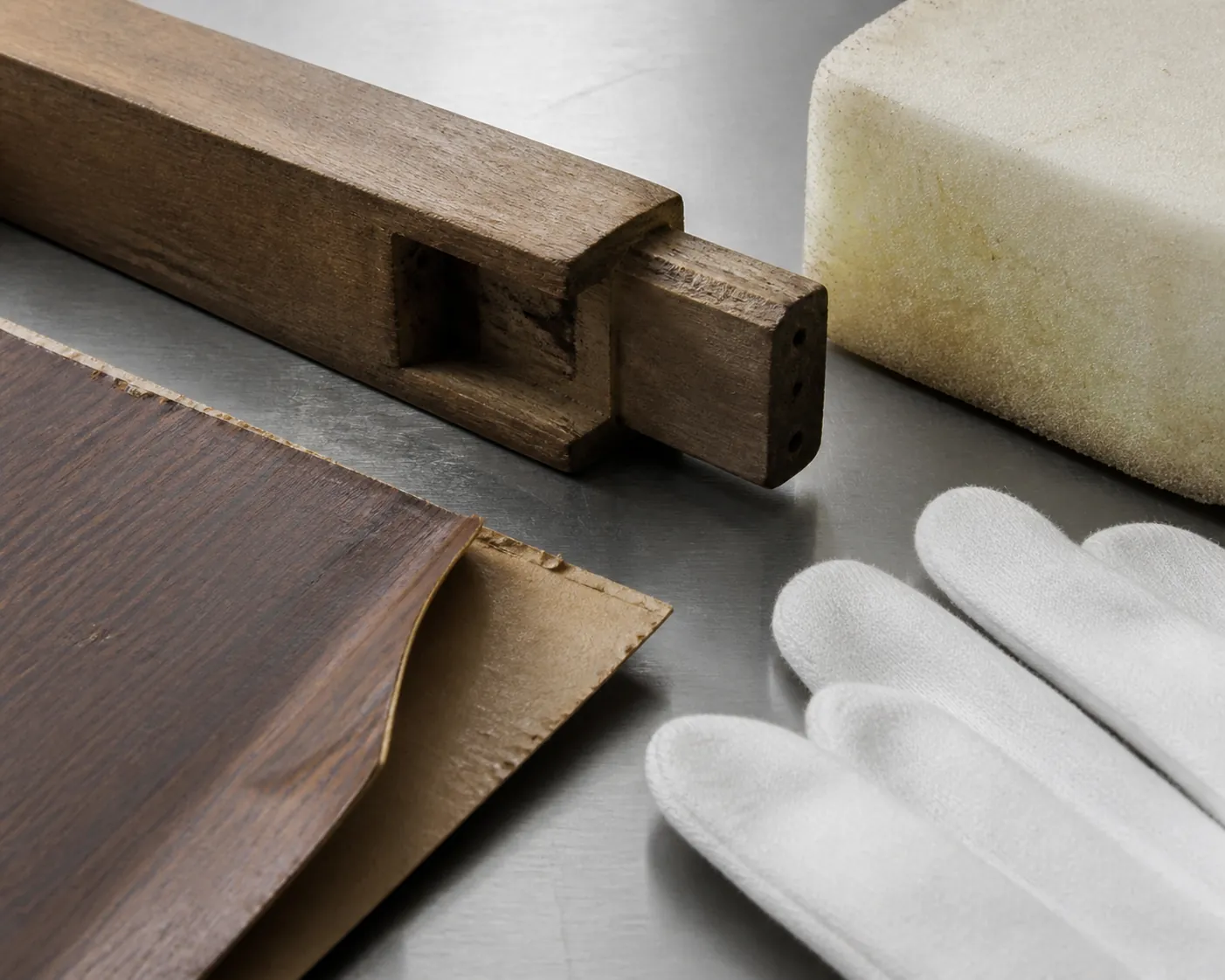
A credible proposal spells out condition, treatment and after-care in writing rather than a single line. Request:
- dated condition photographs from all sides;
- structural and surface findings, including uncertainties;
- the proposed treatment sequence;
- what is retained, replaced and returned;
- sample or test area before full treatment where appropriate;
- handling, transport and Mumbai access plan;
- care instructions and intended-use boundary;
- how discoveries and scope changes are approved; and
- after-treatment photographs and material record.
A one-line "full polish and repair" quote is not enough for an important object.
How does Mumbai logistics change the answer?
Mumbai logistics can decide the outcome before any craftsmanship begins, so plan the route as carefully as the treatment. Measure lifts, stairs, doors and turning points before moving the piece. Fragile furniture may require partial stabilisation before transport, not dismantling by a general mover. Decide where it will be stored during building work and how it will be protected from dust and moisture.
FCI India's recent Mumbai furniture access survey explains packed dimensions and delivery routes. Apply the same discipline to collection and return after restoration.
What are the red flags in a provider's proposal?
Pause if a provider proposes to:
- strip every old finish without first assessing significance;
- conceal structural failure under upholstery;
- replace hardware without recording or returning it;
- promise an exact colour match before testing;
- treat active damp or pest evidence as a cosmetic issue; or
- proceed without an agreed response to hidden damage.
For a piece of exceptional artistic, historic or financial importance, seek an appropriately qualified conservator and independent valuation or provenance advice where relevant.

Limitations
Photographs cannot establish internal condition, authenticity or value. This guide is not an appraisal, pest diagnosis or conservation treatment specification. Materials and past repairs can react unpredictably; all treatment needs object-specific testing and informed approval.
Sources
- Canadian Conservation Institute, furniture and wooden objects
- Canadian Conservation Institute, care of original furniture finishes
- Institute of Conservation, caring for furniture
- FCI India, furniture services
Have one piece in mind? Contact FCI India with photographs, dimensions, history and intended use to arrange an assessment.