Renovation Services
Luxury Home Renovation in Mumbai
Reimagining Mumbai’s finest homes — from structural reconfiguration to final styling. One accountable team from start to finish.
Full-Service Renovation
One Team. Every Trade. Complete Accountability.
A luxury renovation in Mumbai is one of the most complex undertakings a homeowner can initiate. It involves BMC permissions for structural changes, society NOC procedures that can take months, the co-ordination of 15–20 different trades in a sequence that must be precisely managed, material sourcing from multiple countries on timelines that must align with site readiness, and quality control across every element from the structural slab to the final cushion placement.
Most renovation horror stories in Mumbai have the same root cause: a design studio that hands off to contractors it does not fully control, or a contractor who is executing a design they were not involved in developing. FCI’s renovation service eliminates this handover problem entirely. Our design team and our site execution team are the same organisation — briefed together, accountable together, and solving problems together when they arise.
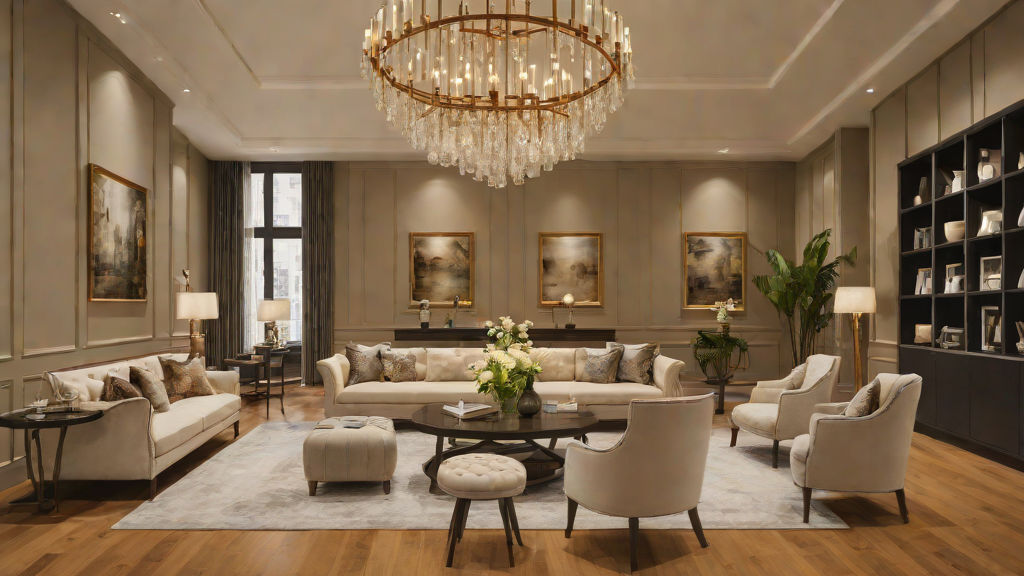
We undertake complete renovations — structural reconfiguration, all civil works, bespoke joinery, furniture, soft furnishings, lighting, artwork installation, and final styling. Or we scope to the elements you need — not every project needs to start from bare concrete.
Specialisations
The Properties We Renovate
Heritage Apartments
Mumbai’s pre-1970 residential stock — art-deco buildings in Bandra and South Mumbai, the elegant co-operative societies of Malabar Hill and Breach Candy — represent some of the city’s finest architectural inheritance. Renovating these buildings requires sensitivity to the original proportions, understanding of the original construction methods, and awareness of which elements can be altered and which cannot. We work with heritage conservation architects where required and have a strong track record of producing genuinely contemporary interiors that respect the host building’s character.
Sea-Facing Penthouses
A sea-facing penthouse in Worli, Marine Drive, or Carter Road is among the most demanding renovation contexts in India. The views are extraordinary — but they come with salt-laden wind, extreme UV exposure on terraces, and the constant challenge of managing the boundary between magnificent outside and controlled inside. Our penthouse renovations pay special attention to glazing specification (low-e laminated glass for UV control), terrace waterproofing (critical — a failed terrace waterproofing membrane below is a catastrophic problem above), and the visual composition from every vantage point inside the flat looking out.
Juhu & Bandra Villas
Standalone villas are comparatively rare in Mumbai, and those that exist — particularly in Juhu, Khar, and Pali Hill — command extraordinary premiums. Villa renovations offer freedoms that apartment renovations do not: structural walls can sometimes be removed, basements can be created, and landscaping is part of the design canvas. We have renovated villas ranging from 3,500 to 18,000 sq ft in these neighbourhoods, and each project begins with a structural assessment that maps what is possible before the design brief is developed.

Navigating Mumbai’s Rules
BMC Permissions, Society Approvals & Heritage Regulations
Renovation in Mumbai operates within a layered regulatory framework that surprises first-time renovators. The Brihanmumbai Municipal Corporation (BMC) governs all structural changes — opening or closing walls, modifying structural slabs, creating new openings — and requires stamped drawings from a licensed structural engineer, an approved architect’s submission, and inspection clearance before and after structural work.
Above and beyond BMC, most Mumbai apartment buildings are governed by a co-operative housing society whose managing committee must approve renovation work. The NOC process varies enormously between societies — some have simple one-page forms; others require a full set of architectural drawings, a structural engineer’s certificate, a deposit against common area damage, and a committee meeting approval. Our project management team has dealt with hundreds of Mumbai society NOC processes and knows how to structure submissions to minimise delays.
Properties in heritage-listed buildings or within the influence zones of protected structures have additional requirements managed through the Maharashtra Heritage Conservation Committee. We work with approved heritage architects for all such projects.
Monsoon-Proof Renovation
Planning Around Mumbai’s Monsoon
Mumbai receives approximately 2,400mm of rainfall annually — virtually all of it concentrated in the four months from June to September. This is the defining constraint on renovation scheduling and specification in the city.
Scheduling Strategy
The ideal renovation timeline in Mumbai has all external works — waterproofing, façade repairs, external painting — completed before June, all civil and joinery work timed to avoid the peak monsoon weeks of July–August for any work requiring drying or curing, and decorative finishing scheduled for the post-monsoon period from October to January when humidity drops and temperatures moderate. Projects that begin in October with a 10-month timeline typically produce better results than identical projects started in April, because the execution phase falls in the optimal climate window.
Waterproofing Specification
In our experience, the single most common cause of renovation regret in Mumbai is inadequate waterproofing — either in the wet areas (bathrooms, terraces, balconies) or at external wall junctions. We specify a two-coat crystalline waterproofing system for all wet area floors and walls, a torch-applied membrane for all terraces and balconies, and a flexible polymer sealant at all wall-floor junctions and around all service penetrations. This specification costs more than a single-coat treatment — but a waterproofing failure after finishes are applied costs ten times as much to remediate.
The Renovation Sequence
How a Full FCI Renovation Unfolds
Assessment & Design
Structural assessment, measured survey, regulatory review, and design development. This phase culminates in a full set of approved drawings, a detailed specification document, and a fixed-price contract. We do not begin civil works without an approved design and a signed contract — this protects both parties from scope creep and misaligned expectations.
Approvals & Procurement
Society NOC, BMC submissions (where required), and all material procurement is initiated simultaneously. Long-lead items — stone from Italy, imported sanitary ware, bespoke furniture, and specialist lighting — are ordered immediately after design sign-off. Mumbai’s import timelines mean that waiting until the site is ready to order furniture results in a completed site sitting empty for months.
Execution & Handover
Civil works, MEP (mechanical, electrical, plumbing) rough-in, waterproofing, screeds, tiling, joinery installation, painting, furniture installation, soft furnishings, lighting commissioning, styling, and final snagging. Our project manager is on site daily during active works phases. Handover includes a full user manual for all installed systems, warranty documents, and a 3-month post-handover support period.
Expert Answers
Frequently Asked Questions
How much does a full luxury renovation cost in Mumbai?
A complete luxury renovation in Mumbai (civil works, joinery, furniture, finishes, and soft furnishings) typically costs between ₹12,000 and ₹30,000+ per square foot depending on specification level. A 3,000 sq ft apartment at mid-luxury specification would typically cost ₹3.5–5.5 crore all-in. Ultra-luxury specification (Italian marble throughout, bespoke European furniture, full home automation, premium joinery) can reach ₹10,000+ per sq ft. We provide itemised cost plans after design sign-off — never approximate budgets at the inquiry stage.
How long does a luxury renovation take in Mumbai?
A complete renovation of a 2,500–4,000 sq ft apartment — from design sign-off to handover — typically takes 9–14 months. This includes the regulatory approval phase (which can vary from 4 weeks to 4 months depending on the society and BMC requirements), civil works, joinery production, furniture lead times, and finishing. Larger properties and those with complex regulatory situations naturally take longer. We provide a detailed programme with milestones at the outset of every project.
Can you renovate a flat while I am living in it?
It is technically possible to phase a renovation around occupancy, but we generally advise against it for projects involving civil works and waterproofing. Dust, noise, and service interruptions make occupation genuinely uncomfortable, and working around furniture and possessions significantly slows the civil trades. For joinery and soft furnishing phases, occupied renovation is more feasible. Many of our clients rent alternative accommodation for the civil works phase — typically 3–5 months — and return for the finishing and installation phase.
What permissions do I need for a Mumbai apartment renovation?
For non-structural renovation (new flooring, joinery, painting, bathroom fixtures without moving walls), you typically need only a society NOC. For structural changes — removing or adding partition walls, creating new openings in structural walls, modifying the slab — BMC approval via a licensed architect and structural engineer is required. For changes to external façades, lift lobbies, or common areas, additional approvals may be needed. Our team advises on the specific permissions needed for your project scope in your specific building before you commit to any timeline.
What should I look for in a luxury renovation contractor in Mumbai?
The critical questions are: do they design and execute under one roof (no handover problem), do they employ their own tradespeople or subcontract everything, do they have a track record of similar projects in similar buildings, and do they provide a fixed-price contract rather than a cost-plus arrangement? References from completed projects — not just showroom photographs — are the most reliable indicator of quality. Ask to visit a completed project if the contractor will arrange it.
Can you renovate a heritage building apartment in Mumbai?
Yes — this is a specialisation of ours. Heritage buildings require working with a MHCC-approved conservation architect for any changes to the exterior or common areas. Internal renovations in heritage buildings have more latitude — you can create entirely contemporary interiors within the original shell — but structural changes require additional engineering scrutiny given the original construction method (typically load-bearing brick or early RCC). Our team has completed over 40 renovations in pre-1947 Mumbai buildings and understands both the technical and regulatory landscape.
By Property Type
Renovation Specialisations
Penthouse Renovation
Top-floor transformations for Mumbai’s most prestigious addresses. Sea views, terraces, double-height spaces.
Apartment Renovation
From heritage South Mumbai flats to modern Bandra high-rises. Space-smart renovations for every neighbourhood.
Plan Your Renovation
Begin With a Complimentary Assessment
Our design and project management team will visit your property, review the structural and regulatory context, and give you a realistic picture of what is possible — at no charge and with no obligation.
Explore Further
Related Services
Interior Design Mumbai
Full interior design services for new-build and renovation projects across Mumbai.
Bespoke Joinery Mumbai
Custom wardrobes, cabinetry, and wall panelling for renovated Mumbai apartments.
Curtains & Soft Furnishings
The final layer — bespoke curtains, upholstery, and bedding for completed renovations.
All Services
The complete range of FCI India design and renovation services.
Our Process
How FCI manages a renovation from first brief to final handover.
Contact FCI India
Talk to our renovation team about your project.