The FCI Buyer’s Guide
The Complete Guide to Buying Luxury Furniture in Mumbai
What the showrooms do not tell you — from wood species that survive four monsoons to the questions every buyer should ask before signing an order.
The Informed Buyer
Why Buying Luxury Furniture in Mumbai Requires Specialist Knowledge
Mumbai’s furniture market has expanded dramatically over the past decade. Luxury imports from Italy, France, Germany and Scandinavia compete with an increasingly sophisticated tier of Indian craftsmanship — and the price differential between them has narrowed considerably. A well-made bespoke piece from a Mumbai workshop can hold its own against a mid-tier European import at a fraction of the cost and with far better specification for local conditions.
At the same time, the market has also seen a proliferation of product described as “luxury” that is nothing of the sort — veneers over particle board sold at solid-wood prices, zinc alloy hardware chrome-plated to look like solid brass, and “Italian leather” sofas with leather only on the seating surfaces and vinyl elsewhere.
This guide draws on our 25 years of furniture sourcing and manufacturing in Mumbai to give you the knowledge to make informed decisions — whether you buy from us or elsewhere.
The Core Decision
Bespoke vs Ready-Made: Making the Right Choice
The first decision every furniture buyer faces is whether to commission bespoke or purchase ready-made. This is not purely a budget question — it is a question of priorities, timeline, and what you actually need your furniture to do.
The Case for Bespoke
Mumbai apartments rarely conform to standard dimensions. A dining table that seats eight comfortably in a 14 x 11 ft dining room with a column in one corner is not something you will find on a showroom floor — it needs to be designed. The same applies to sofas for awkwardly shaped living rooms, beds for low-ceiling bedrooms where a high headboard would look oppressive, and wardrobes that must work around structural beams.
Bespoke also allows material specification for Mumbai conditions: the right wood species, moisture-resistant substrate, salt-resistant hardware. With FCI’s bespoke service, lead time is typically 10–14 weeks for upholstered pieces and 12–16 weeks for case goods.
The Case for Ready-Made
When the geometry works, quality ready-made furniture from established European manufacturers offers a level of manufacturing precision that is difficult to replicate even in a skilled workshop — particularly for pieces requiring complex mechanism engineering, precision metalwork, or proprietary material treatments.
High-end Italian and German brands also offer programmes for customisation within their standard ranges: fabric choice, leg finish, dimension adjustment within a range. This gives the quality and warranty of a manufactured product with some degree of personalisation. Our curated collection focuses on exactly this tier of product — not standard luxury imports, but the best European makers who also design with longevity and functionality in mind.
Material Intelligence
Choosing the Right Wood Species for Mumbai’s Climate
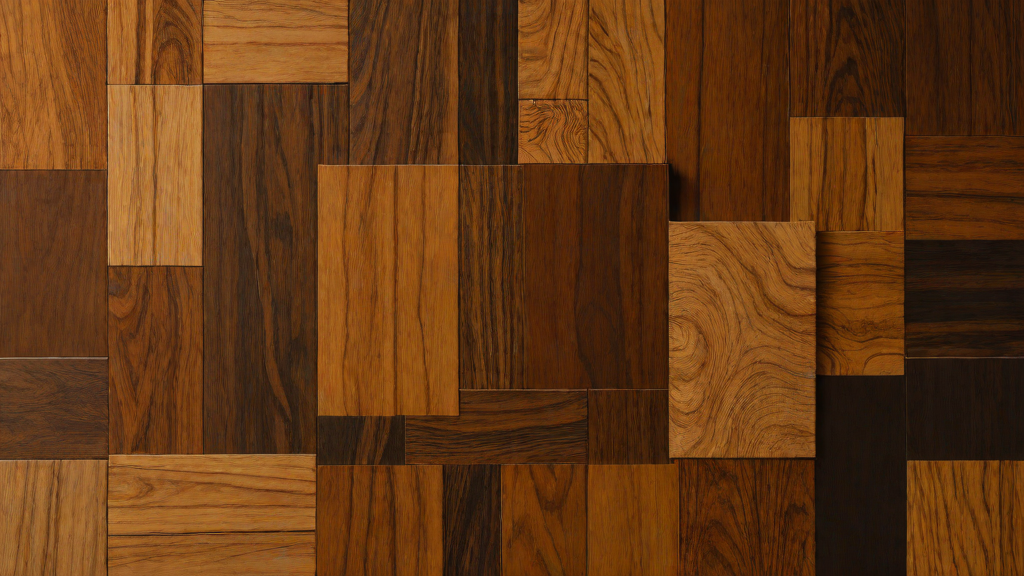
Wood and humidity have a complicated relationship. All timber moves — expanding when it absorbs moisture and contracting when it dries. In Mumbai, where relative humidity swings from 55% in winter to 90%+ during monsoon, the wrong species or improper kiln-drying can result in furniture that warps, splits, or loses its joints within a few years.
Teak — The Gold Standard
Burmese teak has been the material of choice for Mumbai’s finest furniture for over a century. Its natural silica and oil content provide inherent resistance to moisture, insects, and the biological growth that affects other species in humid conditions. Properly kiln-dried teak from legal FSC-certified sources remains the best choice for sea-facing and high-humidity applications. Expect to pay a significant premium — teak prices have increased sharply as legal supplies have tightened.
Oak — The Versatile Choice
European white oak and American red oak are among the most dimensionally stable hardwoods available. Used as engineered or quarter-sawn solid timber, oak performs well in Mumbai’s climate when properly finished with penetrating oils or hard-wax oil that allow the wood to breathe rather than sealing it completely. Avoid lacquered oak in rooms with significant humidity cycling — the finish will eventually crack as the wood moves beneath it.
Walnut & Sheesham
American black walnut is a premium choice for dining tables, desks, and case goods where a darker, richer grain is desired. It performs acceptably in Mumbai but requires more maintenance than teak. Indian sheesham (rosewood) is widely available, cost-effective, and durable — it is not exotic wood, but it is honest material that performs well. Avoid species marketed as “solid wood” without specifying the species — much of what is sold this way is poplar or rubber wood, which performs poorly in humid conditions.
Quality Indicators
What to Look for Before You Buy
Luxury pricing does not guarantee luxury quality. These are the questions to ask and the checks to perform before committing to any high-value furniture purchase in Mumbai.
For case goods (wardrobes, sideboards, cabinets): Ask for the substrate specification — is it solid wood, MDF, or particle board? Particle board is acceptable in dry, air-conditioned rooms but should not be used in kitchens, bathrooms, or any space with humidity fluctuation. Check the drawer mechanism brand — Blum, Grass, or Hettich hardware from Austria indicates a manufacturer investing in quality; unbranded runners indicate cost-cutting. Check the rear panel — it should be sealed and fixed, not stapled hardboard.
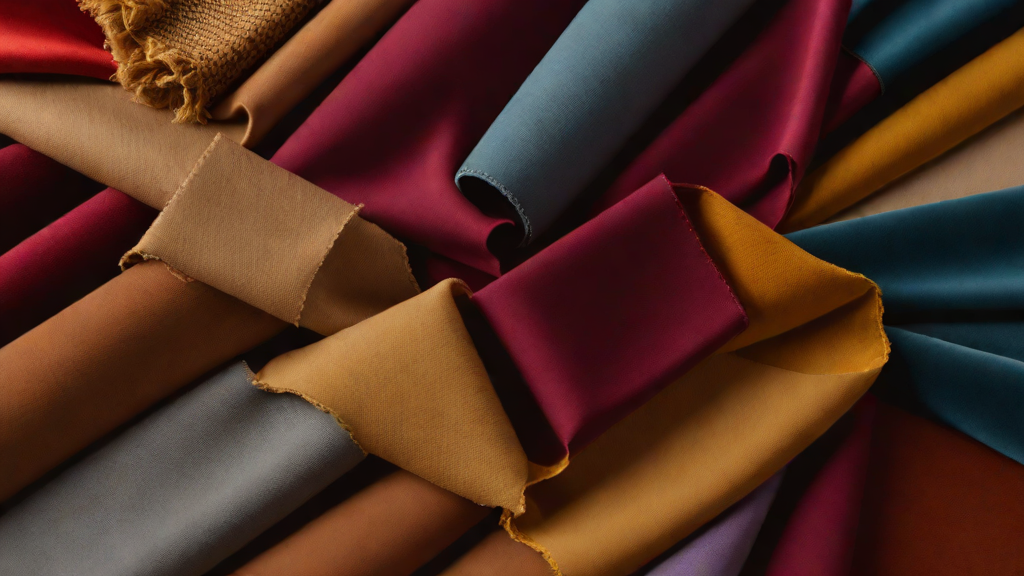
For upholstered pieces: Ask for the frame material (solid hardwood or engineered wood are both acceptable; tubular steel is fine for contemporary pieces; avoid plywood-only frames for primary seating). Ask about the seat cushion foam specification — HR (high resilience) foam at 35kg/m³ density or above will not sag within five years. Request a swatch of the actual fabric used in production, not a library sample.
Our materials guide provides detailed specifications for every material category we use in production and sourcing.
An Honest Comparison
European Brands vs Indian Craftsmanship
The “European brand vs Indian-made” question is one we are asked constantly. The honest answer is that neither is inherently superior — the question is what you are getting at what price point and for what application.
Where European Brands Excel
Mechanism engineering, upholstery consistency at scale, proprietary material treatments (Poltrona Frau’s leather tanning, for instance, or Molteni’s veneer matching process), and the warranty and after-service infrastructure that comes with a global brand. For sofas, beds, and precision case goods where the design is fixed and the quality mark matters, established European brands at the right price point offer genuine value.
Where Indian Craftsmanship Wins
Bespoke dimensioning for non-standard Mumbai spaces, specification for local climate conditions, far shorter lead times, significantly lower freight and duty costs, and the ability to make changes during production. FCI’s own workshop produces furniture that competes directly with mid-to-high European imports on material quality — because we control the specification, the substrate, and the finishing process. For dining tables, custom joinery, and any piece that needs to be designed for a specific space, Indian bespoke is the stronger choice.
Expert Answers
Frequently Asked Questions
What is the best wood for furniture in Mumbai’s humid climate?
Teak remains the most resilient option for Mumbai — its natural oil content resists both moisture and insects. For interior-only pieces in air-conditioned spaces, European white oak and walnut perform well when properly finished. Avoid solid timber species with high moisture movement coefficients (like beech or ash) for rooms without consistent climate control. Engineered timber — solid wood bonded in cross-laminated layers — is dimensionally more stable than solid timber for tabletops and wide panels in any species.
How much should I budget for furnishing a luxury apartment in Mumbai?
A complete furniture package for a 2,500–3,500 sq ft luxury apartment in Mumbai (living, dining, master bedroom, guest rooms, home office) typically ranges from ₹60 lakh to ₹2 crore depending on specification level and the proportion of bespoke vs ready-made pieces. This excludes joinery (built-ins, wardrobes, kitchen), soft furnishings, and lighting. FCI provides detailed room-by-room costing as part of our initial design consultation — there is no obligation and no design fee at this stage.
Can I mix furniture from different brands and get a cohesive result?
Absolutely — the most interesting interiors almost always combine pieces from multiple sources. The key is to establish a clear design language first: a consistent material palette, a coherent proportional logic, and a clear hierarchy between statement pieces and supporting furniture. Our interior design service is specifically structured to curate across sources — we will specify bespoke where it performs best, European brands where they offer the right product, and vintage or antique pieces where they add the character that new production cannot replicate.
Do imported luxury furniture brands perform well in Mumbai’s climate?
It depends on the category. Italian stone-top tables, glass, metal, and ceramic furniture are largely unaffected by climate. Upholstered European furniture performs well in fully air-conditioned spaces — issues arise when pieces are in rooms that cycle between AC and ambient temperatures. The biggest area of risk is European timber furniture specified with exterior-quality lacquer finishes, which can check and crack in Mumbai’s humidity cycles. We review every European product we sell for climate suitability before recommending it.
How long does bespoke furniture take to produce in Mumbai?
At FCI’s own workshop, lead times are typically 10–14 weeks for upholstered pieces, 12–16 weeks for case goods, and 14–20 weeks for complex joinery installations. These timelines assume design sign-off, material availability, and a smooth site for installation. We schedule production in sequence with the project’s site readiness — there is no value in furniture arriving before the floors are laid. Our project management team tracks all production against the site programme.
What warranty should I expect on luxury furniture in Mumbai?
Established European brands typically offer 2–5 year structural warranties on frames and 1–2 years on mechanisms and upholstery. FCI’s own production carries a 5-year structural warranty on all case goods and joinery, 3 years on upholstered pieces. Warranty claims in Mumbai most commonly relate to moisture damage — which is generally excluded from coverage if the specified usage environment (relative humidity, temperature range) has not been maintained. We provide a clear care guide with every piece we supply.
Deep Dive
Expert Buying Guides
Bespoke vs Ready-Made
An honest comparison covering cost, quality, timelines and when each option makes sense.
Furniture for Mumbai’s Climate
Which woods, fabrics and finishes survive monsoon humidity and sea air — and which don’t.
Start Shopping
See Our Full Furniture Collection
Browse our curated range of bespoke and European luxury furniture — or speak to our team about a fully specified furniture package for your Mumbai home.
Explore Further
Related Guides & Services
Luxury Interior Design Mumbai
Full interior design services for Mumbai’s most discerning homes and commercial spaces.
Bespoke Joinery Mumbai
Custom wardrobes, cabinetry, wall panelling and library units for Mumbai residences.
Curtains & Soft Furnishings
Bespoke curtains, blinds, and upholstery for Mumbai’s luxury interiors.
Custom Furniture Mumbai
Commission bespoke furniture made to your exact dimensions and specification.
Materials & Finishes
The full FCI materials library — timber, stone, fabric, metal and more.
Contact FCI India
Speak to our design team — we respond within one working day.